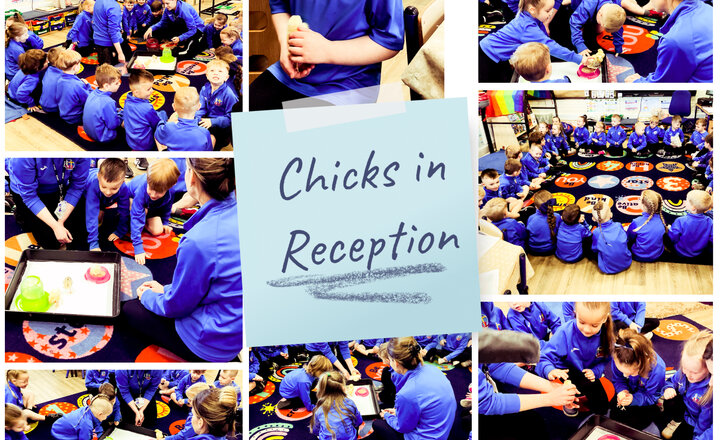
Reception: Chicks have come to visit
The Reception classroom is buzzing with excitement this week as we welcome some very special, fluffy new residents! Our little learners have officially begun their journey as mini-farmers, starting the week by discovering exactly how to care for our baby chicks. Today was a particularly big day, as the children practised their "gentle hands" to learn the proper way to hold and stroke the chicks, marvelling at how soft and delicate they feel. Beyond the cuddles, it was a fantastic day of discovery. The children spent time observing the chicks' behaviour and learning the essentials of their routine, from the specific type of food they need to grow strong to the clever way they use their beaks to sip water. It has been wonderful to see the pupils so engaged and showing such natural kindness toward their new friends. We are all incredibly excited to spend the rest of the week looking after them and watching them grow!
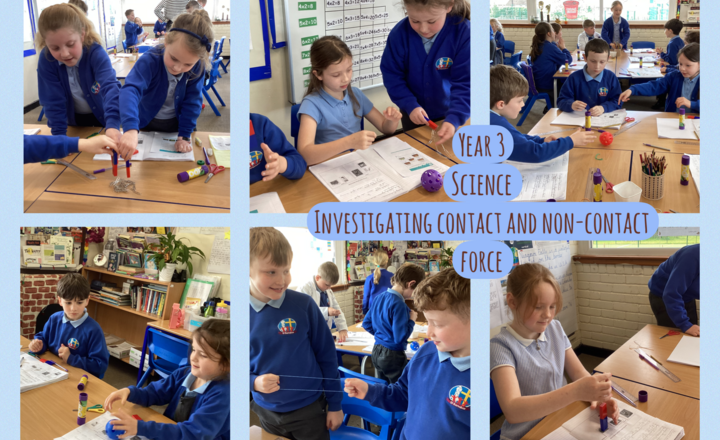
Year 3- Science- Investigating Contact and Non-Contact Forces
Today, we began our new science unit on forces and magnets. We started by exploring how objects move and learned that a force is essentially a push or a pull acting upon an object. We discovered that while some forces require objects to touch (known as contact forces, such as kicking a football), others can act at a distance (known as non-contact forces, such as the pull of gravity or a magnet). By experimenting with magnets and clips, we observed non-contact forces in action, watching objects rise without being touched. We also explored contact forces by stretching elastic bands and pushing balls. We realised that forces are responsible for starting motion, stopping it, and even changing the shape of an object.
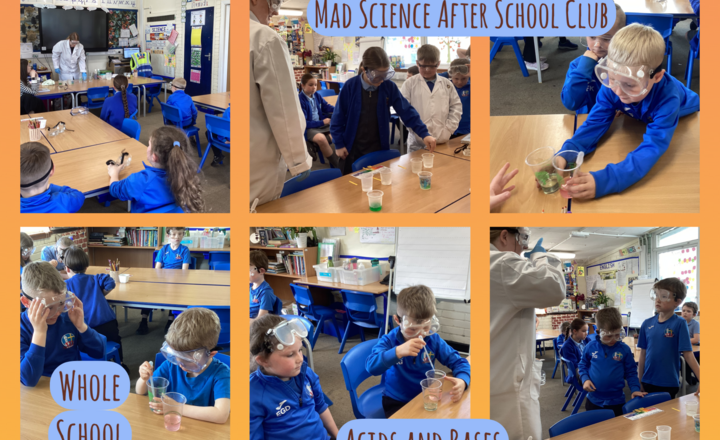
Mad Science After School Club- Exploring the Chemistry of Curiosity: pH Levels
We had a fantastic start to our Science club today, delivered by the Mad Scientist, Jo. Our future scientists focused on the power of pH levels, learning how to identify acids and bases using professional liquid indicators and pH paper. The children put on their safety glasses and learned the vital importance of protecting themselves while conducting experiments. From observing the chemical reactions used to clean oxidised coins to testing the acidity of common household liquids. It was inspiring to see the children’s curiosity come to life as they realised that science isn’t just found in a textbook, it is happening in their kitchen cupboards and the world around them.
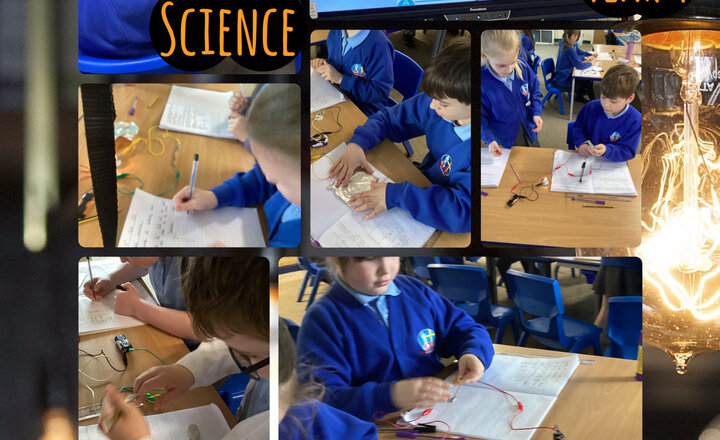
Year 4 - Science: Conductors and Insulators
In this week’s science session, the children had to set up an investigation to test different materials within their electrical circuits. Their task was to predict then test which materials would conduct electricity. We discussed first what would happen in our circuits if the material was a conductor and then the children began working to make their bulbs light. Of the materials tested, the children found that aluminium and stainless steel were conductors, whereas rubber, card, wood and plastic were insulators.
Year 5 - Science
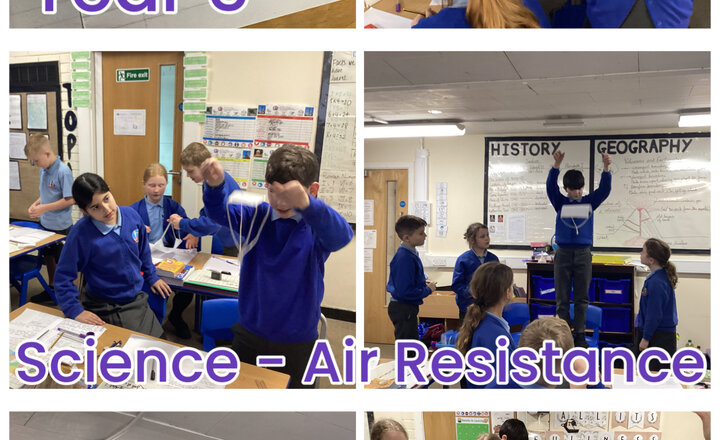
After exploring gravity last week, we today considered how the air around us pushes against objects as they move through it. We defined air resistance as an oppositional force and carried out experiments using parachutes made of paper and string. We found that the larger the parachute, the slower it fell to the ground because its greater surface area encounters more drag.
DT Year 4 - Electric Posters - Group 1
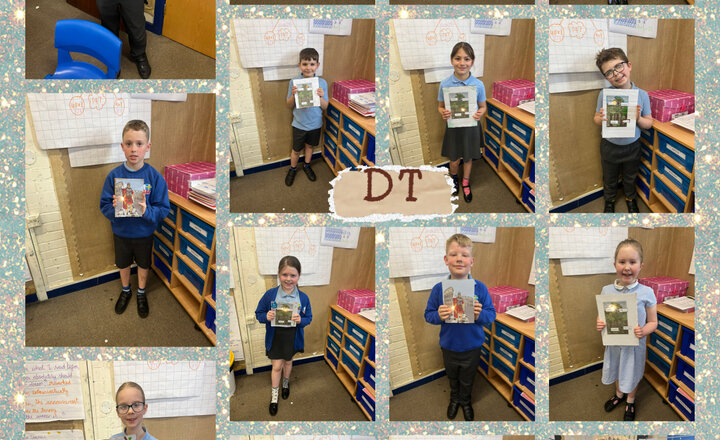
In our DT session we finally got to make our Electric Posters. We made the circuits with two crocodile clips, a battery, battery holder and bulb. The children followed their designs carefully, choosing to focus on either the Amazon or a Roman soldier. We were really impressed with the final pieces and in our last session we will evaluate and reflect on what we found challenging and what worked really well.
Year 3 - Science-The Journey from Organism to Fossil
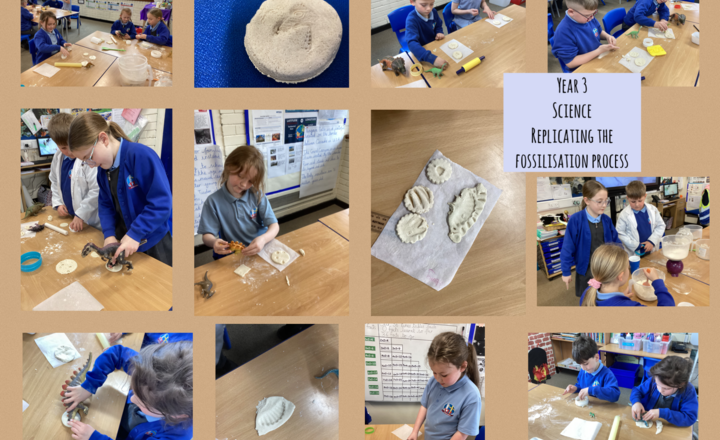
In Science today, we explored the fascinating process of how fossils are formed, which begins when an organism dies and is quickly buried by sediment, such as sand or mud carried by wind or water. This is essential because it protects the remains from decaying or being destroyed before they can be preserved. Over a very long period, layers of this sediment turn into solid rock, preserving the imprint of the living thing. These fossils are eventually discovered through natural erosion, such as wind wearing away a cliff face, or by palaeontologists searching in sedimentary rock formations. To understand this scientific process, we became "experts" by creating our own trace fossils. We started by mixing 200g of salt, 150g of flour, and 100ml of cold coffee to create a "sediment" dough. After kneading the mixture until it was no longer sticky, we used some toy dinosaurs from the Reception class to create our imprints. By pressing the dinosaurs into the dough and gently peeling them off, we replicated how living things leave behind an embedded shape that eventually dries and hardens into a fossil. By studying these remains, scientists can unlock secrets about the anatomy, behaviour, and extinction of ancient creatures, providing a vital record of the history of life on Earth.
Year 3- Science- Weathering: How Rocks Break!
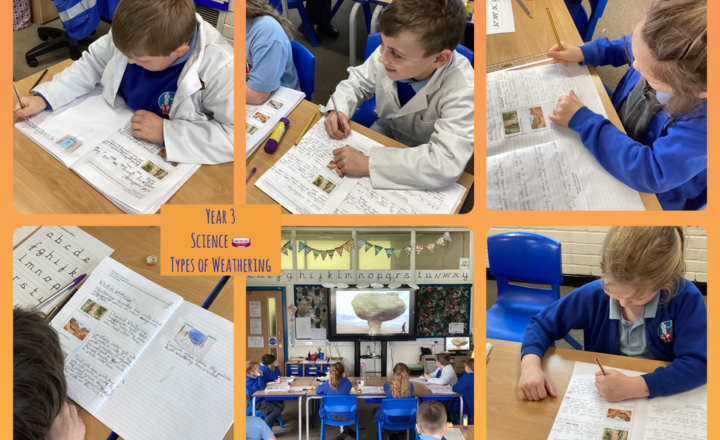
This week, the Year 3 scientists recapped on the previous lesson learning all about rocks. They started by talking with their peers about different rock groups: igneous, sedimentary, and metamorphic. The main part of the lesson was about weathering, which is how rocks get broken or worn away over time. They looked at physical weathering (like freezing water), chemical weathering (like acid rain), and biological weathering (like tree roots growing through cracks). There was lots of "talk time" for the children to use their oracy skills, especially when discussing which rocks make the strongest walls. By the end, they could explain how weathering changes rocks and pick the best ones for different jobs.
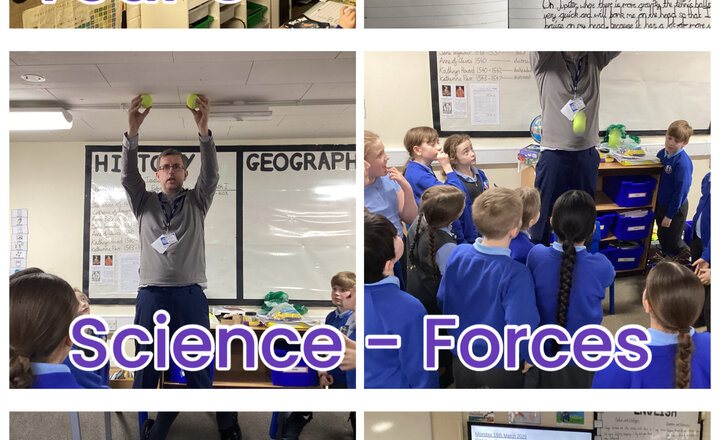
Year 5 - Science
We started our new topic of Forces by considering the relationship between gravity and mass. We defined mass as the ‘stuff’ that makes up objects and weight as the force pulled by gravity. We tested whether mass affected the speed that objects fall by replicating Galileo’s famous thought experiment of dropping objects from the Leaning Tower of Pisa. We discovered that balls with different mass fell at the same rate.

Year 1 British Science Week
For British Science Week, we focused on the word ‘curiosity’. We discussed how all scientists have to be curious to find anything out. Then, we looked at the curiosity quiz, which asked questions such as “Will plants grow faster if you speak kindly to them?”. Year 1 also came up with some big questions themselves. Our class question was “What happens to crayons when they get warm?”. Year 1 worked in groups of 4 to draw simple pictures and put crushed crayons on the. Using a hair dryer, we melted the crayons to see that they become like paint and can be spread.
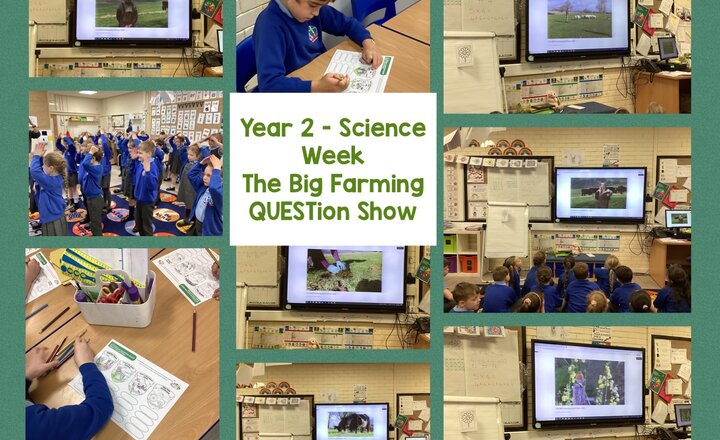
Year 2 - Science Week - The Big Farming QUESTion Show
Year 2 took part in webinar where we learned about some of the science involved in farming. We learned that cow poo is a microhabitat where some creatures such as dung beetles live.
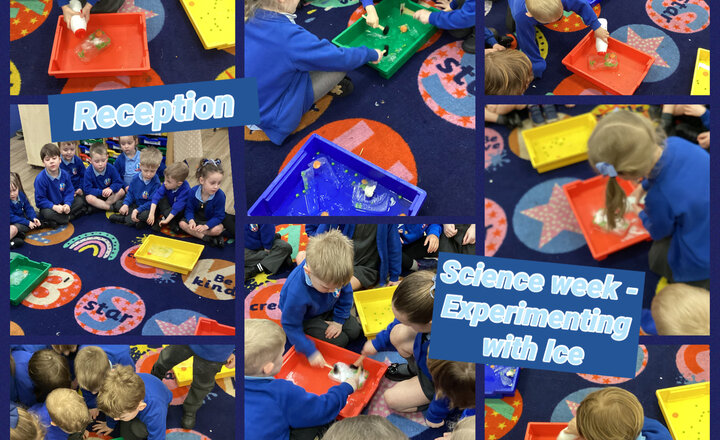
Reception Science Week - Experimenting with Ice
For Science Week, Reception have been experimenting with ice to see how it can change from a solid to a liquid. We based our Science lesson around The Evil Pea from Supertato, where the children had to help free the vegetables from the ice using different tools or equipment. We helped to free the vegetables by breaking the ice, using warm water to melt the ice and by pouring on salt to dissolve the ice. The children loved observing the changes as the vegetables were freed from the blocks!
.png)