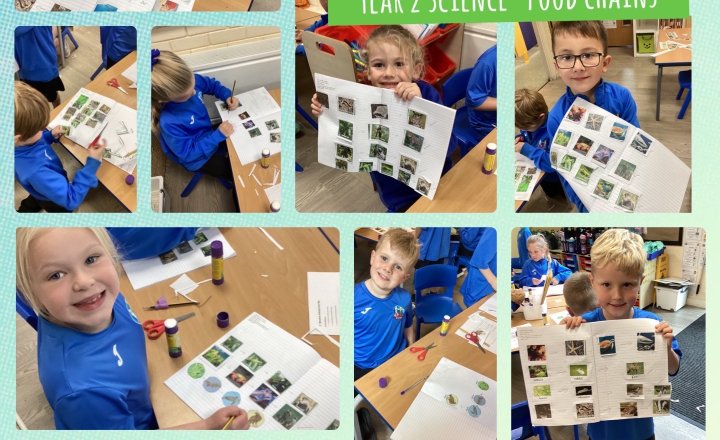
Year 2 Science- Food Chains
Today in Science, Year 2 learnt all about food chains. They explored the key vocabulary producer and consumer, before enjoying the opportunity to construct their own food chains using animals and plants from a range of habitats, including woodlands, rainforests and oceans.
.jpeg)
Science in Year 4
As part of our Science unit this half term we have been covering Living things and their habitats. This week we completed research using the Chromebook’s to identify how an animal is adapted to its habitat. The children worked in pairs to identify this key information on either a flamingo or a tortoise. You can see from the finished pieces that the children worked extremely hard and produced some fantastic final pieces.
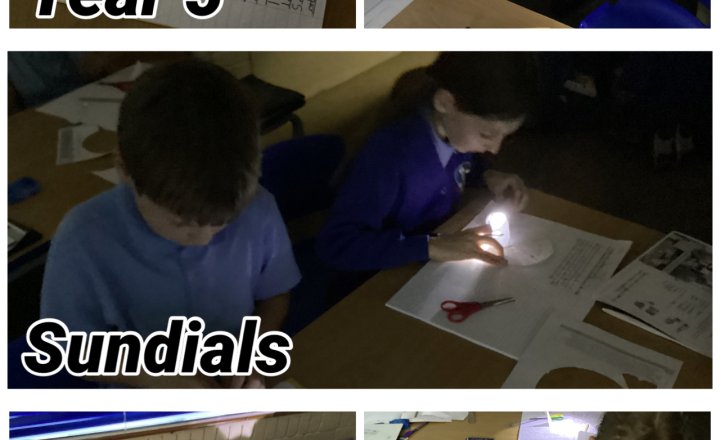
Year 5 - Science
In science, we explored how the rotation of the Earth on its axis creates day and night, with different sides of the planet facing towards and away from the Sun. This creates the impression that the Sun is travelling across the sky, rising in the east in the morning before setting in the west in the evening. To investigate this phenomenon, the children made their own sundials, using a torch to mimic the Sun’s transition from east to west. The placement of the shadows allowed us to mark different times of day on the dial.
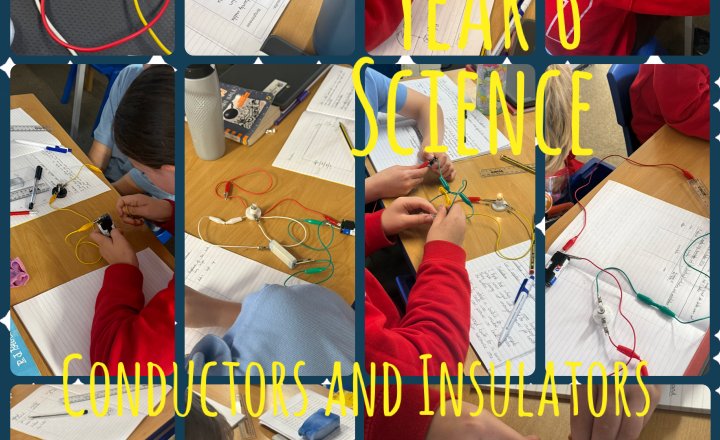
Year 6 - Conductors and Insulators
Today in science, Year 6 explored how different materials conduct and insulate electricity using simple circuits. The children tested a range of materials, making predictions before investigating whether each material allowed the electrical current to flow. The children carefully observed the circuits and recorded their results, developing their understanding of the difference between conductors and insulators.
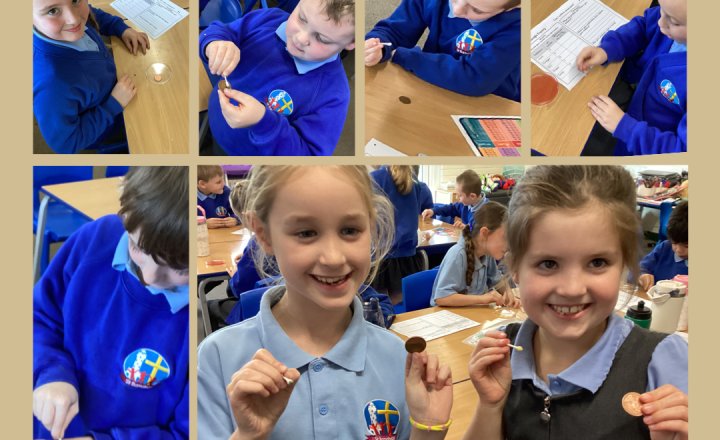
Year 3 - Science: Clean Coins and Conclusions
Last week in science, the Year 3 class were testing liquids with litmus paper to find out which were acidic and which were alkaline. This week, they used the liquids to soak some dirty coins in order to investigate which liquids were the best at cleaning. They then had to use their results to write a conclusion. They found out that the more acidic liquids were better at cleaning the coins. By the end, we had some lovely, shiny two pence pieces!
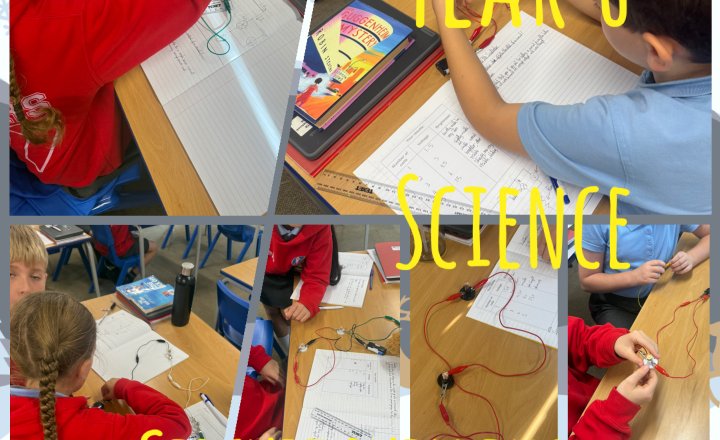
Year 6 - Building Circuits
Today in Year 6, the children built electrical circuits to investigate how adding more bulbs to a series circuit affects the output. They worked scientifically by making predictions, carefully constructing their circuits and observing how the brightness of the bulbs changed as more bulbs were added. The children then discussed their findings and used their observations to explain how the number of bulbs in a series circuit affects the circuit’s output.
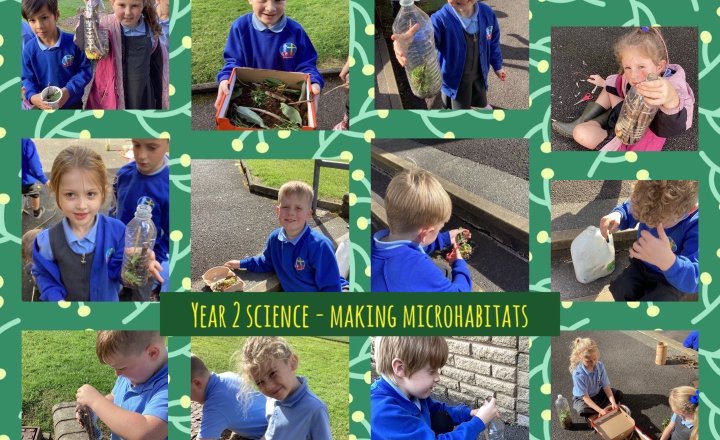
Year 2 Science- Microhabitats
Today in Science, Year 2 put their planning into action and created their very own microhabitats! They used a range of recyclable materials, including egg cartons, yoghurt pots, boxes and plastic bottles, and filled them with natural materials they found themselves. These included moss, sticks, bark, grass, flowers, soil and leaves. What a fantastic effort, Year 2! We’re looking forward to seeing which minibeasts come to visit and discovering the different creatures that make these microhabitats their home.
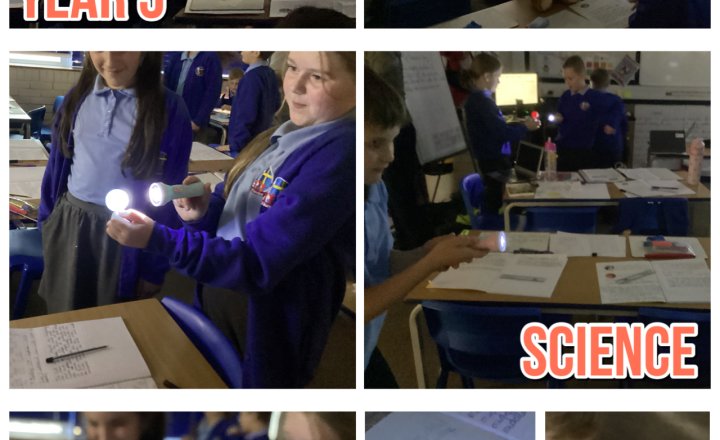
Year 5 - Science
In science, we looked at how the Earth moves through space and how this creates day, night and the seasons. After going through the concepts and vocabulary, the children used torches to mimic the light and heat from the Sun and table tennis balls to mimic the Earth. By rotating the ball on its axis, the children saw how sides faced towards and away from the light, creating day and night. Then the children moved the ball around the torch, with different hemispheres receiving different amounts of light over the course of its orbit, creating winter and summer.
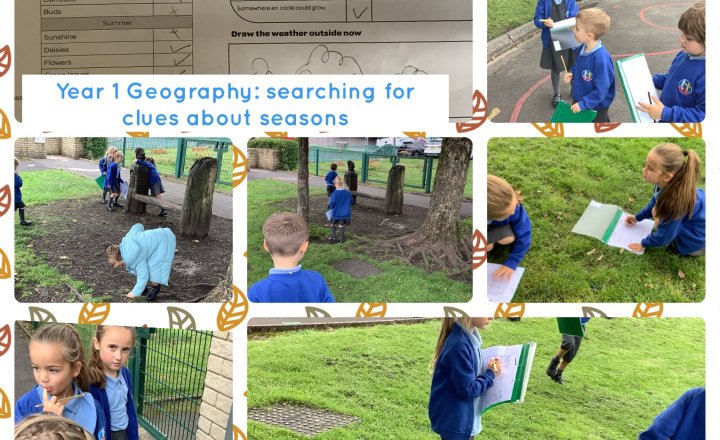
Year 1 Geography: Searching for clues about seasons
In Geography, we searched for clues to decide what season we are in. We looked for information about the colours of leaves, the weather and the plants. We were able to find some red and orange leaves, leaves on the ground and we had some windy and rainy weather which helped us to decide that we were in Autumn.
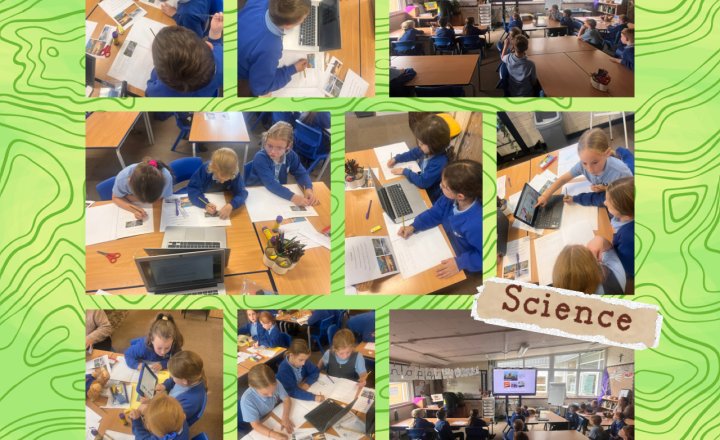
Year 4: Science
This week in Science, we were spent time researching animal habitats.We focused on Polar, Ocean, Rainforest and Grassland habitats and the children used their Chromebook’s to access the internet and answer the following questions: What animals live in your habitat? what plants live in your habitat? What is the climate like in your habitat? What are the conditions like in your habitat? The children worked really well in mini groups in order to collect the information, recording this in their books.
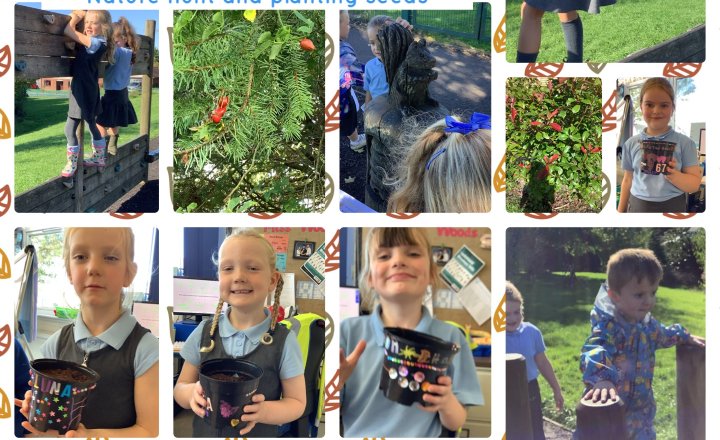
Little Gardeners Club: Nature hunt and planting seeds
Our first session of Little Gardeners Club was so fun. We started by going on a nature hunt to find common sightings like red, brown and yellow leaves, a spider web, a pinecone, something prickly, a log and so many more. The children ticked off their items and all helped one another to find things. Then we had a quick play on the trim trail before we were back inside ready to plant seeds. The children each had a plant pot to decorate with letter stickers, gems and paint pens. Then each child put compost into their plant pot and planted a bean seed. We discussed what a plant needs to grow and survive. They are so excited to see them grow!
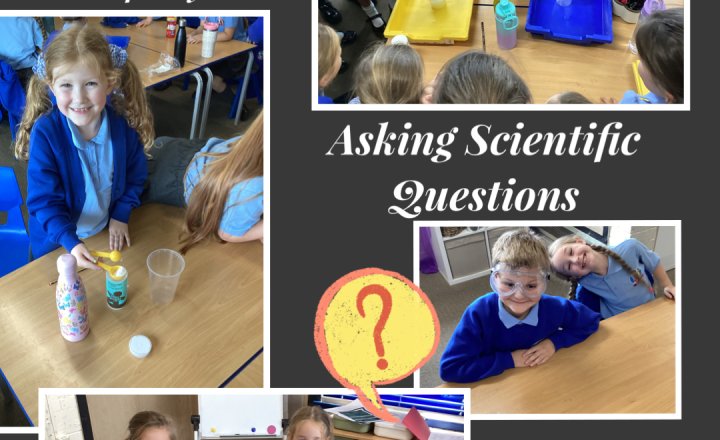
Year 3 - Working Scientifically - Asking Questions
This week we started a very exciting science unit on scientific enquiry. Our first lesson involved identifying and writing scientific questions about chemical reactions. We mixed vinegar with bicarbonate of soda and washing up liquid and observed the effects. After the experiment, we learned how to answer our questions based on what we observed.
.png)