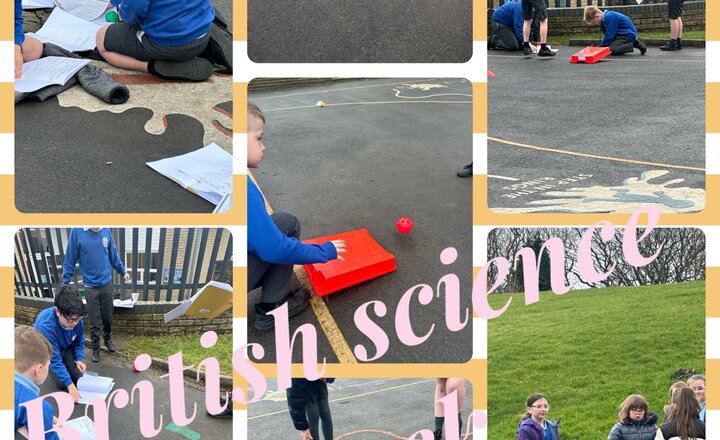
Year 5 - British Science Week
For this years science week year 5 have been focusing on time. Our class looked at the force of friction and its uses within the wider world. The children tested four balls on rough surface and recorded the time it took them to reach a given target. The children drew on many conclusions on the speeds of each ball and how much friction was being exerted. This then determined how quickly and smoothly each ball reached their target.
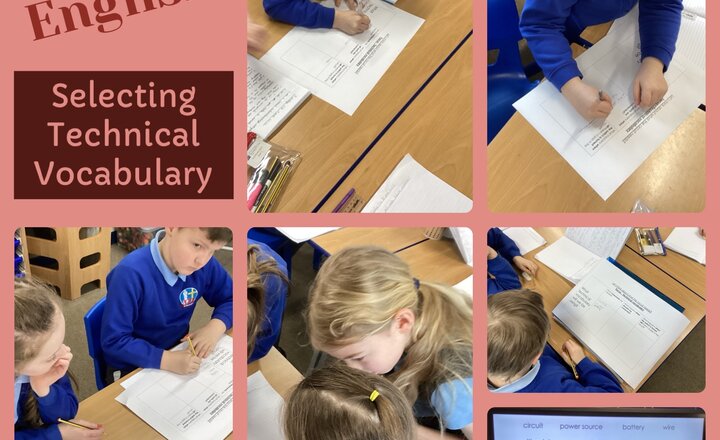
Year 4 - English: Technical Vocabulary
Our English unit is linked to our science work at the moment, which falls perfectly in line with British Science Week! In Year 4, we are currently learning to write an explanation text about how circuits work. In this lesson, we were selecting key scientific vocabulary to answer a specific question. We then used our chosen vocabulary to craft a paragraph to explain what a circuit is and how it works.
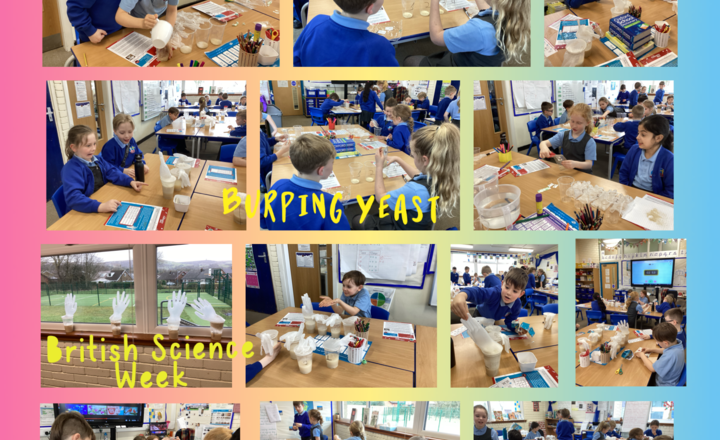
Year 3- British Science Week- Time- Experimenting Yeast Burps every 15 minutes for 45 minutes.
The future Scientists of Year 3 had a fun science project for British Science Week, all about making electricity without burning coal. Working in pairs, they had four cups, each numbered 1 to 4, with yeast added to all of them. Cup 1 got 150ml of cold water, cup 2 got the same amount of warm water, cup 3 had warm water and a teaspoon of salt added, and cup 4 had sugar and 150 ml of warm water. They secured the cups with gloves and rubber bands to keep air in. They observed what was happening every minute 15 minutes for 45 minutes to see how things changed over time. Before experimenting, Year 3 predicted what might happen. Some thought the yeast would turn into flour or make the gloves fly! But they were amazed by what happened. As time passed, the yeast made a gas called carbon dioxide. This gas filled the gloves, making them blow up like balloons. Cup 4 had the most respiration because it contained sugar. As the yeast consumes the sugar, it releases carbon dioxide gas. With nowhere else to go but upwards, this gas gradually inflates the glove. The whole experiment wowed the kids! It was fun celebrating science during British Science Week, with a theme of time.
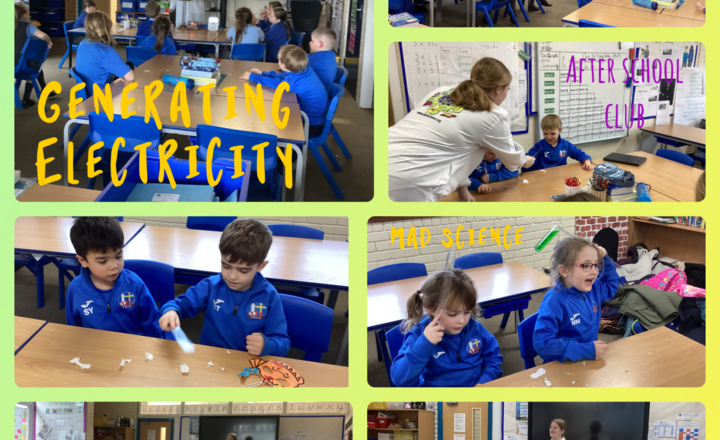
Mad Science After- School Club-Watts-Up!
The future Scientists had a blast this afternoon: They learned about static electricity, exploring its properties and involvement in natural phenomena. They also created indoor lightning and conducted hair-raising experiments with an electrostatic generator.
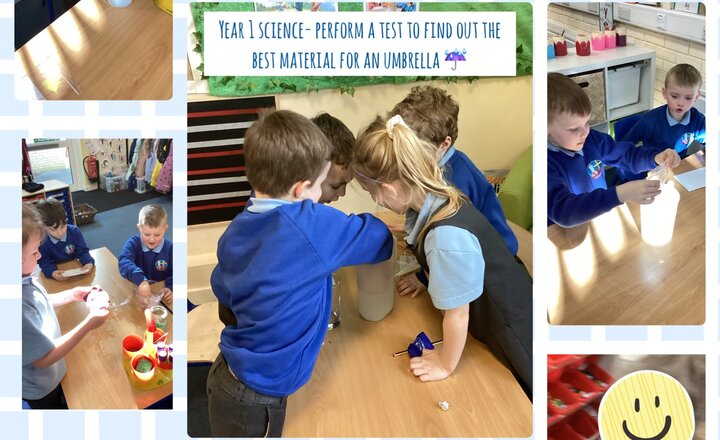
Year 1 Science- Perform a Test
In their science lesson this week, Year 1 performed a test to find out whether a material was waterproof or absorbent. This was because they wanted to know which material would be the most appropriate for an umbrella. Out of the materials that they tested, four of them were waterproof which meant that they could potentially be a suitable material for an umbrella. The next step was deciding the other properties that the material needed to be so that it was suitable for an umbrella. Year 1 decided that the material needed to be flexible, strong and light as well as waterproof. In the end, they came to the conclusion that plastic would be the best material.
.jpeg)
Year 4 English - Non-Fiction - Explanation Texts
Today we started our new English unit with a focus on Non- Fiction -Explanation texts. We identified the key features within two texts looking at subordinating conjunctions. This unit links well to both of our science and DT units as we can work towards writing an explanation text on how a circuit works.
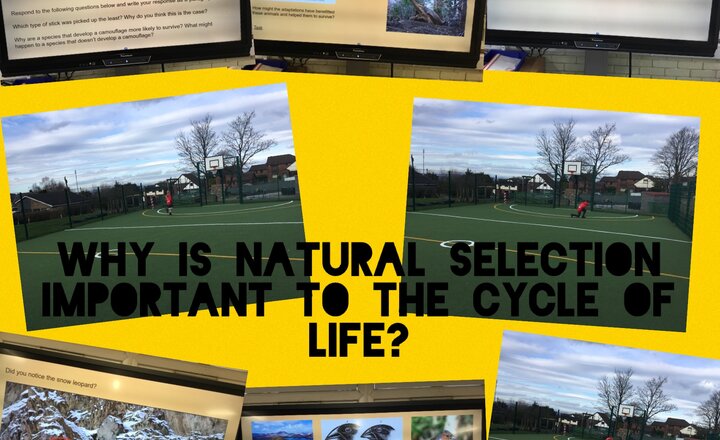
Year 6 Science
This week, we started our new unit in Science, which is all about evolution and inheritance. We looked at the term ‘Natural Selection’ and discovered that if an animal is unable to adapt to its surroundings, it is more likely to become extinct. We then carried out an investigation involving some matchsticks on the MUGA. This demonstrated the benefits of being camouflaged and how animals are more likely to survive if they blend into their surroundings. The green matchsticks were picked up the least; however, numerous multicoloured matchsticks were not so lucky as they were gathered by our predators.
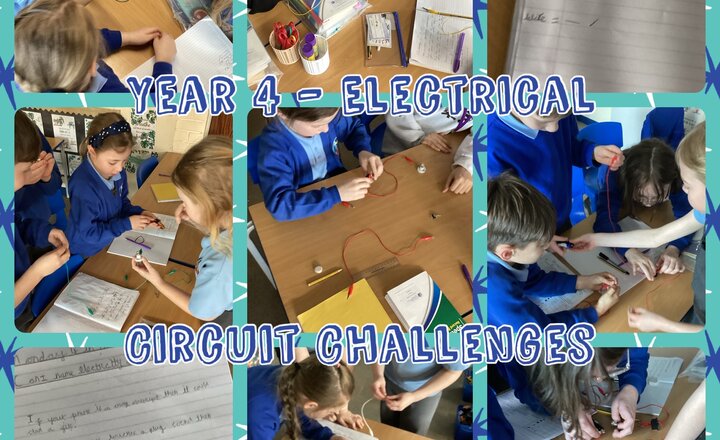
Year 4 - Science: Electrical Circuit Challenges
In science this week, the Year 4 children have been learning the names and symbols of different components in a series circuit. They drew the scientific symbols and then were challenged to build different circuits based on key questions; ‘Can you make the bulb light up?’, ‘Can you make the buzzer sound?’, ‘Can you control when you want the circuit to work?’
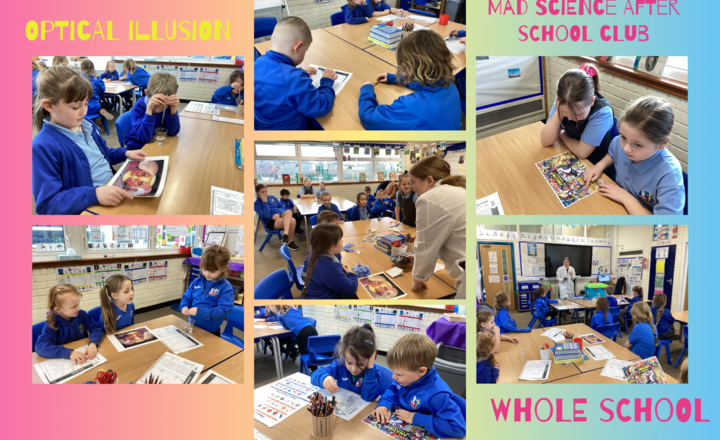
Mad Science After- School Club- Optical illusion
Today, the children in the science club observed changing images firsthand through a camera obscura while delving into the fascinating realms of optics, reflection, and sight.
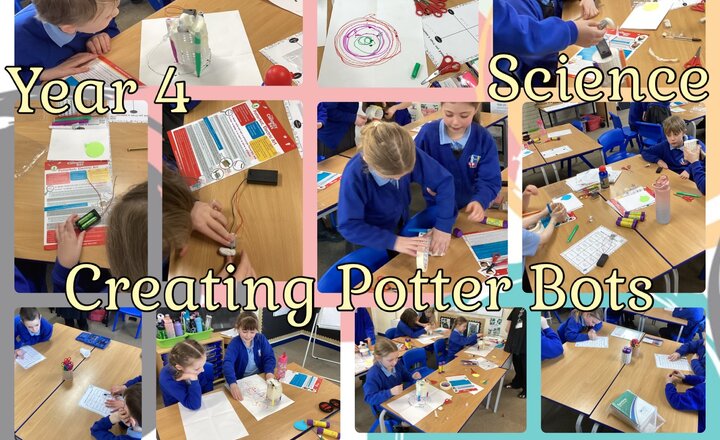
Year 4 - Science: Creating Potter Bots
We began our new science unit this week with a hands on lesson. To kick off our learning about electricity we created our own potter bots. These were little robots containing a motor and batteries, and had felt tip pens for legs. The idea was to create a potter bot that would use a pivot arm to push it across a page and draw a picture. The class had great fun working in pairs to create and test their bots with fantastic results.
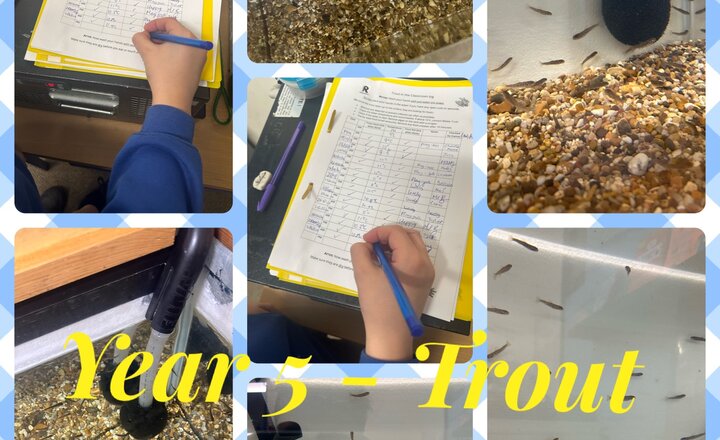
Year 5 - Trout
As part of Year 5 RotaKids, the children in year 5 have been learning about and looking after trout. This initiative is support by the River Ribble Trust who have been supporting our class throughout our journey. The children have been looking after the trout from the first day when the eggs were planted in the class tank. Throughout their life cycle the trout are now at the fry stage in which the children feed them on a regular basis. Once at a suitable size, the trout will be released into our local river to support and aid the life cycle process.
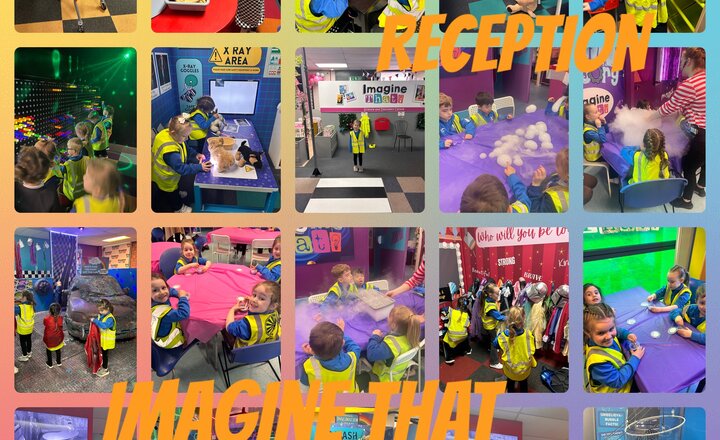
Reception: Imagine That Educational Visit
Wow, what a fantastic day our Ducklings had today. We visited Imagine That in Liverpool and had lots of fun! The children did lots of experiments with dry ice, made magical snow and made slime too. They used their imaginations in the roleplay area, painted a car, explored the creative area and made their own magnets. They were well behaved and represented the school beautifully!
.png)