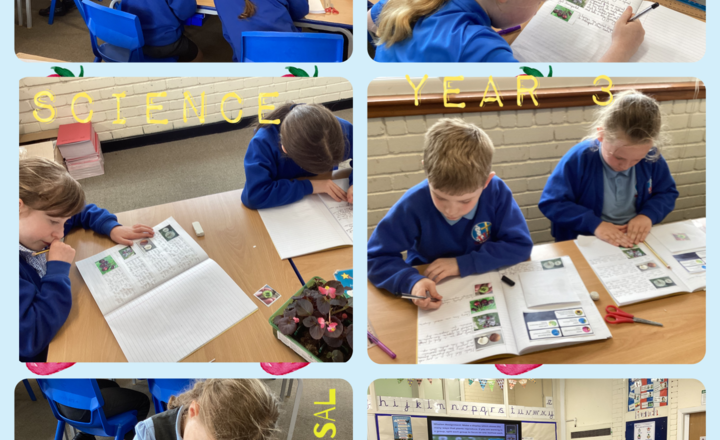
Year 3- Science- Use scientific language to describe how plants reproduce.
This afternoon in science, Year 3 investigated how seed dispersal helps some plants reproduce. They were able to explain that dandelions use the wind to spread their seeds, cherry trees rely on birds to eat the seeds and then disperse them through their droppings, wild cucumbers burst to scatter their seeds explosively, burdock plants use their spikes to hitch a ride to a new location and coconut trees use water dispersal to disperse their seeds by letting them fall on the beach and when the tide comes in, the tide picks up the coconut and carries it to another to grow.
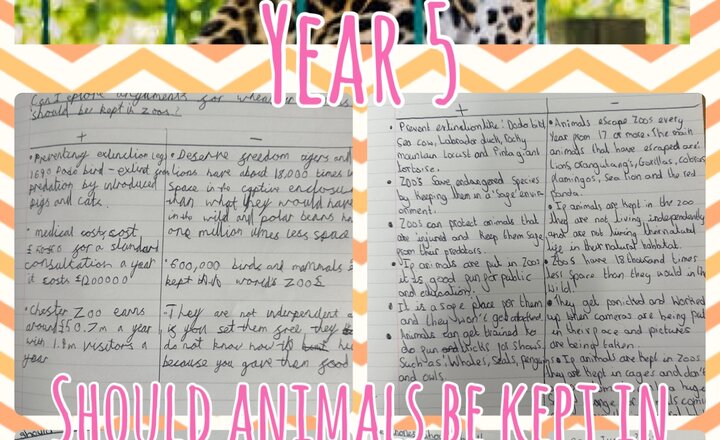
Year 5 - Balanced Arguments
Year 5 have begun researching one of the most debated topics - should animals be kept in Zoo’s? The children found out a number of alarming facts that are against Zoo’s such as: that animals have 1800 times less space in zoos than in the wild and animals are not evolving the way they should. But found many compelling reasons why animals should be kept in zoos such as: they live longer, stop species becoming extinct and it can advance medicine. The children will use these arguments to create their own balanced argument.
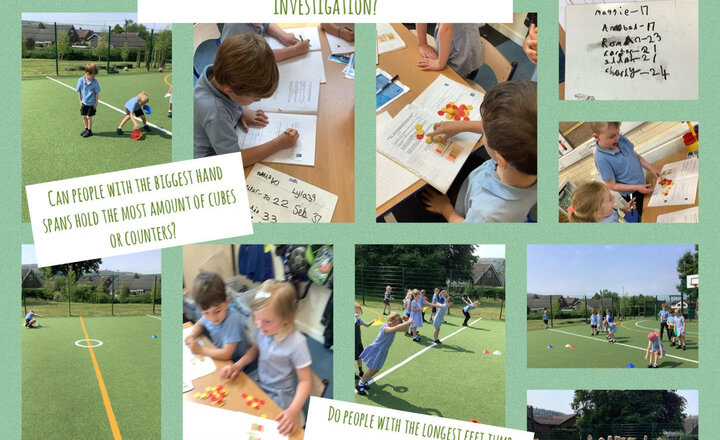
Year 1 Science- A Pattern Seeking Investigation
This week in science, Year 1 carried out a pattern seeking investigation. In groups of 5 or 6, they had to investigate whether the children who had the biggest hand spans could hold the most amount of counters or cubes and whether the children who had the longest feet could jump the furthest. Some teams found this to be true and other teams found this to be false. Therefore, Year 1 decided that overall as a class there can sometimes be a pattern/link between these two factors but not always. They said that they would like to try out some further investigations such as can people with the biggest hand span throw the furthest? Or can people with the longest feet kick the furthest?
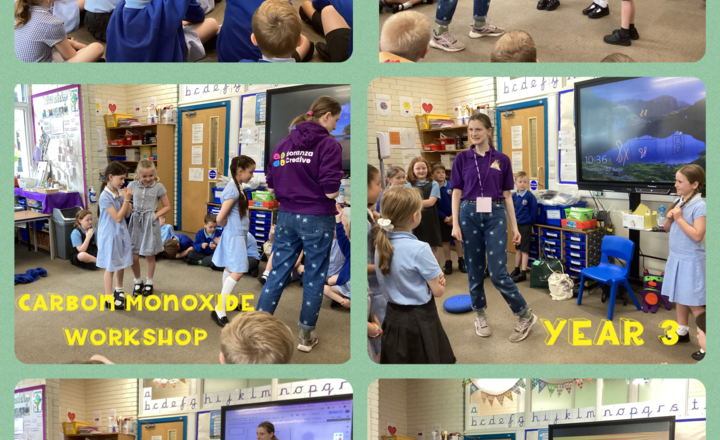
Year 3 - Carbon Monoxide Workshop- Year 3
Emily delivered a workshop today as part of the CO Safety Assembly and Class Workshops, designed to raise awareness about the dangers of carbon monoxide (CO). Year 3 students learned a lot about this invisible and dangerous gas, known as the hidden danger because it can't be seen, heard, smelled, tasted, or touched. The children enjoyed the video and fun activities and are ready to spread the word as Safety Assistants.
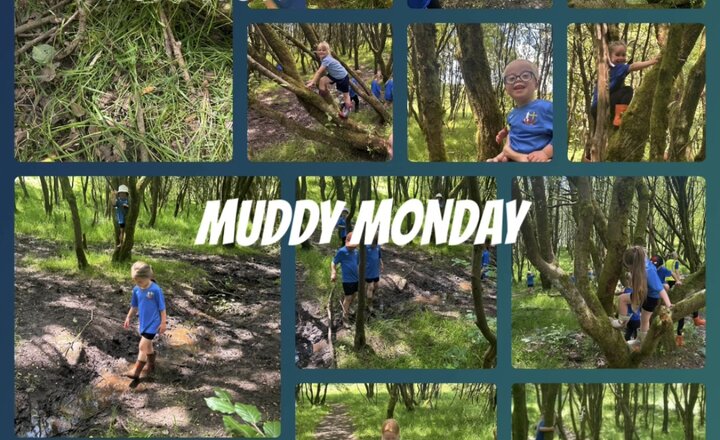
Reception: Muddy Monday
Reception had a very busy forest school session today. They enjoyed exploring in the shaded area of Jacks Keys. They found a fox hole and enjoyed exploring and creating their own storylines. They made houses for different animals and roleplayed a story about a fox coming out during the night. Some of our children climbed trees and managed to climb higher than usual. We are so proud of the children and love seeing how far they have come. Super perseverance, challenge and determination was seen from them all!
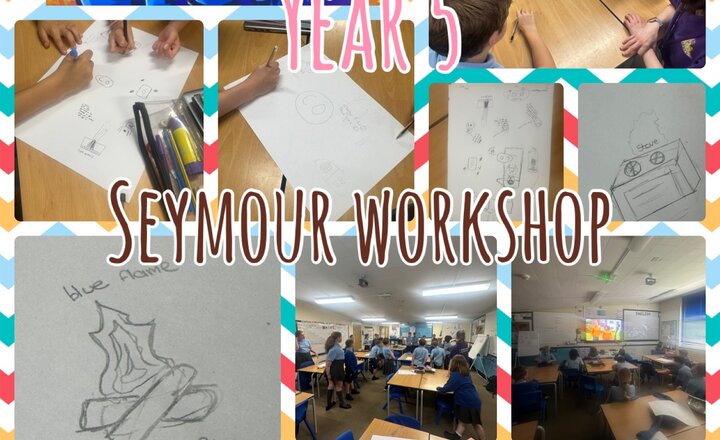
Year 5 - The CO2 Crew Workshop
Today, Year 5 took part in the Safety Seymour workshop. The children discussed and explored the dangers of carbon monoxide and discussed how they can spot it in their homes as this is something that cannot be detected by our senses. The children explored a variety of ways that if carbon monoxide is detected, what can be done to mitigate the spread of the harmful gas.
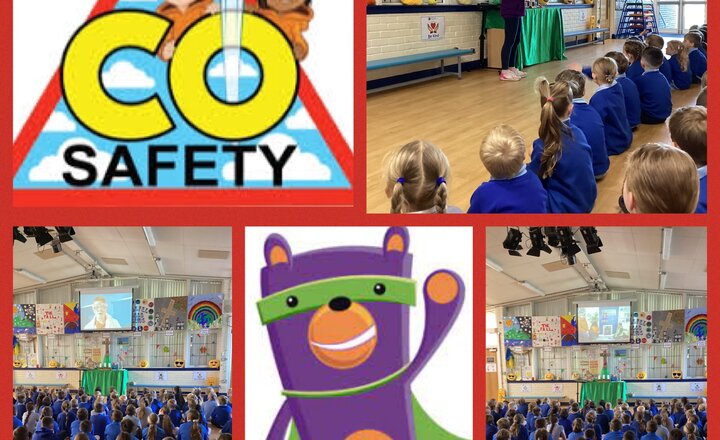
Whole School CO Safety Worship
Steph visited us to talk about how we can stay safe at home. We watched a video of Safety Seymour and the CO crew and learned about the dangers of CO - Carbon monoxide, a poisonous gas that can’t be detected by our senses alone. We have to be careful if we have gas fires or log burners and check them yearly to make sure they are clean. If we suspect there is a CO leak, then we must contact the gas emergency services to come and check. We must also check our boilers and gas cookers for any changes - if the flame turns floppy and orange it means CO is being produced and a gas safe engineer needs to look at it. Always get an adult to turn it off straight away. If we breathe in CO we might feel unwell and it can be very dangerous so we must remember the 3 safety steps: have our appliances tested regularly, look for signs and symptoms of feeling unwell and install a CO alarm at home.
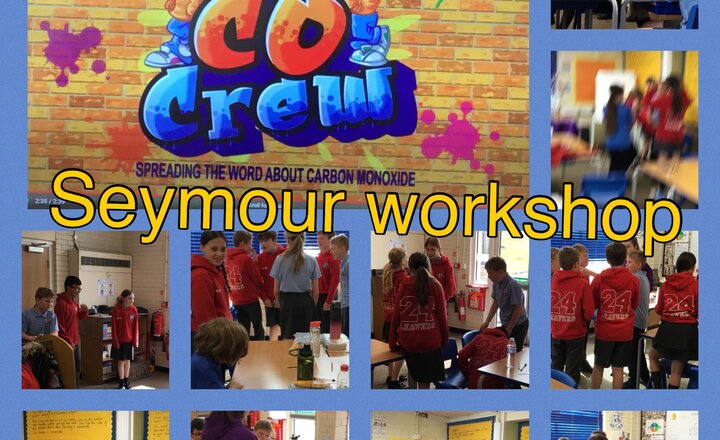
Year 6 - Safety Seymour
Today, Year 6 took part in the Safety Seymour workshop. The children discussed and explored the dangers of carbon monoxide and discussed how they can spot it in their homes as this is something that cannot be detected by our senses. The children explored a variety of ways that if carbon monoxide is detected, what can be done to mitigate the spread of the harmful gas.
.jpg)
Year 1 Science- Identifying a Variety of Common Wild and Garden Flowers
This afternoon, Year 1 went on a walk to identify a variety of common garden and wild plants. For the garden flowers, Year 1 found lavender, roses, pansies, marigolds and petunias. Roses were certainly the most popular garden flower that they found. They also spotted lots of wild flowers including buttercups, daisies, poppies, foxglove, dandelions, ivy, cow parsley, stinging nettles and forget me not. Well done Year 1 for super listening and identifying!
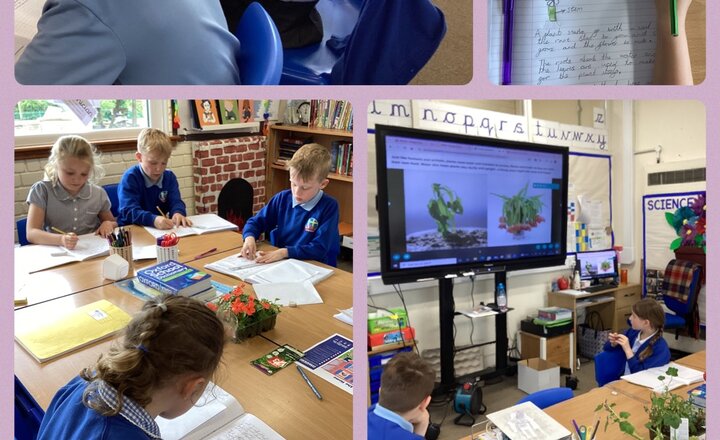
Year 3- Science-identify and describe the functions of different parts of flowering plants and flowers
This afternoon, Year 3 began their unit on plants. Each group was assigned a specific plant to research. Using secondary sources, they investigated the functions of their plant. They highlighted key scientific terms in their writing, such as photosynthesis, nutrients, temperature, light, sun, water, absorbs and transports.
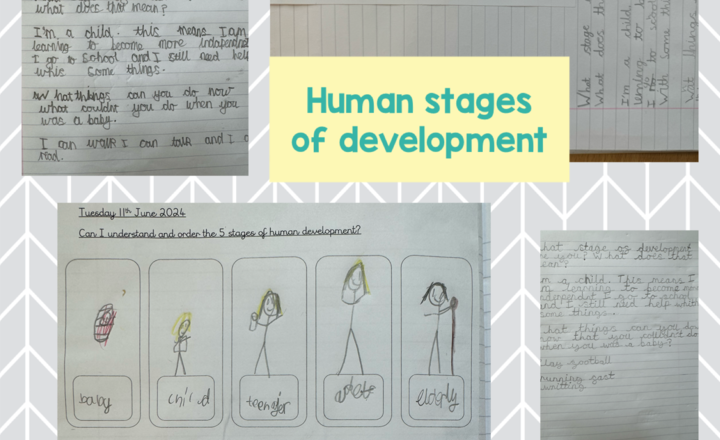
Year 2 - Science
We started our new science topic this week which is looking at different life cycles and stages of development. To begin with, we explored the 5 main stages of human development. We ordered them and discussed what changes we see as we move through these stages. We created a list of things we can do now in the child stage of development that we couldn’t do in the baby stage of development.
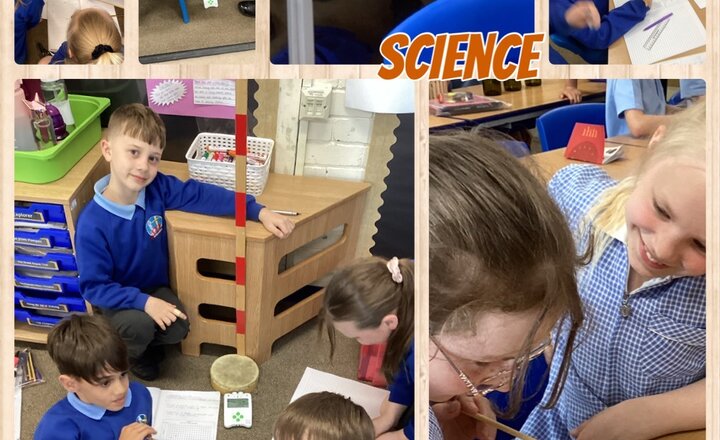
Year 4 - Science: Sound
We finished our science unit on sound in Year 4 this week. For our final extended session we investigated volume and amplitude. We dropped a marble from different heights on to a drum and described the loudness of the sound. We also explored pitch and frequency on a range of instruments. We found that a higher pitch was created when the surface was shorter.
.png)