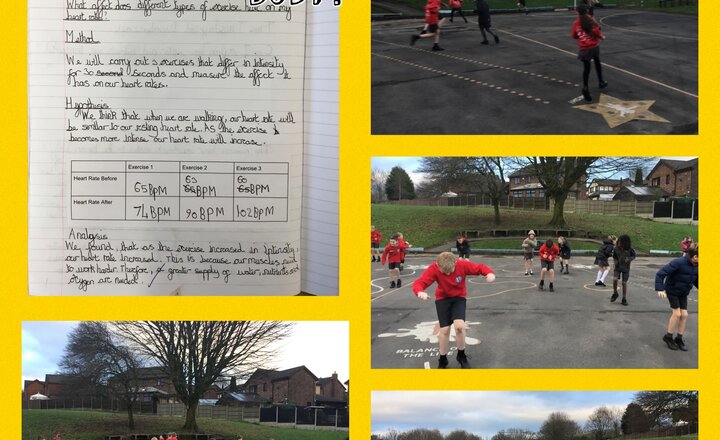
Year 6 - What affect do different types of exercise have on my body?
Year 6 looked at the effect different types of exercise had on their heart rate. We started by taking our resting heart rate and then gradually increased the intensity of the activity we took part in. We found out that as the intensity of the activity increased, our heart rates also increased. Based on our previous learning, we concluded that, because the intensity of the activity increased, the more our muscles demanded water, nutrients and oxygen.
.png)
Whole School- Design Technolgy
This half term, our students have been busy creating a range of designs in Design Technology. From Reception's wooden Christmas decorations to Year 6's electronic steady hand games, our children have showcased their imaginative and creativity skills. Year 1 brought their imaginations to life, creating interactive moving storybooks using slider mechanisms. Year 2 developed their sewing skills, designing and creating a range of Christmas puppets. Year 3 designed and made festive pouches, perfect for holding small gifts or treats. Year 4 stitched up Christmas stockings, ready to hang by the chimney, finally, Year 5 created festive cushions. These creations were showcased and sold at our Christmas Fayre. We're incredibly proud of the hard work and imagination our students have demonstrated in these festive DT projects.
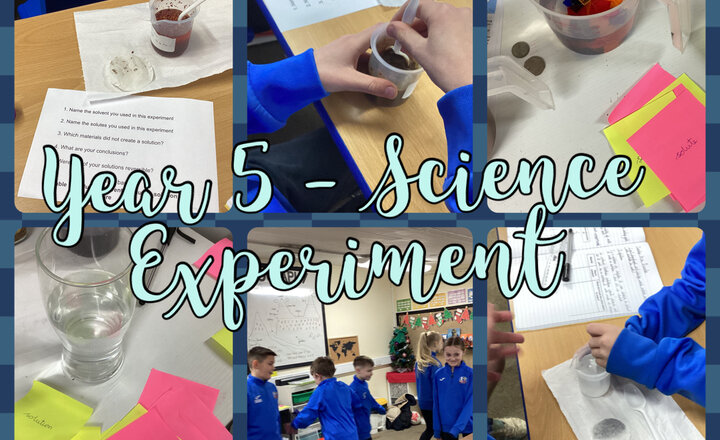
Year 5 - Science Experiment
Today, the children participated in a science investigation to test the differences between solutions, mixtures, and solvents. They began by making predictions about which substances would dissolve and which would not, forming mixtures. During the experiment, the children tested sugar, coffee, and tea leaves by mixing them with water. The children observed how sugar dissolved completely, creating a clear solution, while coffee dispersed evenly but left a cloudy mixture. Tea leaves, however, did not dissolve, instead floating or sinking to the bottom, forming a mixture. After conducting the tests, they carefully recorded their observations and results, comparing them to their initial predictions.
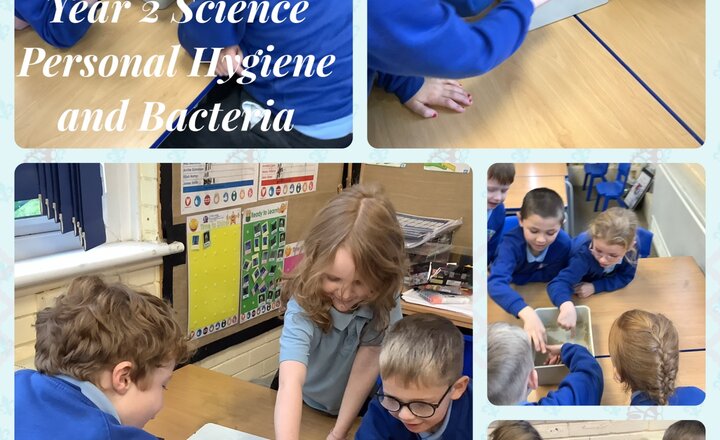
Year 2 - Science - Personal Hygiene and Bacteria
Today for Science we have had an experiment to see how washing our hands can help to stop the spread of germs. We used pepper to represent germs and sprinkled some into a bowl of water, then, the class used dish soap on their fingers to repel the “germs”.
.png)
Year 3- Science - Functions of a muscle
Today in Science, Year 3 matched animals to their skeletons and investigated the structure and function of muscles, including their classification, location, and role in movement. As part of their learning, they created a model arm using cards and elastic to demonstrate how muscles work. By using cards for the bones and elastic bands to represent the tendons, the children were able to visualise how muscles pull on bones to create movement.
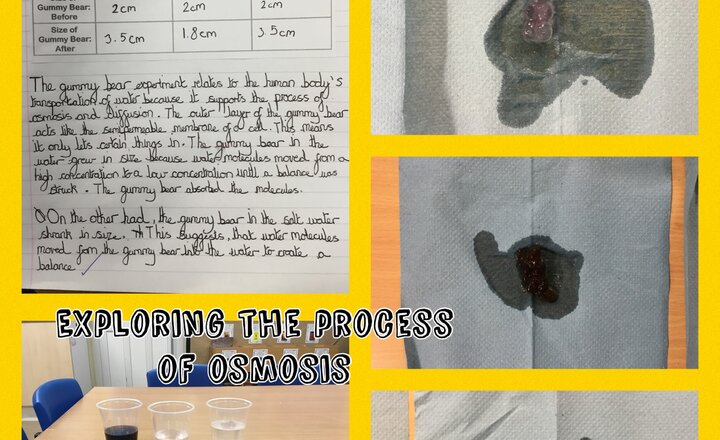
Year 6 - Exploring osmosis and diffusion
Today, Year 6 explored how our bodies get the water and nutrients they need through the process of osmosis and diffusion. To highlight these processes, we soaked gummy bears in 3 different liquids (Coca Cola, water and salty water) for 24 hours. We discovered that the gummy bear in the water grew in size because the water molecules moved from a higher concentration (water), to a lower concentration (gummy bear) which is exactly what happens in our bodies. The water in our blood would move into our cells in order to keep us hydrated. However, the gummy bear in the salt shrank. This tells us that if there is too much salt in our blood stream, the water will actually move away from our cells, where it is needed, and back into the blood to restore balance. As a result, we can become dehydrated and our cells become less efficient.
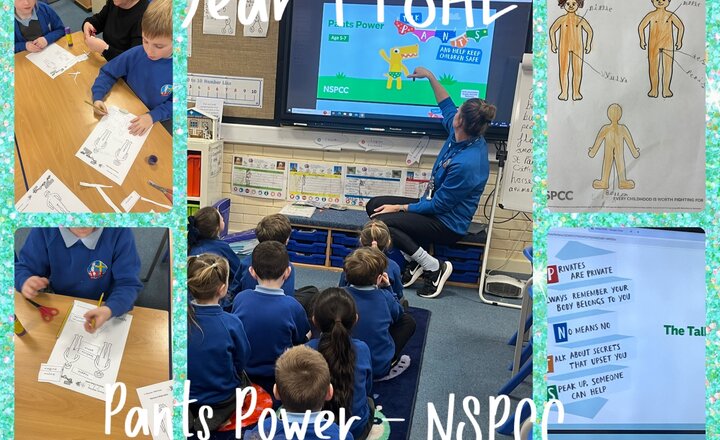
Year 1 - PSHE Pants Project
Today in PSHE we learned all about Pants Power and staying safe. We discussed who safe adults are that we can talk to both in school and at home. We then labelled parts of our bodies with the anatomically accurate labels. The children worked extremely hard to label their bodies and also remembered The Talk Pants Rules!
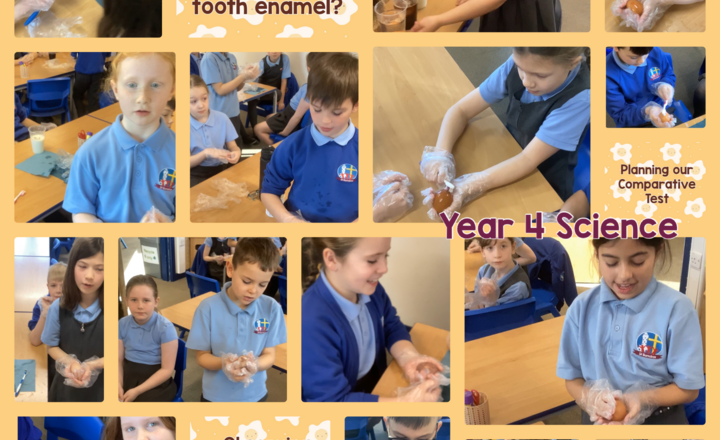
Year 4 - Science: Planning a Comparative Test
This week, our Year 4 super scientists learned how to plan a comparative test. They were interested to find out the effects of different liquids on our teeth. We used eggs to represent tooth enamel and we had 6 different liquids to test: water, milk, vinegar, coffee, cola and cordial. An egg was placed into a cup of each liquid and left for two days. After two days, the children removed the eggs from the liquids and examined them, discussing with their partners any observations which they noticed. They then brushed the eggs for two minutes with toothbrushes, and then they made their final observations. Next week, we will discuss the results and debate which liquid they think would cause the most damage to our teeth.
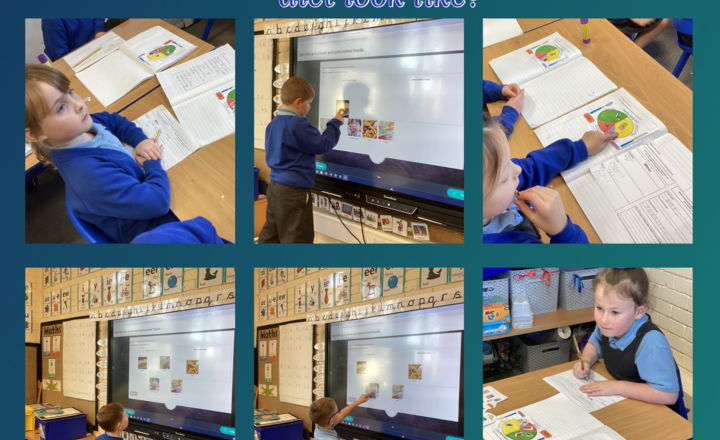
Year 2- Science- What does a healthy balanced diet look like?
This afternoon, Year 2 scientists recapped the five food groups and expanded their knowledge of different food types. We explored the advantages of fresh foods and discussed the advantages and disadvantages of pre-cooked and processed foods. Some children participated by using the interactive board to categorise food items. We had a great discussion about processed foods like canned fish and popular choices like McDonald's and pizza. For their mission assignment, the children created healthy meal plans for breakfast, lunch, and dinner.
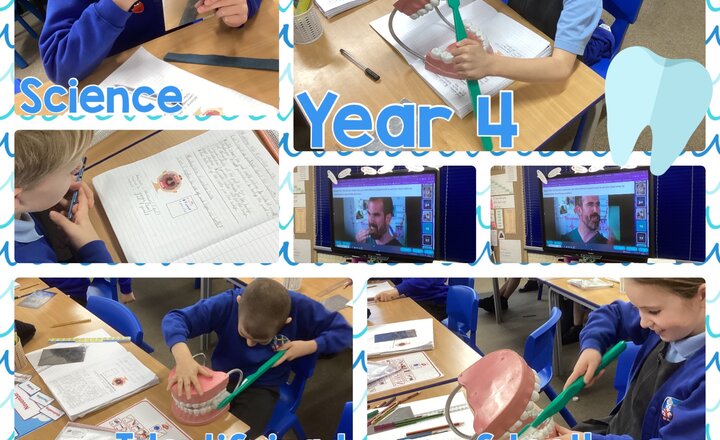
Year 4 - Science: Teeth
Our current science topic has definitely got the Year 4s buzzing. This week we explored our own teeth using mirrors, counted them with our tongues, learned about the different types of teeth and then recorded our findings on a diagram using a key. We watched a video of an investigation, which demonstrated what would happen if we had a mouth full of just one type of tooth and we wrote about the functions of each tooth type. There was even enough time to recap tooth brushing habits: two times a day for two minutes, tickling every tooth!
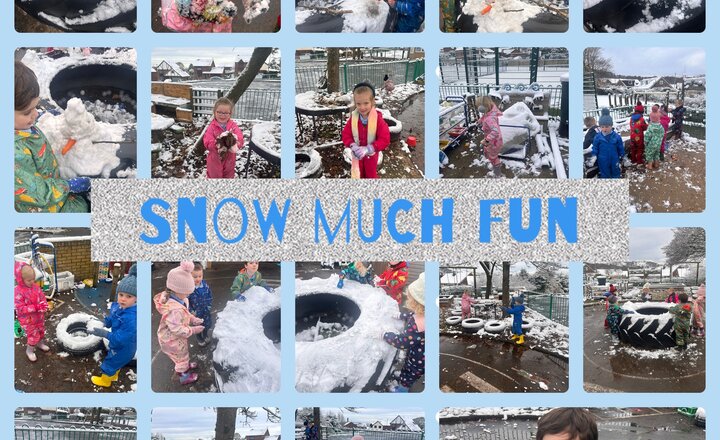
Reception: Exploring the Snow
Our Reception children enjoyed exploring the snow today. They worked together in small groups to build snowmen! They collected resources for the arms and they all had carrots for their noses. The children also found some icicles so we looked closely at them and how they had formed. It was also wonderful to look around at the winter sight and really feel the snow too. Our world is beautiful in all types of weather and what a treat we all had this morning.
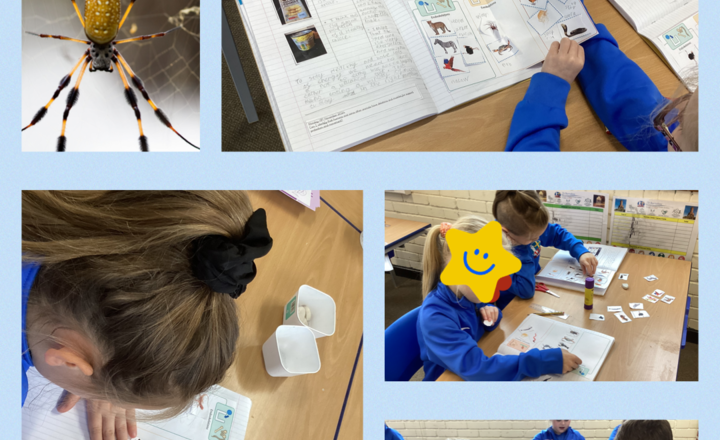
Year 3 - Science- Identifying which animals have an endoskeleton, exoskeleton and a hydrostatic skeleton.
Today, Year 3 scientists explored the different types of skeletons: endoskeletons, exoskeletons, and hydrostatic skeletons. Using presentation slides, they researched animals to discover which kind of skeleton they have. They also learned that while these skeletons are very different in structure and function, they all provide support and protection for the animal's body. Each type of skeleton has its advantages and disadvantages, depending on the animal's environment and lifestyle.
.png)