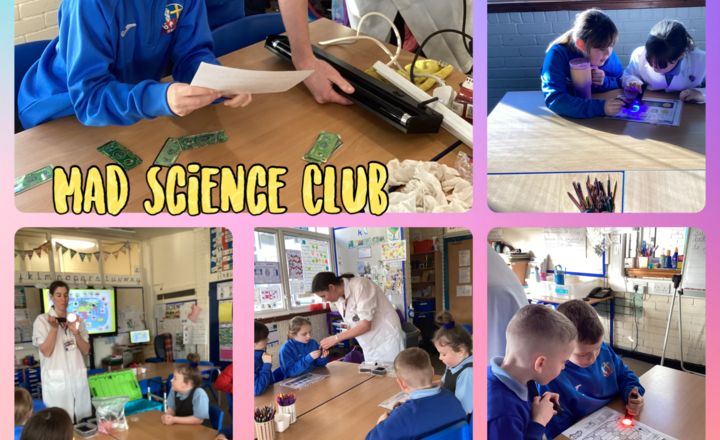
Mad Science After School Club- Glow Show
Today in Mad Science After-School Club, our future scientists explored how we see light and how it interacts with different objects. They were amazed as they observed phosphorescence in action under UV light. They also discovered the fascinating secrets behind how real money is made and the special features used to prevent counterfeiting. The children were fully engaged and are now super keen to find out what exciting topic they will be exploring next week.
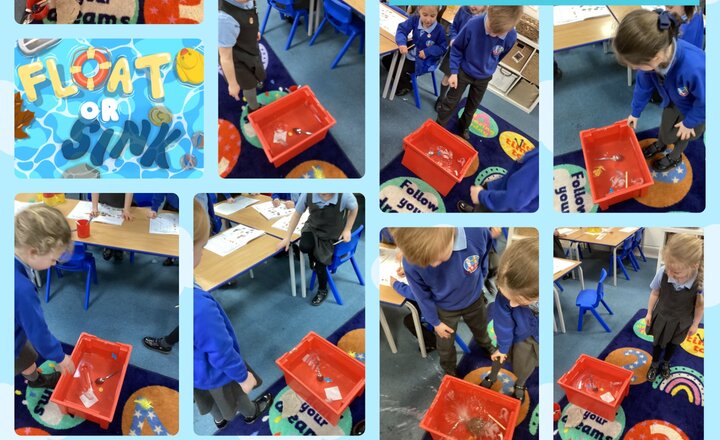
Year 1 Science- Floating and Sinking
Today in Science, Year one learnt about floating and sinking. They learnt that when something is floating, it can be described as buoyant and when something has gone beneath the surface of the water, it can be described as being submerged. Year 1 learnt that generally speaking lighter objects will float and heavier objects will sink. However, they also learnt for an item to float, it must contain trapped air. This was illustrated through the example of a submarine. When the submarine was filled with air, it floated on the water but when this air was replaced with water, the submarine sunk. We saw some examples of this in our own classroom too. When a glass bottle was empty and filled with air, it floated but when this air was replaced with water it sunk. Likewise, we experimented with some cotton wool which presented the same results. Year 1 also predicted and tested many other objects to see whether they would sink or float such as a feather, rock, paper clip, lolly stick and a metal spoon.
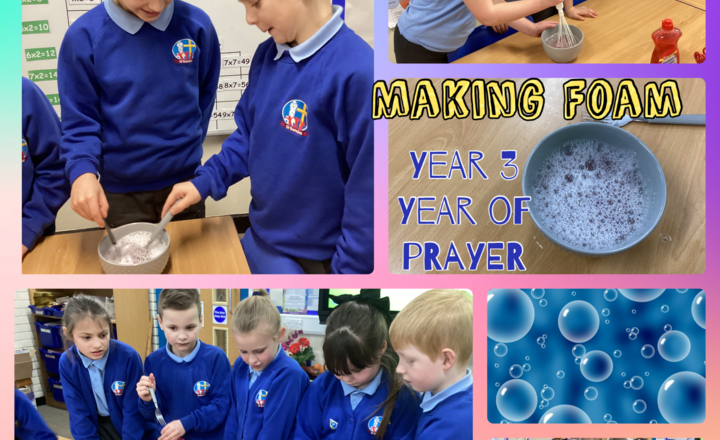
Year 3- Year of Prayer
This week, Year 3 explored the theme of foam as part of our "Year of Prayer." Mixing fairy liquid and hot water, the children experimented with different whisking techniques to create bubbles in the water. This activity provided an opportunity to give thanks to God for the gift of strength that enables us to move and participate in various activities.
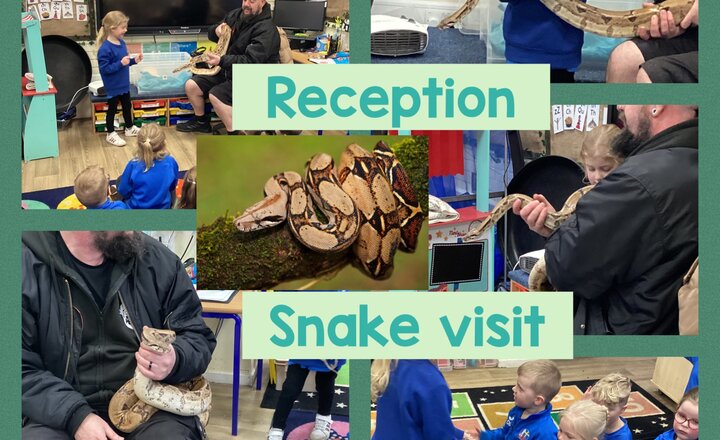
Reception-Snake visit
When we learnt about Chinese New Year, we learnt that it was the year of the snake. We had a visit from Fiia’s Daddy Adam today and their six year old boa constrictor Lucy. We found out lots of facts about Lucy and asked lots of questions we were interested to know what Lucy ate, where she came from, what she lived in and if snakes can swim. Fiia then kindly passed around a snake skin that Lucy had not long shed and we described how it felt to touch.
.png)
Year 2 - Making Sandwiches
Today, year 2 made their sandwiches they had designed in their DT work. We have used our knowledge of nutrition from our science work looking at the 5 good groups: Proteins, Carbohydrates, Fats and Oils, dairy and fruit and vegetables. When designing our sandwich we wanted it to be balanced and healthy. We aimed to use one item from every food group. When making our sandwiches, it was important to use the correct techniques to prepare our ingredients. We used the claw grip when cutting our vegetables and the bridge technique when cutting our sandwich in half. The final results were fantastic and the children were really proud of their work. I’m they they tasted as good as they looked.
Mad Science Assembly- Whole School
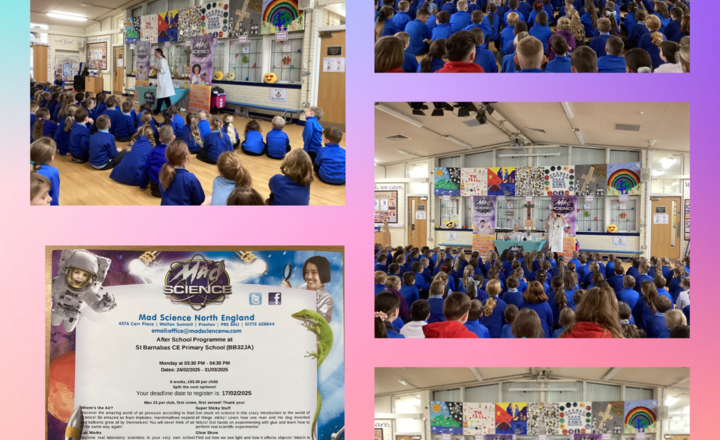
Today, the children were treated to a spectacular science show by Scientific Sarah from Mad Science. Sarah, a trained professional in handling chemicals and fire, emphasized safety throughout the engaging and interactive presentation. Throughout the show, children were encouraged to make predictions about what might happen next, fostering their scientific thinking skills. The children couldn't stop laughing, and there were so many "wow" moments throughout the presentation. The show featured three exciting experiments. First, the children were highly amused by "Egg Bert," a boiled egg that initially resisted entering a glass cylinder. After removing the shell (humorously referred to as his "clothing"), Sarah demonstrated how air pressure, a principle discovered by Jacques Charles, could be used to force the egg into the cylinder. Heating the air inside allowed the egg to slip in, and then, following Charles' suggestion, Sarah introduced cold air to pop the egg back out, to the children's great interest. The second experiment showcased red cabbage juice, a versatile pH indicator discovered by Robert Boyle in 1664. With the help of James, one of the school's science ambassadors, Sarah peeled and blended the cabbage. She explained how adding acid or alkaline substances to the juice would dramatically change its color, creating another captivating visual demonstration. Cassidy also assisted with this experiment. Finally, Sarah performed a "fire hands" experiment. Referencing Doctor Walter Snell's work on storing gas in tanks, she again stressed the importance of safety. Sarah then created three fire bubbles on her hand, a truly mesmerizing finale. Flyers are going home today with details about a new Mad Science After School Club starting next half term, on Monday, February 24th. Importantly, the topics covered in this club are different from those offered last year, so even if your child has participated before, they are guaranteed to learn something new! Registration letters, also going home today, contain full course details and information on how parents can register their children online. The deadline for registration is Friday, February 17th. Interested parents can register online on a first-come, first-served basis at https://northengland.madscience.org. The entire show was a memorable and educational experience for the children, and we're excited to offer this after-school opportunity.
Year 5 - Dance
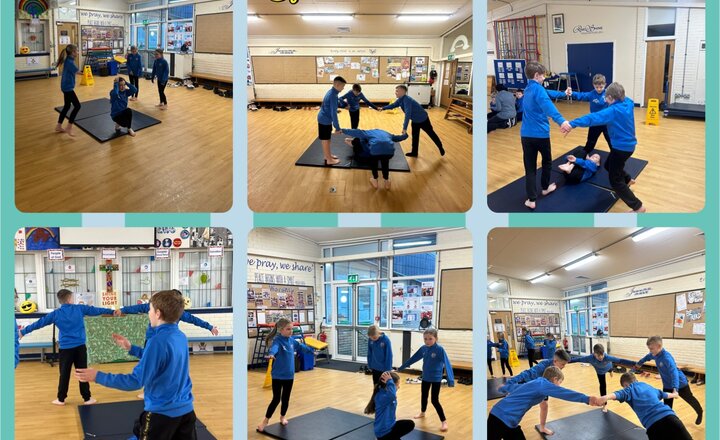
Year 5 continued their dance unit, exploring how movement can represent the unique characteristics of planets in our solar system. Using a variety of dance techniques—including levels, direction, speed and formation—they worked collaboratively to bring each planet to life. From the slow, heavy movements of gas giants to the sharp, quick steps reflecting rocky terrains, the children used creativity and expression to showcase their understanding of space through dance.
Meet Our Science Ambassadors
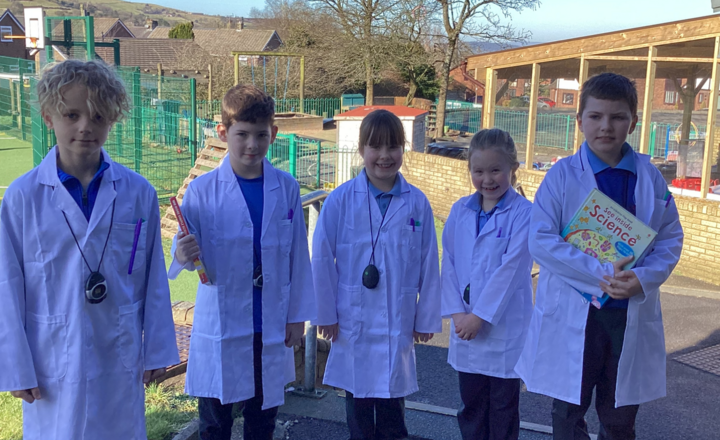
We are thrilled to announce that we now have five Science Ambassadors at our school! This exciting role was open to KS2 students, who had to submit an application explaining why they wanted to apply and what made them a strong candidates. We received an incredible number of applications, making the selection process very challenging, but we have now chosen our final five. Our ambassadors are passionate about science, whether it's through experimenting, discovering how things work, or inspiring others to develop a love for the subject. As part of their role, they will support teachers during science lessons, assist their peers with investigations, help set up experiments, and promote a love of science throughout the school. They will also play a key part in science events and initiatives, encouraging curiosity and excitement for learning. We are so proud of them and look forward to Noah, Mathew, James, Cassidy and Naomi shining in their new role!
Reception: Wonderful Writing
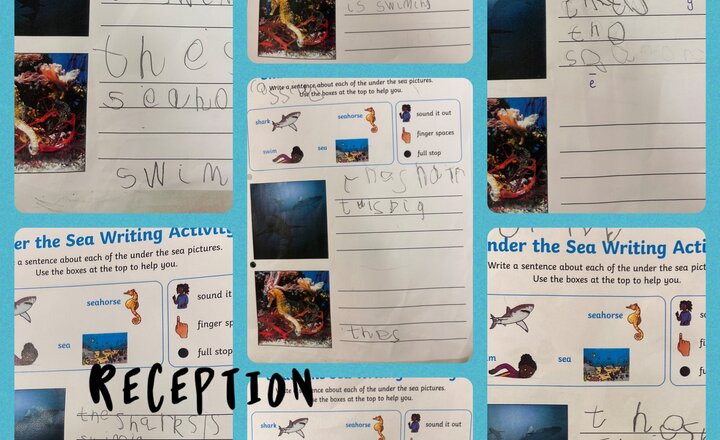
Our children have really enjoyed our under the sea topic. It is wonderful to see how much progress they are making with their writing. The children have been writing sentences independently in continuous provision- well done!
.png)
Year 3- Science -Why is doing different exercises regularly good for our health?
Today in Science, Year 3 scientists explored the question: Why is doing different exercises regularly good for our health? They discovered how activities like football and swimming benefit the body, while sleep plays a crucial role in supporting the brain. The class also learned that dogs need regular walks and fresh air to stay fit and happy, while giraffes exercise by walking long distances to find food and stretching to reach high branches. This investigation linked well with Children's Mental Health Week, reinforcing the importance of physical activity for both body and mind. Our Science Ambassadors, Cassidy and Naomi, took their roles seriously, proudly wearing their lab coats to support their peers. They provided guidance and assistance to those who needed extra support, ensuring that everyone could engage in the learning and investigation.
Year 4 - Science: Air Pollution Investigation
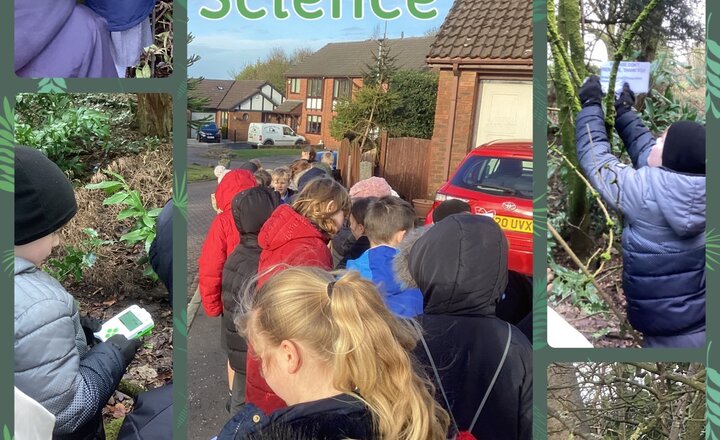
On Monday, the Year 4s went out into the local area to conduct an investigation into levels of air pollution. We placed cards smeared with Vaseline outside school, in a park, near a factory and close to the main road. We predicted that the cards that are nearer to traffic or plant machinery will be dirtier due to more air pollution being produced. We always used data loggers to measure the sound in decibels in these areas. The children predicted the noise levels in each area too. We will analyse the results next week and write up what we found out.
Year 4 - English: Debates
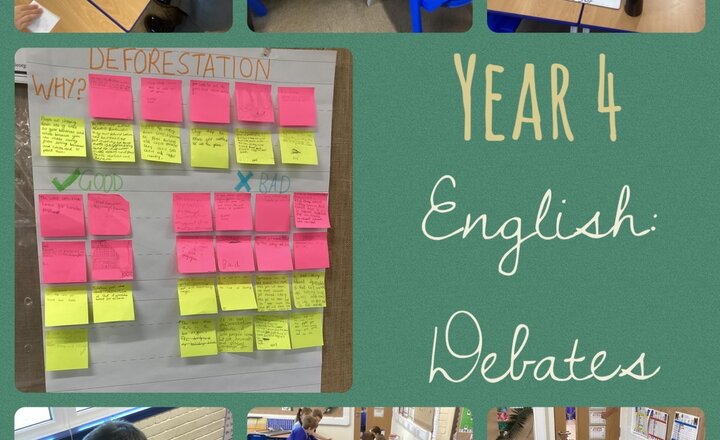
We love a good discussion in Year 4, and with our new English topic being “Debates”, we certainly have a chance to shine! After a little research into deforestation, we recorded some of the reasons mass tree felling occurs, followed by a look at the positive and negative effects. We then went on to sorting the effects into two piles - for and against. It became evident to the children that there were more reasons not to fell so many trees than to continue, we will see what their finished balanced arguments look like.
.png)