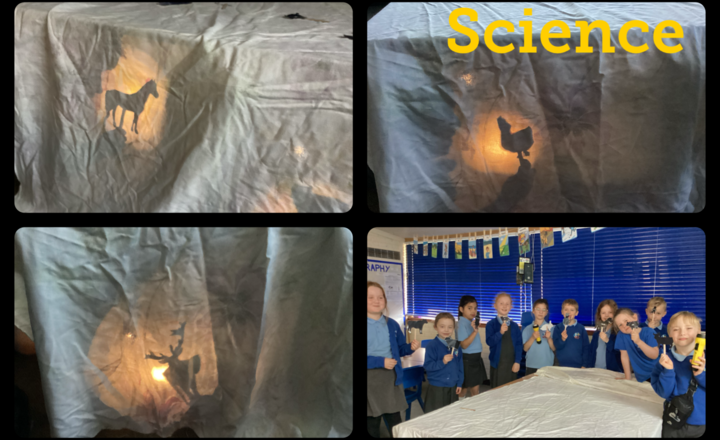
Year 3 - Science- Shadow Puppet Show
For their final lesson on light, the children worked in groups to create a shadow puppet show. They used skills learnt from their previous lessons to demonstrate their understanding on how shadows are formed using props made out of black paper. They worked with great enthusiasm and creativity.
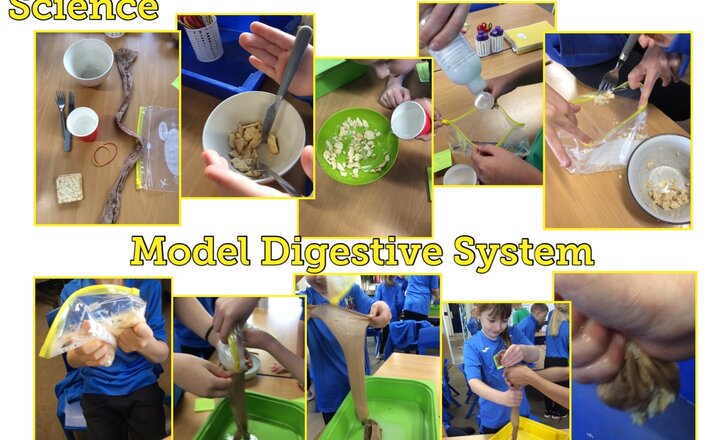
Year 4 Science
Our Year 4 scientists had a rather messy time acting out the role of different organs in the digestive system this week. They used a bowl and cutlery to act out the chewing in the mouth. They added their 'chewed' crackers to a ziplock bag filled with water and washing up liquid to churn up the mixture like the stomach. They then passed the mixture through a pair of tights to act like the small intestines. They squeezed the water out of the mixture as they pushed it down. And finally they had to push the mixture out of the end of the tights (the anus). There was certainly a lot of laughter!
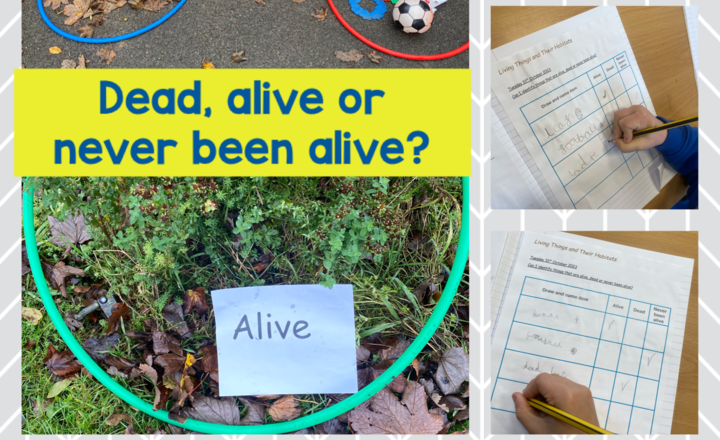
Year 2 - Science
We have begun our science topic for this half-term which is looking at animals including humans. This week, we looked into how we know we are alive and how do we know when things are dead. We discussed our ideas of things we thought are alive such as farm animals and humans. We then went further to talk about how plants are alive because they grow and reproduce. This was very tricky but the children tried really hard to challenge their thinking. We then went outside to find things that are alive, dead and things that have never been alive. We then came back into class and created a list of things we had found or other ideas that were alive, dead or have never been alive.
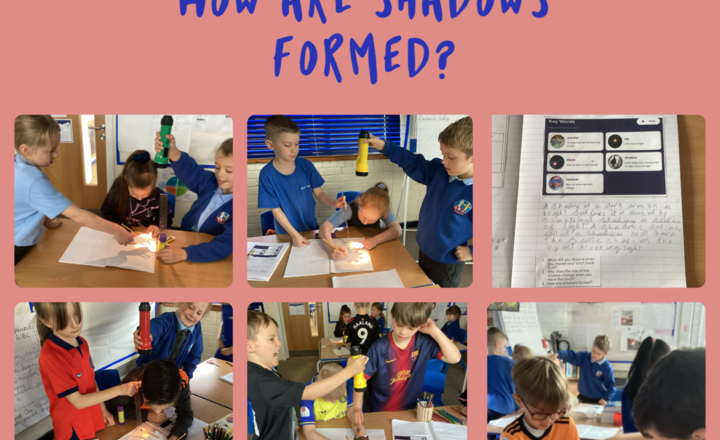
Year 3- Science - Discovering how shadows are formed.
In science this afternoon, Year 3 discovered how shadows are formed. For their mission assignment, the children worked in small groups and used a torch to cast an object's shadow on paper and trace its outline. They then moved the torch 5cm back and repeated the process, noting how the shadow changed with the light source's position.
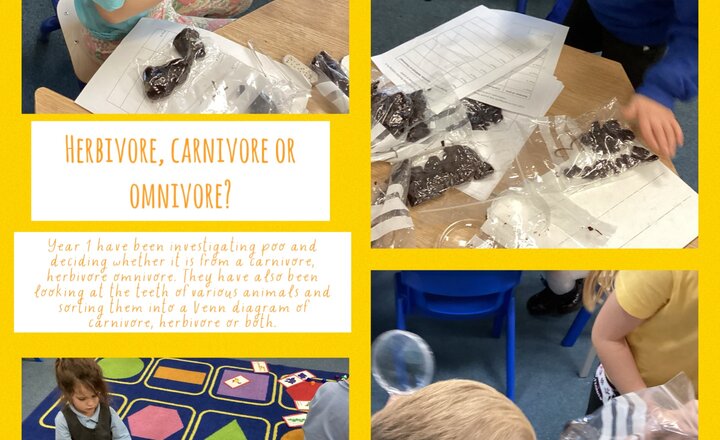
Year 1 Science
Year 1 have been investigating poo this week. They have been looking for clues to decide whether they think the poo is from a herbivore, carnivore or omnivore. The clues included fur, bones, leaves, twigs, shell, hair and nuts. They have also been looking at the teeth of animals and deciding whether they think the animal is a carnivore, herbivore or omnivore before sorting them into a Venn diagram.
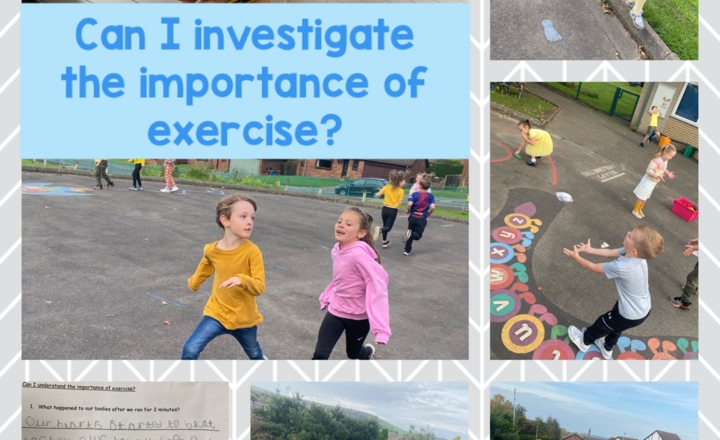
Year 2 - Science
This week in science, we continued our topic of ‘Animals including humans’. After investigating the importance of hygiene we investigated the importance of exercise. We discussed what exercise we do and how we could increase the amount of exercise we do each day. We explored the impact exercise has on our heart, lungs and flexibility. It was then time to see if we could see the effects exercise had on our body by getting outside and working hard. After participating in various exercises we observed the effects it had on our bodies. We decided that our breathing got heavier and our heart started beating faster. The children then reflected on their investigation and recorded why exercise is important .
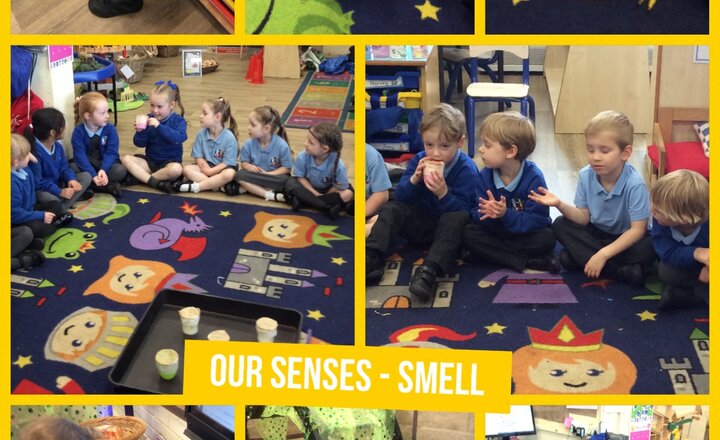
Reception - our sense of smell
This afternoon Reception have been learning about our 5 senses and how they help us to understand the world around us. We talked about what each sense can help us to do - eyes to see, ears to hear, mouth to taste, hands to touch and our nose to smell. We then focused on our sense of smell and how this can help us to identify different things. We passed cups around to see if we could guess what was inside just from using our sense of smell. The children correctly identified coffee, vinegar and perfume but were unsure about cinnamon and peppermint!
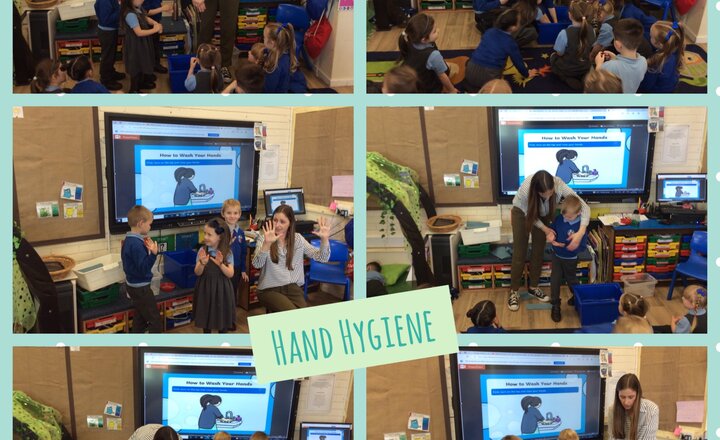
Reception Hand Hygiene
Reception have been learning about the importance of good hand hygiene. We talked about germs - what is a germ and how do they spread? We used glitter to show how quickly germs can spread to others and make them poorly. We also experimented to see if water alone would get rid of the glitter germs and found out that the germs were still on our hands after using water. We finally managed to clean all the germs off when we used soap and warm water to clean all the areas of our hands.
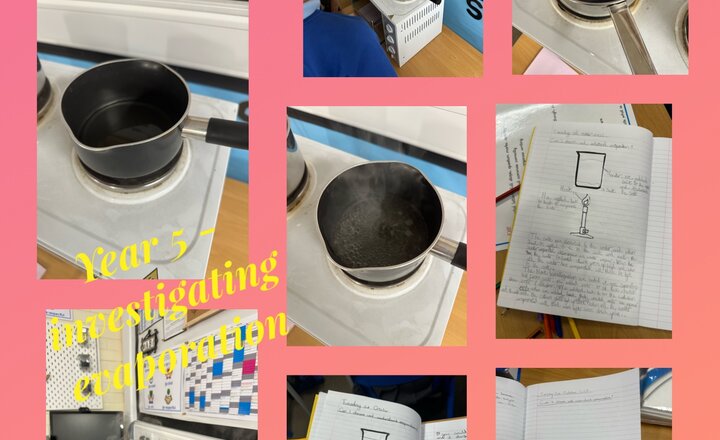
Year 5 - Investigating evaporation
Year 5 have continued to look at reversible and irreversible changes. This week we had a look at how we can recover a dissolved substance that has been dissolved in water. We used the example of salt and ink. We demonstrated that when heat is applied to a solution you can evaporate the water and what’s left in the pan will be the substance originally dissolved in the water.
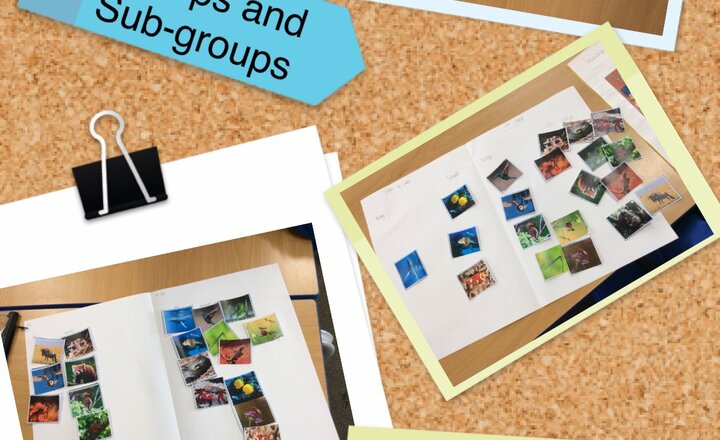
Year 4 - Science: Grouping Animals
In Year 4 this half term, we are studying living things and their habitats. This week we were learning to group animals using a range of features and even went on to create subgroups. Next week, we will be using what we have learned to create our own classification keys.
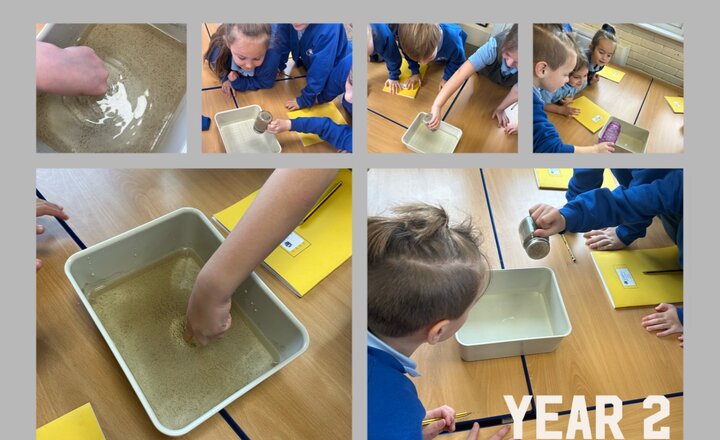
Year 2- Science
Let’s just say our science lesson was lots of fun! Today we investigated the importance of hygiene and how having good hygiene can keep us healthy. To demonstrate how being clean keeps germs and bacteria away from our bodies we carried out an investigation. We used sprinkled pepper on water which represented bacteria on a surface. We dipped our finger in and when we looked closely it was covered in pepper. Next, we put soap on our fingers and then dipped them back into the soap. We observed what happened to the pepper and recorded our results in our science books. I’ll let the children tell you about their results…
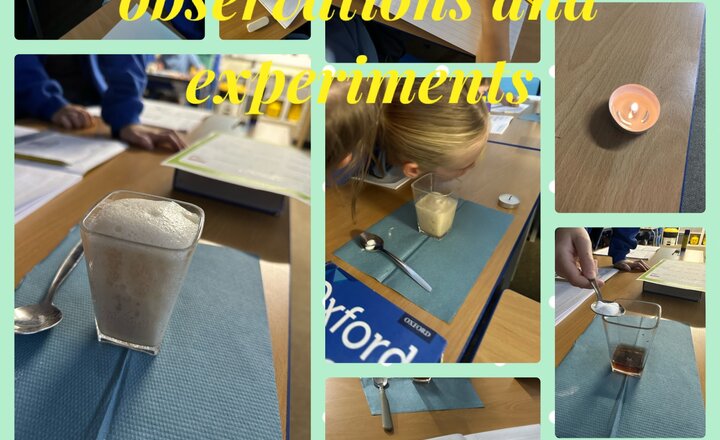
Year 5 - Reversible and Irreversible changes
Year 5 have continued to look at reversible and irreversible changes in science. During this lesson, the children experimented and observed two reactions both demonstrating a different change in matter. The first reaction we looked at was the burning of a candle, wax melting and the carbon dioxide that is released into the air by burning the wick. The second reaction, the children mixed bicarbonate of soda with vinegar. This resulted in the foaming of the solution creating a new gas due to the chemical reaction. The gas that is formed is called carbonic acid and the children explored the change and how the bicarbonate decomposes to create gas.