.jpeg)
Year 4 - English: Research
It was the start of our new English unit on Monday and the Year 4s were busy conducting research and collecting information about Pompeii and Mount Vesuvius. Their objective was to take keywords from each question and type them into a safe search engine in order to gather relevant information to answer the question. The children also used a range of primary and secondary sources to support their research. The children will be using this information to support their writing of stories based on a historical setting.
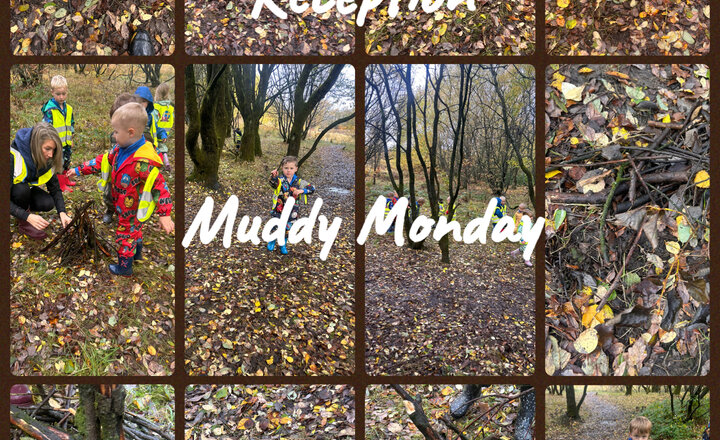
Reception: Muddy Monday
The children in Reception went to Jacks Key for their Muddy Monday session. They found lots of natural resources to build bonfires in preparation for Bonfire night on Wednesday. The children then went on a rainy walk and showed great perseverance and resilience. The children all worked well together and it is lovely to see them continuing to develop during these sessions.
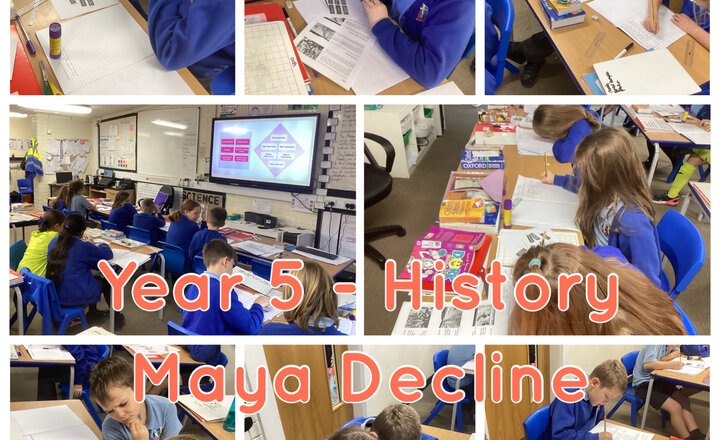
Year 5 - History
We finished our history topic by considering the reasons why the Maya abandoned their cities during the post classic decline starting around 900AD. The children thought like historians, researching the evidence for and against possible explanations before deciding which theory they felt was the most plausible. The children discussed the relative impact of war, drought, deforestation and lack of water.
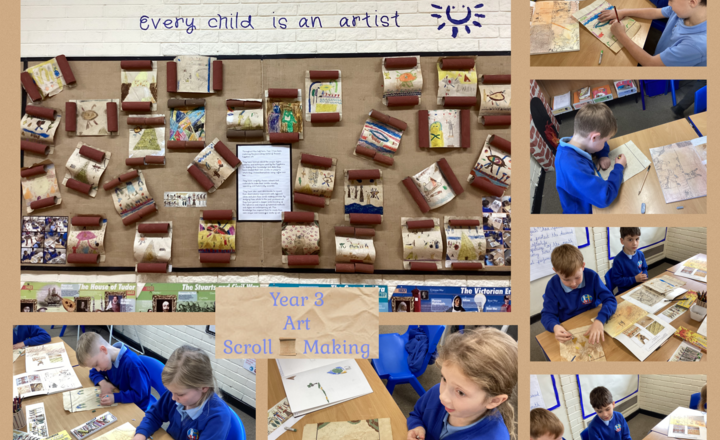
Year 3- Art- Egyptian Scroll Making
Throughout this half term, Year 3 has been exploring the fascinating world of Ancient Egyptian art. They have learned about the unique styles, patterns, and techniques used by the Egyptians. To display their knowledge and skills they have created their own scrolls on papyrus, which they created themselves using coffee and tea. They have carefully chosen colours and materials to make their scrolls visually appealing and historically accurate. They have also used sketchbooks to record their observations, experiment with different ideas, and plan their scroll-making process. By studying how artists in the past produced art, they have gained a deeper understanding of the influence and impact of historical methods and styles on contemporary art. This knowledge has inspired them to create their own unique and meaningful works of art.
.jpeg)
Year 6 - History
Today, Year 6 had a visit from Diana Killey, who as a child, attended St Barnabas in the 1940s. She spoke to the children about what life was like growing up during that time and shared her experiences as a child of war. Diana described her daily life and spoke about the strong sense of community that developed during those years. The children were fascinated by her stories and asked many thoughtful questions, showing great curiosity and respect for her experiences.
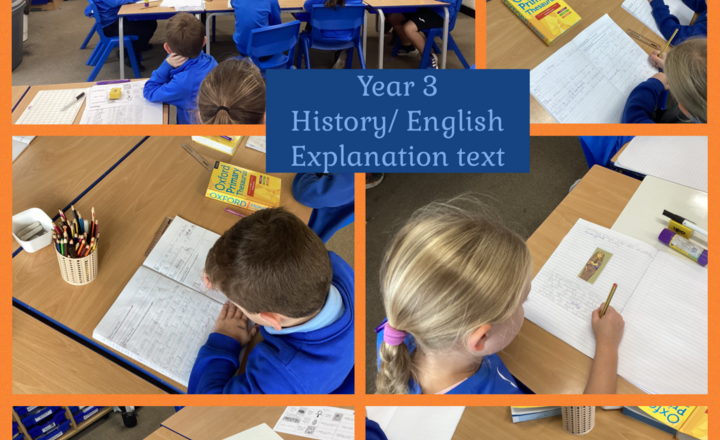
Year 3- History/English-Exploring Ancient Egypt Through Explanation Texts
This week, Year 3 has started a new writing unit on explanation texts. In History, we’ve been learning about the beliefs of the Ancient Egyptians, the process of mummification, and the importance of the River Nile. The writers are now using what they have learned to write their own explanation texts, applying their knowledge of Ancient Egypt to build and develop their English writing skills.
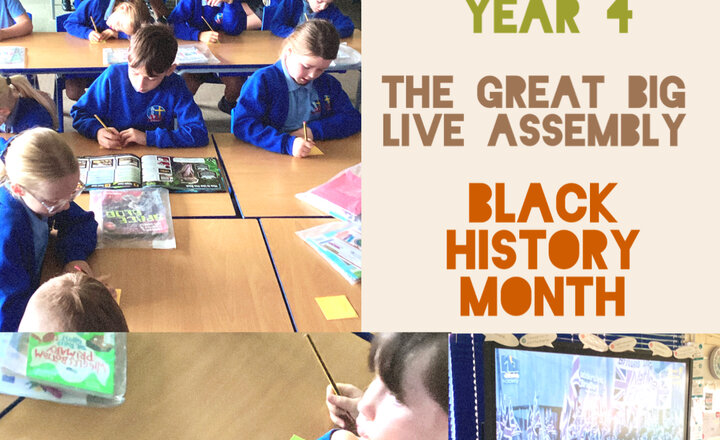
Year 4 - Black History Month
In our class worship this week, the Year 4s joined in with the Great Big Live Assembly to learn about Black History Month. This year’s BHM assembly began with a look at current issues in our localities. They addressed the division becoming more apparent within communities and raised the questions: ‘What does the St George’s flag mean to you?’ and ‘How can we help to make everyone welcome?’ The children had some lovely, heartfelt answers about the flag being a symbol of pride, of peace and of our amazing sports teams. As usual, there were many ideas for welcoming visitors and people new to our school. Being welcoming is definitely a strength of our fantastic children.
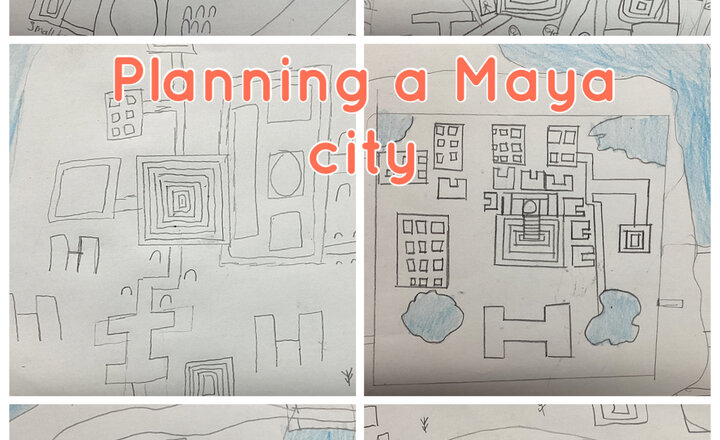
Year 5 - History
In History, we studied examples of Maya cities including the building types, architecture and city layout. The children considered how their city would function, with temples to make offerings to the gods, roads for transport (sacbeob) alongside meeting places such as plazas and market places.
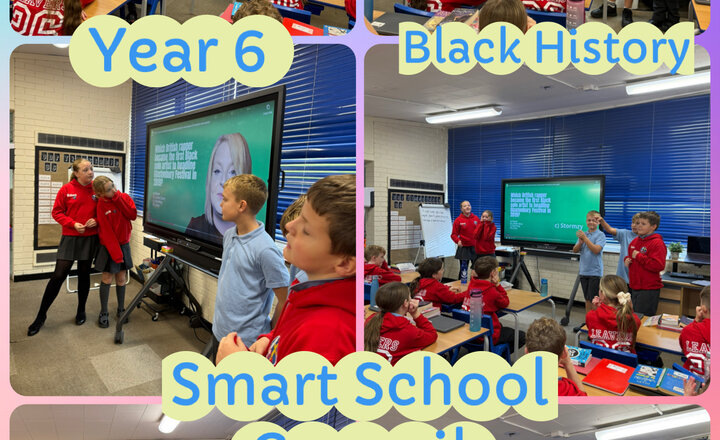
Year 6 - Smart School Council Debate
This week’s Smart School Council debate was led by the children who took part in a thoughtful discussion on whether it’s more important to learn about past Black history or present-day Black history as part of Black History Month. The children shared a range of interesting opinions, with some highlighting the importance of understanding the struggles and achievements of the past, while others felt it was just as valuable to celebrate modern black role models who are making history today. The debate encouraged everyone to think deeply about how learning from both the past and the present can inspire a more inclusive and informed future.
.png)
Year 3 Join the Great Big Live Assembly for Black History Month
Today, Year 3 took part in the Great Big Live Assembly for Black History Month 2025, hosted by Chris Kanday, Jeriah, and Gemma Hunt. The assembly explored the theme of “Standing Firm in Power and Pride”, celebrating the achievements and courage of Black individuals throughout history and today. Pupils learned about Rosa Parks and how one small, brave act helped spark huge social change. The presenters also discussed the St. George’s Cross, explaining how symbols can carry different meanings and how important it is that everyone in our communities feels welcome, valued, and respected. Through videos, discussions, and messages from inspiring guests, children reflected on how they can show kindness, courage, and fairness in their own lives. The children were thrilled, and a little surprised, when their class appeared on the big screen during the live broadcast! It was an exciting moment that made the experience even more memorable. They were inspired to speak up against injustice, celebrate diversity, and remember that even small acts of bravery and kindness can make a big difference.
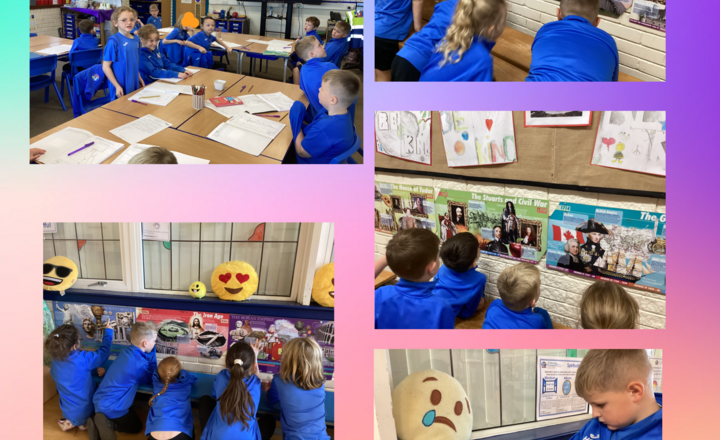
Year 3- History-Exploring Ancient Egypt Through the River Nile
The Year 3 Historians investigated why the River Nile was so important in the lives and beliefs of the ancient Egyptians. They explored the interactive history timeline online and also looked at the timeline displayed in the school hall. They learned that the Nile was essential for many reasons: It provided water for drinking and washing. It supported farming, as the river flooded each year and left behind rich, fertile soil, perfect for growing crops such as wheat and barley. The children also discussed how the ancient name for Egypt, Kemet, meaning ‘black land’, referred to the dark, fertile soil along the Nile. They discovered that the Egyptians believed the yearly floods were a blessing from the god Hapi, whom they worshipped to ensure the river continued to bring life each year. They were fascinated to discover how the past could be presented in these different ways and worked brilliantly throughout the lesson.
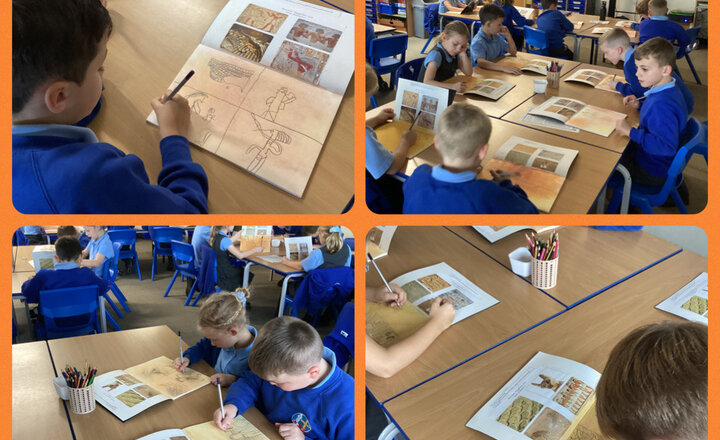
Year 3- Art- Drawing Like the Egyptians
Today in art, Year 3 Artists travelled back in time to ancient Egypt. Before drawing their egyptian patterns and shapes, they prepared their sketchbooks by creating interesting surfaces to work on. Just like the ancient Egyptians who drew on papyrus, they transformed their white paper using chalk pastels last week to give it that special, papyrus-like texture. With the surfaces ready, they put pencil to paper today to draw beautiful Egyptian patterns, all while listening to some traditional Egyptian music in the background. The children's drawings have turned out absolutely amazing and they should be very proud of the surfaces and patterns they created.