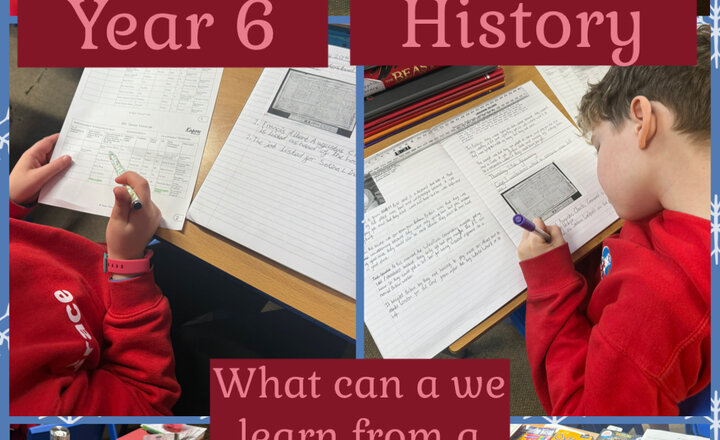
Year 6 - What can we learn from a Census?
Today, Year 6 focused on what we can learn from a census. The children observed the 1851 Royal Census and carefully analysed the information recorded, including names, ages, occupations and places of birth. The children discussed how historians use census data as a primary source to build an understanding of daily life in the past.
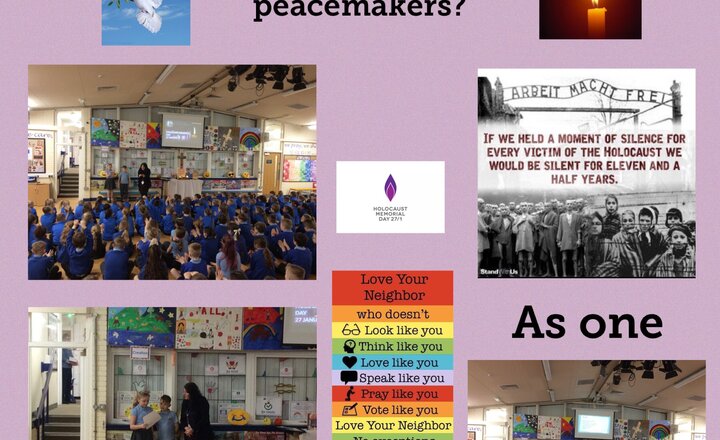
Whole School Worship - How can we be peacemakers?
On Monday, during our whole school worship we came together to think about peace, how the bible tells us to show peace and also how we can learn from the past to ensure we create a world of peace and not war. Olivia and Desmond beautifully read our Peacemaker Bible readings from this week's kindness kite whilst we made doves, a symbol of peace, from our hands being linked together. We thought about world Holocaust Memorial Day, which is today, and reflected on how during that time peace and forgiveness were not shown and how cruel and unfair that was. We prayed for all those who lost their lives during the Holocaust and also asked God to help us to be courageous peacemakers when we see cruelty and also to love our neighbours and treat everyone with kindness and respect. We lit a special candle of peace for all those who cruelly lost their lives during the Holocaust and were shocked to learn that if we held a moment of silence for each person then we would have to be silent for 11 and a half years. We then sang a song about living without division but together, 'As One'.
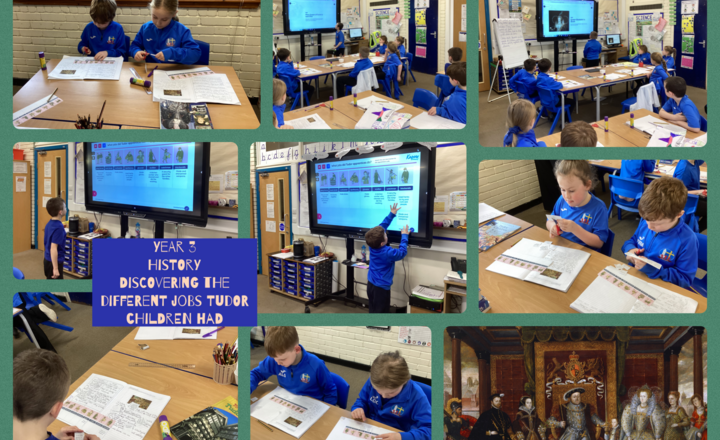
Year 3- History-Investigating the Lives of Tudor Children
Today, our young historians took a step back in time to explore the lives of children during the Tudor period. We focused on the role of the apprentice, discovering how children learned essential trades and skills by working under a "master." Visual Evidence: By analysing historical images, the children identified the heavy labour apprentices performed, such as fetching water for farms or working in papermaking and printing shops. Working Conditions: Through video and audio accounts, we discussed the reality of Tudor life. The children learned that while wealthier children attended school, poorer children worked long, exhausting hours, cleaning, cooking, and farming, with very little time for play. Interactive Learning: Using the whiteboard, the children worked in pairs to match different Tudor occupations with their job descriptions. This allowed them to see the wide variety of trades available at the time.
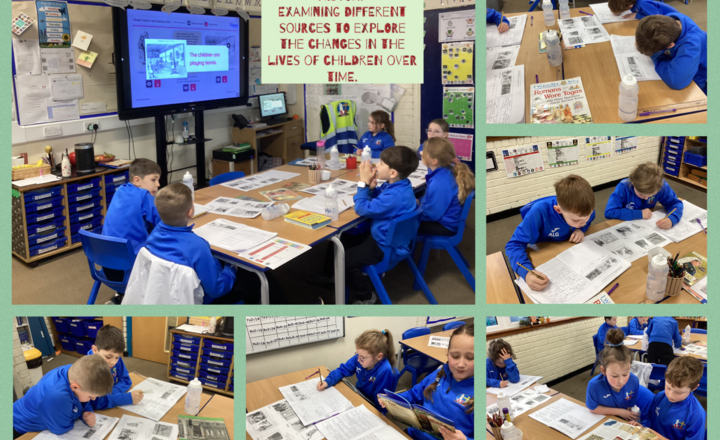
Year 3 - History-From Tudors to Today: How Childhood Has Changed
Year 3 stepped into the role of historians this afternoon as we launched our new History unit! We have been exploring the similarities and differences between children's lives now and in the past. Using portraits of Tudor children as our primary sources, the pupils practised the art of observation and deduction. By observing closely what the children were wearing and playing with, our class made astute deductions about who was wealthy and how they spent their time. It was a brilliant way to see how much, and how little, life has changed over the centuries!
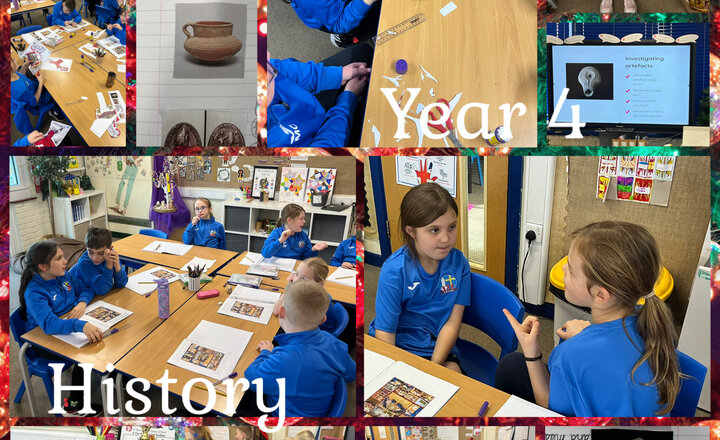
Year 4 History - what can artefacts tell us about the Romans?
In our history lesson today we looked at what artefacts can tell us about Roman times? The children covered deceiving an artefact, making observations and deductions. We finished by creating mini Roman soldiers and labelling the armour and weapons that they used.

Y4 History - Roman Formations
In our history lesson this week, we looked at Roman formations. The children created their very own shields and tested how effective the formations were whilst Mrs Gardner tried to break through with table tennis balls. The key formations are the testudo (tortoise), which is a defensive shell formed by soldiers holding their shields to create a roof and walls, and the wedge, an offensive V-shape used to charge and break. We had a great time and the children worked really well within their legions.
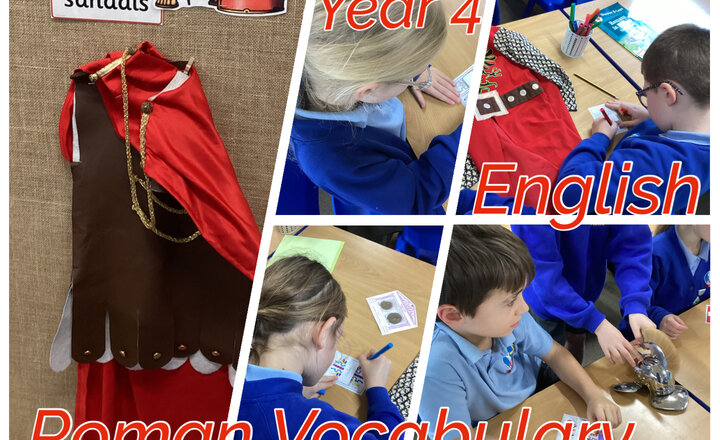
Year 4 - English: Roman Vocabulary
To start our new diary unit in English we explored a range of primary and secondary sources in order to build a bank of Roman vocabulary. The children will be writing in role as a Roman soldier describing a typical day at the start of the Roman invasion of Britain.
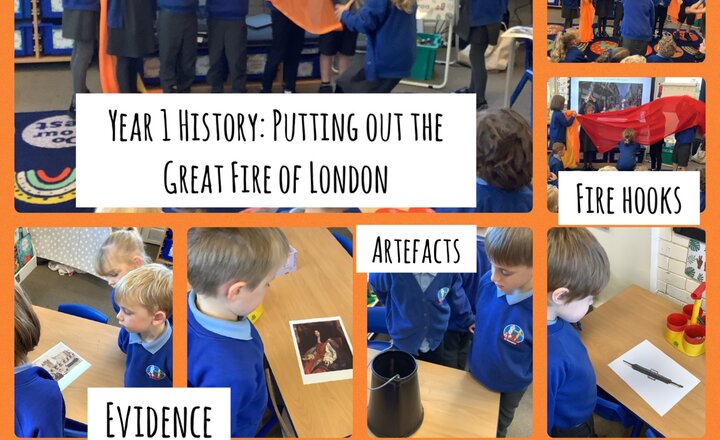
Year 1 History: Putting Out The Great Fire of London
Today, we examined evidence, primary sources and artefacts to help us understand how the people of London tried to put out the fire in 1666. We learnt that Samuel Pepys wrote a diary and buried it with wine and cheese, which we still use today to understand the events of the fire. We also used pictures and artefacts, such as a leather bucket to understand ways the fire was put out. We did some role play using our buckets and filling it with water from the River Thames and throwing it onto the flames. When that didn’t work, we used a water pump to try and extinguish the flames, but that did not work either. We started to pull down houses with fire hooks to create a fire break, which did help stop the spread of the fire. Ultimately, the fire ended as the wind stopped blowing and the fire was contained. Year 1 really enjoyed stepping into the role of the people in London and understood how tricky it was to put the fire out without fire engines like today.
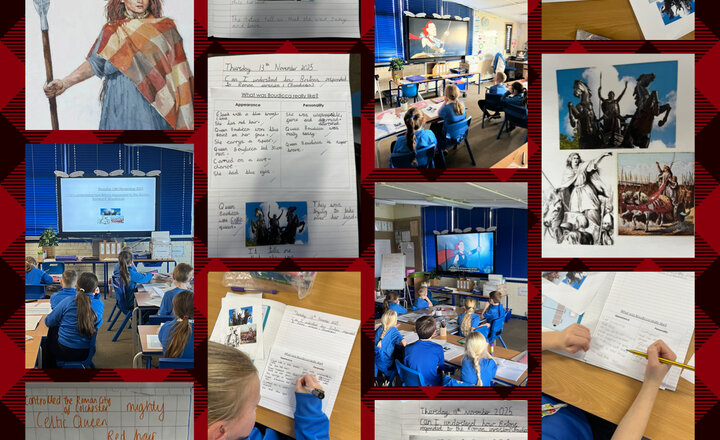
Year 4 History - How did Britons respond to the Roman Invasion
In our second history lesson, we looked at how the Britons responded to the Roman invasion and in particular, Queen Boudicca who was in charge of the Iceni Tribe . Through research and watching video clips we learned that the Britons responded to the Roman invasion in different ways: some fought back, but many tribes made peace and agreed to obey Roman laws and pay taxes to keep their kingdoms. A famous example of resistance was Queen Boudicca, who led a major rebellion in AD 60 that destroyed Roman towns like Colchester and London before her army was defeated by the more disciplined Roman soldiers. The children also observed different perceptions of Boudicca and what they could take from photos of her statues. Focusing on both her appearance and personality.
Reception- Trekking Tuesday- Remembrance
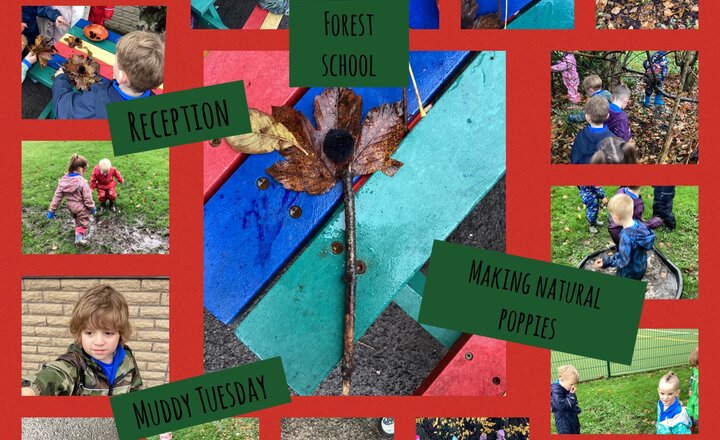
Today we had our Trekking Tuesday forest school session and for the first part of the session we were thinking all about Remembrance Day and we created some lovely natural poppies. We then went on to have some free choice and exploration on this very muddy Tuesday. The children loved jumping in the muddy puddles, creating with sticks and hiding in natural dens.
Year 6: Remembrance Service
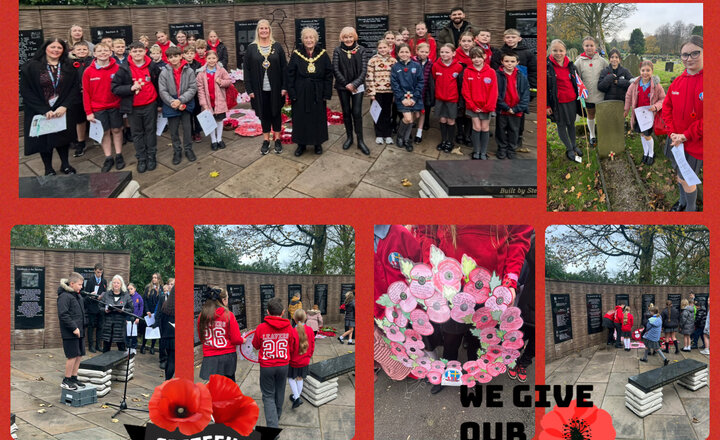
Our Year 6 children took part in the Darwen Cemetery remembrance day service this morning and we were so proud of the remarkable respect that they showed. A huge well done to Mason for his lovely reading and to all of our children for their maturity and compassion when placing crosses on the graves of the soldiers who bravely fought for our country. After the service the children learned that the piper used to attend St Barnabas as a child so he let the children try on his special hat. As a reward for representing our school so brilliantly, the children got to enjoy their break time on the play area in Whitehall Park. #WeWillRememberThem #remembrance #remembranceday #lestweforget
Year 4 English - Escape From Pompeii
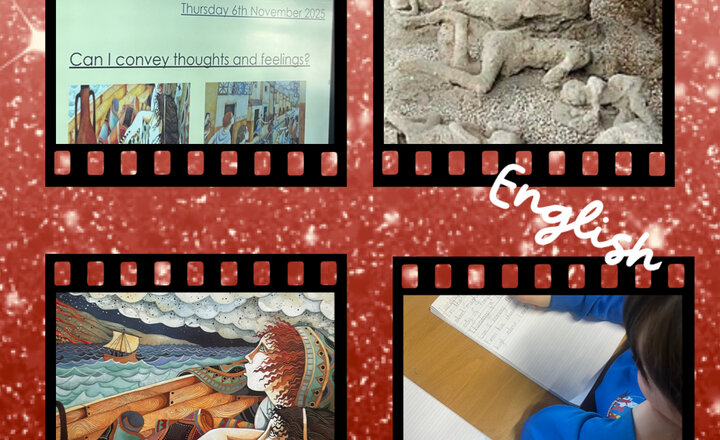
Our new class novel is Escape From Pompeii by Christina Balit. In today’s sessions we have continued to use sentence stacking to develop and construct better sentences. We started by adding a fronted adverbial by watching the main character Tranio and recording how he feels about living in Pompeii at the start of the story. We then moved into a modelled sentence and then an independent one with a different fronted adverbial. In our next sentence, we referred back to our experience day and described the size of Mount Vesuvius using words such as colossal and humongous. Finally we used the same modelling to construct a sentence thinking about how Tranio feels about living in such a beautiful part of the world. The children produced some very effective sentences, using the success criteria to ensure they added all of the key parts.