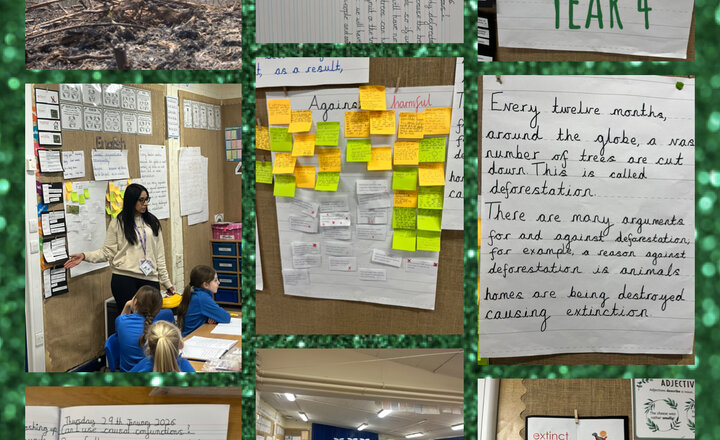
Year 4 - Using causal conjunctions
As part of our English lessons we have continued to build on our for and against points. Today we looked at the main argument followed by how to develop the argument and then its effect - what the effect of deforestation has on the subject. The children tried really hard to use a range of causal conjunctions and extend their arguments further.
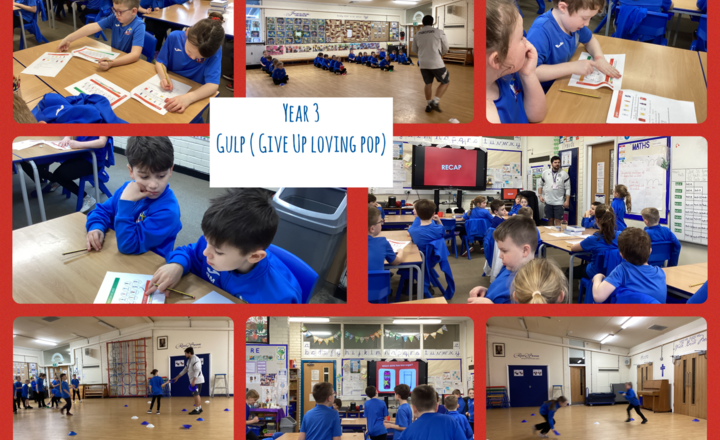
Year 3 GULP Project-Final Recap and Results
The Year 3 children have completed their final session of the GULP (Give Up Loving Pop) project! This initiative, delivered in partnership with the Blackburn Rovers Community Trust, has been a fantastic journey for our young "Sugar Detectives." Throughout the program, the children have developed vital "Label Literacy" skills, learning how to decode nutritional information and calculate total sugar content in various bottle sizes. Converting grams into physical sugar cubes, allowing the pupils to truly visualise the hidden sugars in their favourite fizzy drinks and juices. We finished with a "Sugar Detective Quiz" to assess their knowledge, and it was wonderful to see how much they remembered about making healthier drink choices. The program has already made a visible impact, with many children now opting for water over high-sugar alternatives, which is also saving on plastic too! We would like to extend a huge thank you to Nathan for his time and expertise.
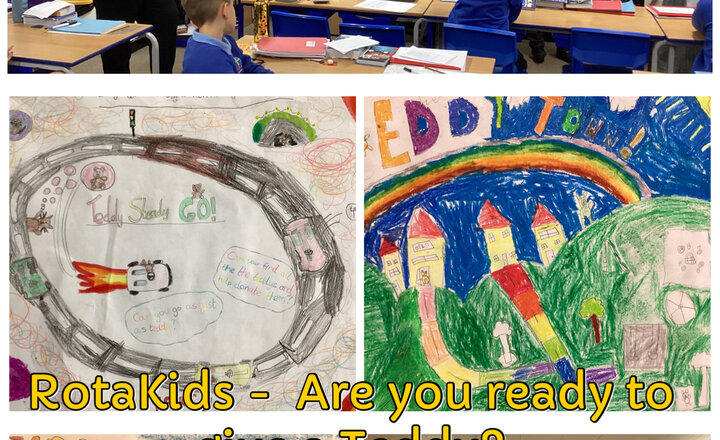
Year 5 -Rotakids
Today, Julia from Darwen Rotary Club visited the class to discuss our next project. We have decided to collect Teddy Bears to give to children around the world who do not have their own. We have made posters and comic strips to promote the endeavour and we will be asking everyone in the school to donate a Teddy Bear in good condition that they would be willing to part with.
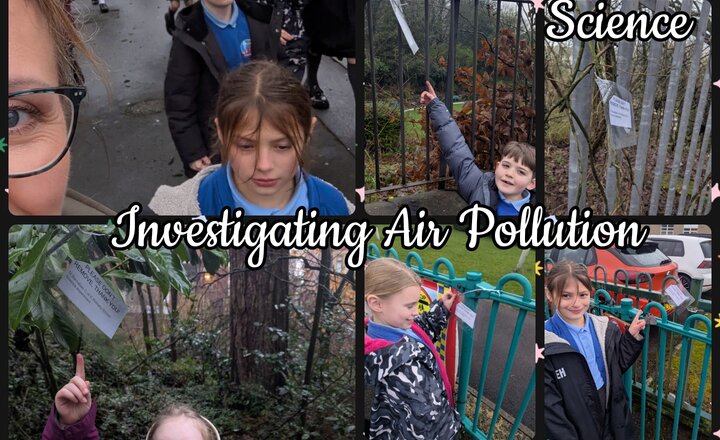
Year 4 - Science: Air Pollution
The Year 4 super scientists undertook some fieldwork this week. They will be comparing the level of air pollution in 4 areas within our locality and so they suggested some areas to test and off we went to place our test cards. One side of each card was covered with a thin layer of Vaseline with the idea that some particles released from vehicles and machinery will stick to the cards and we can observe and discuss the level of pollution in each area. We also took a reading of the noise level in each area using a decibel meter so that we could determine whether there is a link between noise level and pollution level.
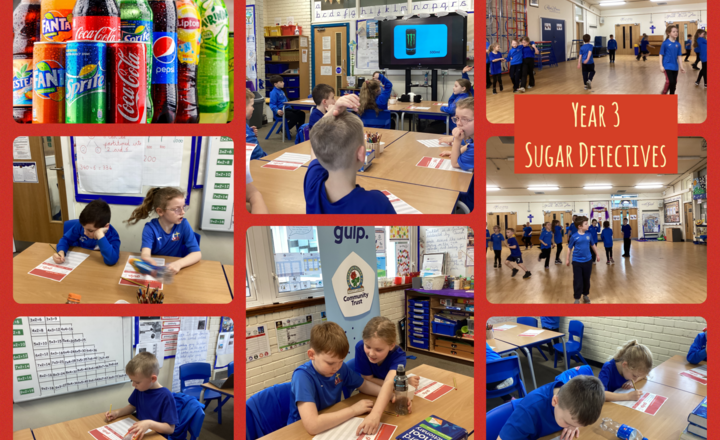
Year 3- P.E-Sugar Detectives: Our GULP Project
Today, our pupils became "Sugar Detectives" as part of the GULP (Give Up Loving Pop) project. The children investigated a variety of popular drinks to uncover the hidden sugars they contain. Using their mathematical skills, they completed a comparison table detailing the total volume of each drink and the specific sugar content. The highlight of the lesson was converting grams of sugar into the actual number of sugar cubes to create a visual representation of what we are consuming. A key takeaway for our detectives was the importance of reading labels carefully; they discovered that while some bottles are 500ml, the nutritional information is often only listed for 100ml, requiring them to calculate the total amount for the whole bottle.
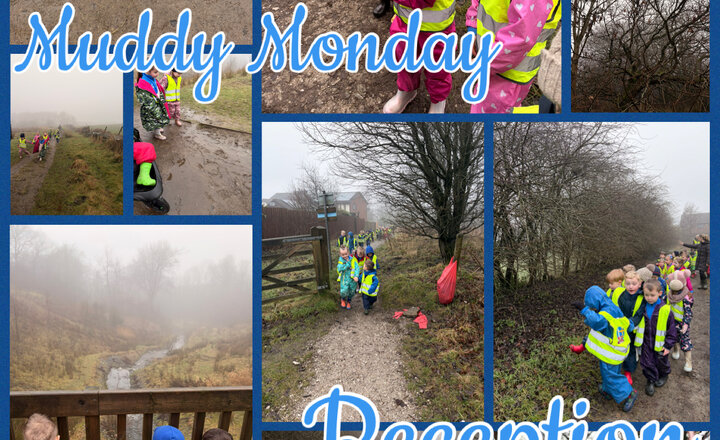
Reception: Muddy Monday
Today is known as Blue Monday, but our Reception class decided to rename it "Happy Monday" by participating in the five steps to wellbeing. The children focused on being active and taking notice of our special world. During their walk, they were mesmerised by the fog and gave thanks for the birds, insects, dogs, and trees. They returned to school excited to share what they had observed with their peers during "snack and chat." If you are feeling a bit low today, we encourage you to try going for a walk and taking a moment to appreciate the world around you.
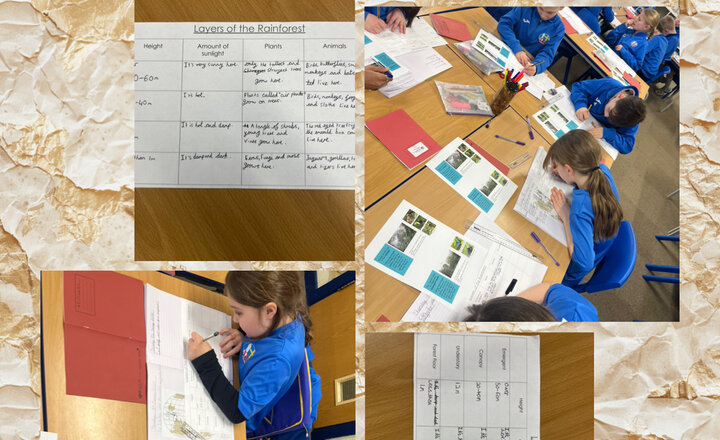
Year 4 Geography - Rainforest Layers
In our Geography lesson we have been looking at the layers of a rainforest. The children identified the four layers as the forest floor, the understory, the canopy and emergent layer at the very top. Using their enquiry skills they researched the climate, plant and animal life and height of the trees at each layer.
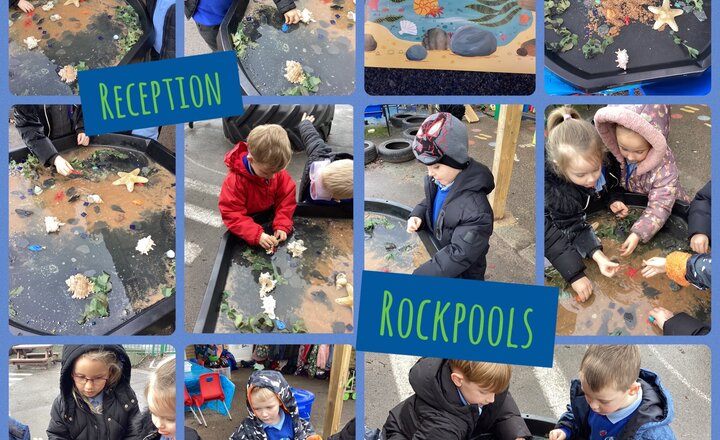
Reception Rockpools
The Reception class had a wonderful time exploring rockpools in their outdoor play area. After learning about creatures like crabs, shrimps and prawns who live in rockpools, the children used their imaginations to turn the tray into a coastal habitat. They acted as scientists looking at sea creatures who live in this small habitat and asked lots of questions to understand more about it. This hands-on activity helped the children learn new vocabulary and understand how to care for nature and God's creatures.
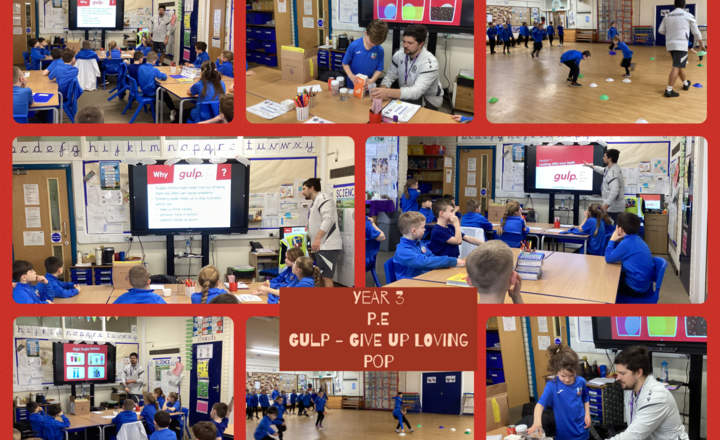
Year 3-Oral Health & Physical Activity
Today, Nathan delivered the second GULP (Give up loving pop) session, focusing on the importance of oral hygiene and making healthy drink choices. The session was split into active and classroom-based learning: Physical Activity: The children participated in 30 minutes of high-energy exercise, playing a game where they had to "run away from plaque" and earn points for "cleaning" their teeth. Classroom Learning: We explored the impact of sugary drinks on health and discussed practical ways to avoid them. To see the effects of sugar and acid firsthand, the children carried out an egg experiment, which provided a great visual representation of how tooth enamel can be damaged. Practical Skills: Every child received a toothbrush and toothpaste to encourage consistent dental care at home. The children were fully engaged and absolutely loved the session.
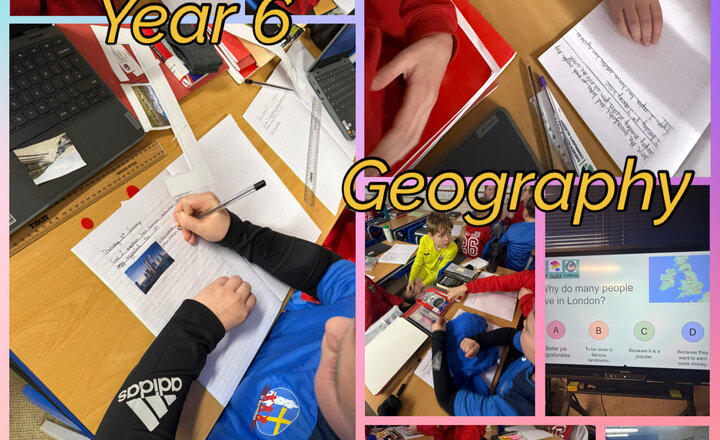
Year 6 - Geography
Today in Geography, the children began the lesson with a diagnostic question exploring why people might choose to live in London. Using talk tokens, they practised their oracy skills by sharing ideas, listening carefully to one another and building on responses within their groups. This supported thoughtful discussion and helped pupils justify their opinions. The lesson then moved on to exploring how human activity has shaped and changed the landscape. The children examined key concepts such as urbanisation, agriculture and erosion management, considering both the positive and negative impacts humans can have on the environment. They used examples to deepen their understanding and made links to real-life locations, developing their geographical vocabulary and critical thinking skills throughout the session.
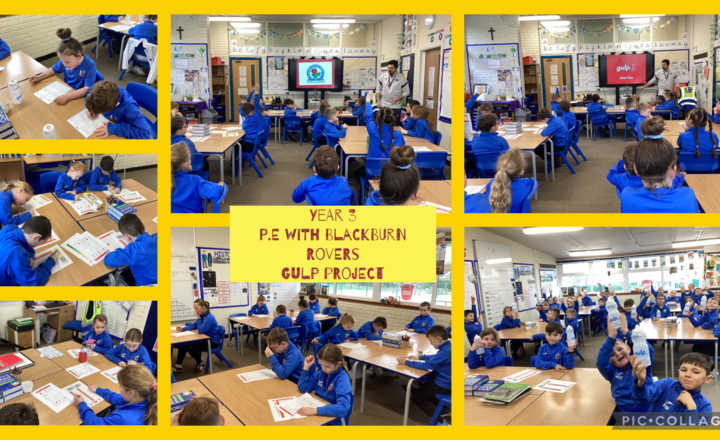
Year 3 Welcome Blackburn Rovers for GULP Project
We are delighted to welcome Blackburn Rovers to Year 3 for a four-week programme. They are delivering the GULP (Give Up Loving Pop) campaign, a fantastic initiative by Food Active, to help our students understand the health risks associated with sugary drinks. Today, the children kicked things off by learning all about what’s really inside their favourite sodas and how to make healthier choices.
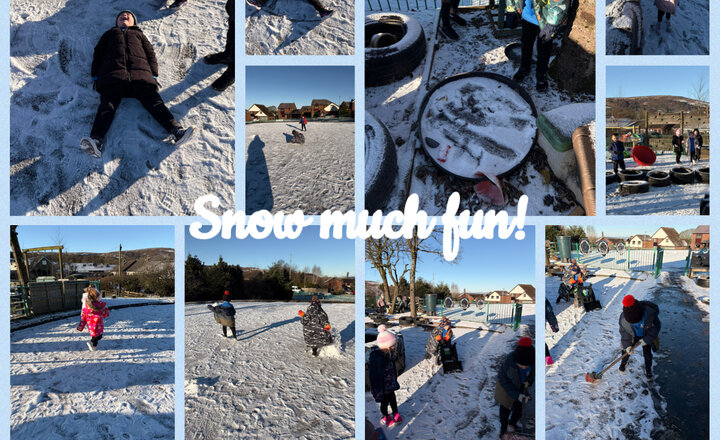
Reception: Snow Much Fun
Reception class have really enjoyed our Winter Wonderland. They loved making snow angels, collecting snow to create sculptures and investigating the ice too. It was a great way to introduce our learning all about the season of Winter.
.png)