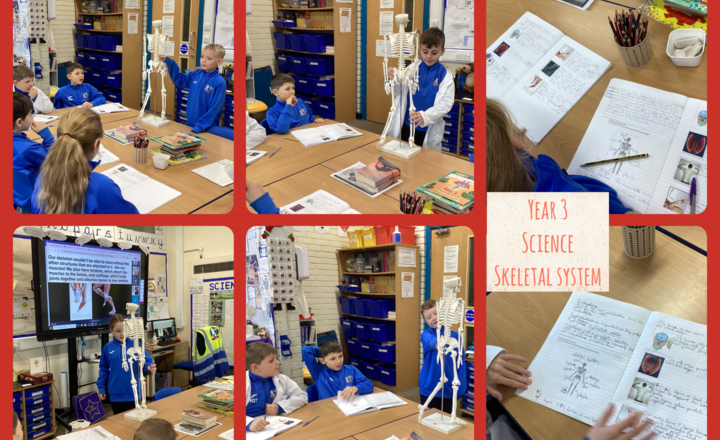
Year 3- Science-Investigating the Body's Framework
Today, as expert scientists, we investigated the human skeleton and its vital roles, a framework shared by humans and some other animals. Our scientific mission was to understand that bones and muscles work together to provide support, protection, and movement. The skeleton gives our bodies support and shape, allowing us to stand upright. It also protects by encasing delicate organs; for instance, the skull protects the brain, and the ribcage protects the heart and lungs. Finally, our muscles attach to the bones, creating a system of levers that allows us to move so we can run, jump, and play. We successfully identified key bones, including the humerus, femur, tibia, and fibula.
.jpeg)
Year 6 - Animals including humans
During today’s science experiment, Year 6 explored how restricted arteries can affect the human body. The children carried out an investigation using cups with different sized holes to model how blood flows through arteries. They poured water into each cup and timed how quickly it passed through, recording their results and comparing the differences. The cups with smaller holes represented restricted or clogged arteries, showing how blockages can slow down or even prevent the flow altogether. This hands on activity helped the children clearly visualise the impact of unhealthy arteries and deepen their understanding of the circulatory system.
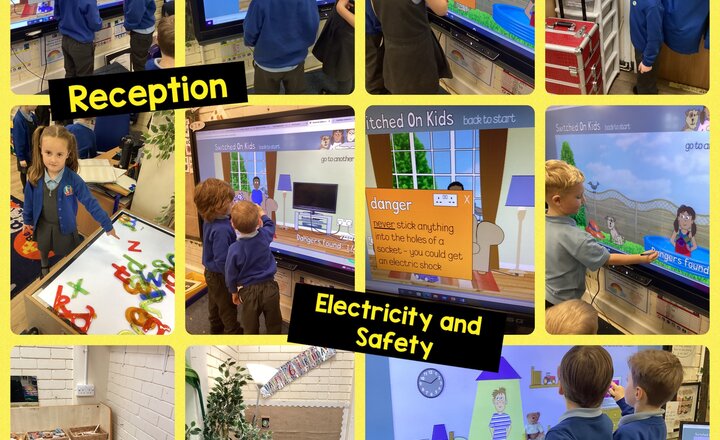
Reception - Electricity and Safety
This week as part of our Understanding of the World, we have been looking at objects in the home that use electricity. We talked about the power of electricity and what jobs it helps us to do, but also the importance of how we can be safe around electricity, as it can be very dangerous if not used by a grown up or used carefully. The children enjoyed spotting electrical items around the classroom and the ways we use electricity to improve our learning. We also thought of ways we can save electricity by making sure electrical devices are turned off when they aren't being used.
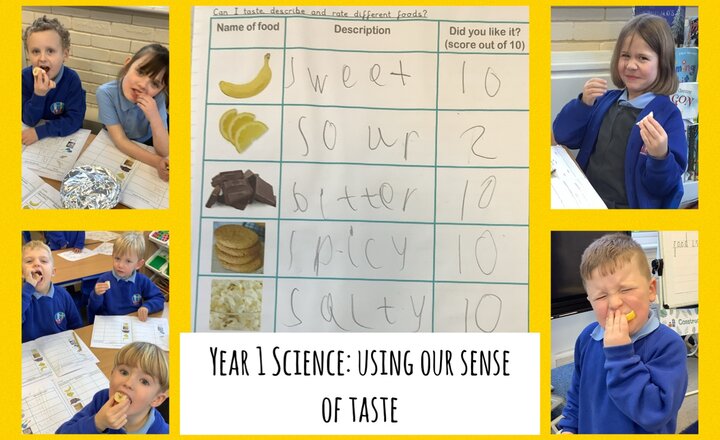
Year 1 Science: using our sense of taste
Today in Science, we used our sense of taste to identify, describe and rate different flavours. Firstly, we looked at each other’s tongues to spot the tiny bumps, which are our taste buds. Then, we discussed that foods have different flavours, such as sweet, spicy, bitter, sour and salty. Year 1 had to use their scientific skills to identify which flavour matched the food. They tried banana, lemon, dark chocolate, ginger biscuits and salted popcorn. They then rated the food out of 10 depending on how much they liked the flavour. It was great to see that all the children tried the foods, even if they knew that they didn’t like them. Well done Year 1!
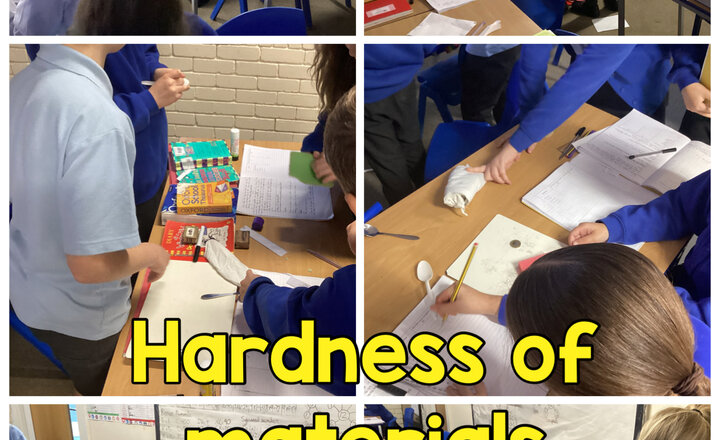
Year 5 - Science
We continued our topic on the properties of materials by exploring what hardness means. The children used nails and coins to try to scratch a variety of materials and used their observations to order them from hardest to softest. They general found iron to be the hardest materials to scratch and fabric/sponge to be the softest. The children worked well together in groups using oracy skills to discuss their conclusions.
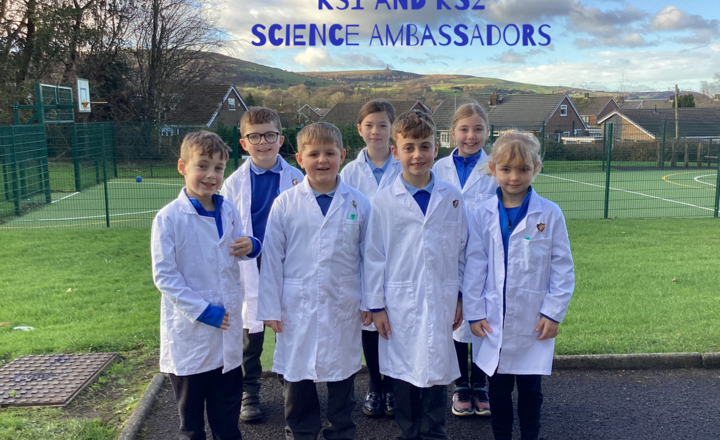
Meet Our Science Ambassadors
We are absolutely thrilled to announce that we have expanded our Science Ambassadors and now have seven passionate representatives! For the first time ever, the role was open to both KS1 and KS2 students (previously KS2 only). We were overwhelmed by the incredible enthusiasm, receiving a huge number of applications from students explaining their passion and suitability for the role. The selection process was tough, but we have chosen our final seven. These enthusiastic leaders will be crucial in supporting our upcoming science initiatives; specifically, they will play a key role in the planning session with the Science Leader for British Science Week (BSW), where the team will focus on three key areas: determining the Big Idea by aligning the BSW theme with school goals; planning engaging Shows & Activities, including booking external providers, aiding teachers during practical lessons and assisting peers with scientific investigation to foster a culture of curiosity and learning across the school. We are so proud of them and look forward to Grace, Daisy, Jack, Harry, Elijah, Oliver and Minnie shining in their new role!
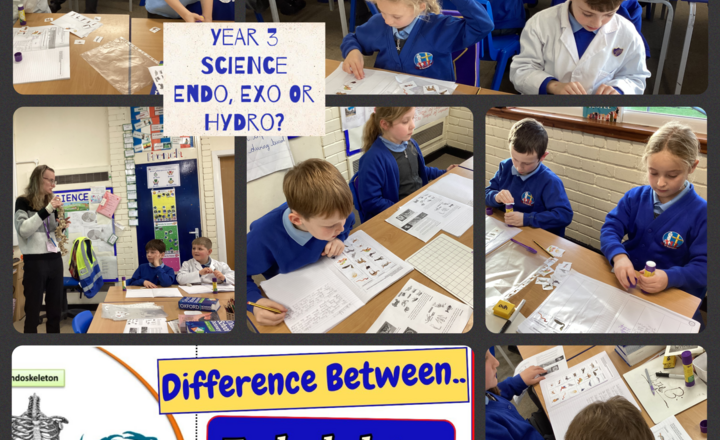
Year 3- Science-Identifying Endoskeletons, Exoskeletons, and Hydrostatic Skeletons
This afternoon, our young scientists (supported by our excellent Science Ambassadors, Elijah and Harry) were busy investigating the frameworks that support life. We started by recalling the difference between vertebrates (animals with a backbone) and invertebrates (animals without one), and defining what a skeleton is. The main task was to become Skeleton Detectives, researching various animals to identify whether they possess an endoskeleton (internal, like humans and fish), an exoskeleton (external armor, like crabs and insects), or a hydrostatic skeleton (fluid-filled, like earthworms and jellyfish). For the final challenge, the children discovered an interesting fact about each animal's framework, explaining exactly how that specific skeleton helps them with movement and protection, showcasing their excellent understanding of biological support systems.

Year 1 Science: Sound and Hearing
In our Science today, we explored our sense of hearing. We understood that sound waves travel to our ears, which send a message to our brain for us to understand what we are hearing and where it is coming from. We demonstrated this by blindfolding one child and then shaking a Maraca and trying to follow the direction of the sound, which they were all very good at. We also talked about sounds that are quiet, loud, pleasant and unpleasant. We made sounds with different objects and described them.
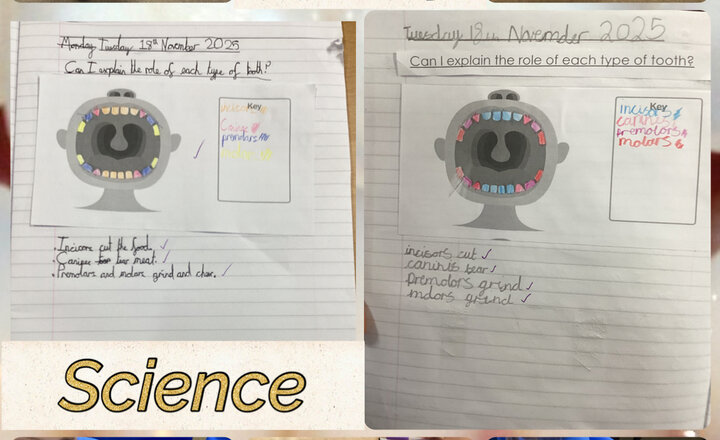
Year 4 - Science: Teeth
As our Year 4 scientists continued their research on the human body, this week, they learned about the different types of teeth and their functions. They colour-coded the teeth in order to label the tooth types on a diagram and then they explained whether each tooth was for cutting, tearing or grinding the food.
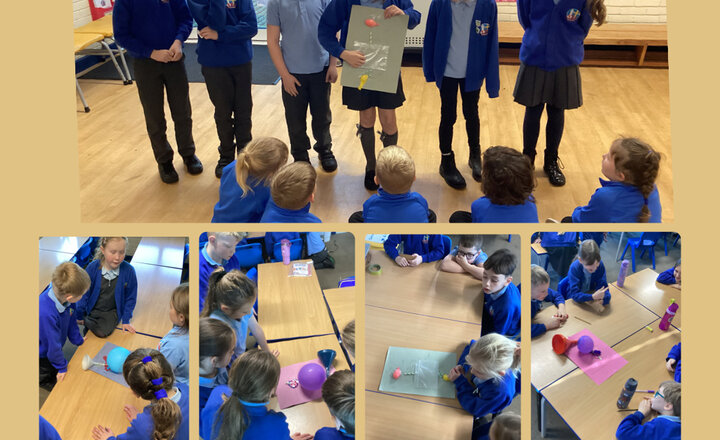
Year 4 - Presentation of Learning
The Year 4s were very excited to present their learning to the Year 1 class this week. The children were put into groups of 6 to create a model of the human digestive system. They rehearsed their explanations of what each part does to the food and then proudly presented to small groups of Year 1 children. To start with, their explanations were a little bit complicated for our younger audience because they were keen to use the scientific vocabulary they’d learned, but we practised again using our best Mr Tumble impressions to make our explanations more Year 1 friendly.
.jpeg)
Year 6 - Steady Hand Game
Today, the children began designing their steady hand games with a festive Christmas theme. Using all the knowledge they have gained about electrical circuits, they then started to construct their own loop and buzzer games, applying their understanding of components, conductors and how to create a complete circuit.
.JPG)
Year 2 Science: How do we change as we grow?
We looked at different stages of a human and thought about how we change over time.