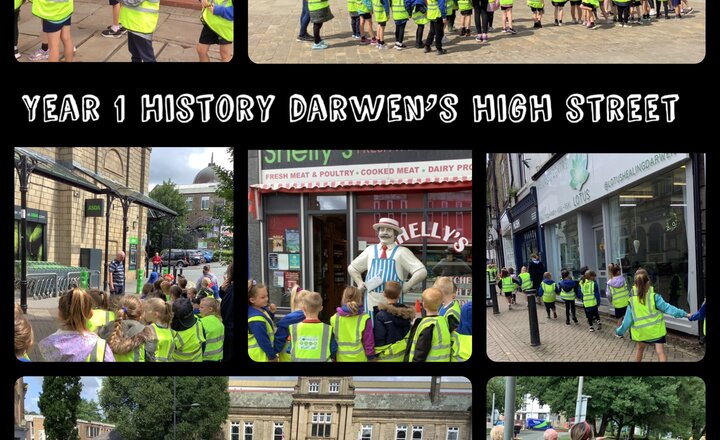
Year 1 History Walk in Darwen High Street
Year 1 have really enjoyed walking around Darwen High Street identifying different types of shops and finding out which type of shops used to be around many years ago. With the help of an expert from the Darwen Heritage Centre, they were shown different places that used to be bakers, butchers, grocery stores, pharmacies, shoe shops or different types of clothes shops (such as hat shops). They also walked through Darwen Market Place and found some placards explaining which shops used to exist in the 1800s.
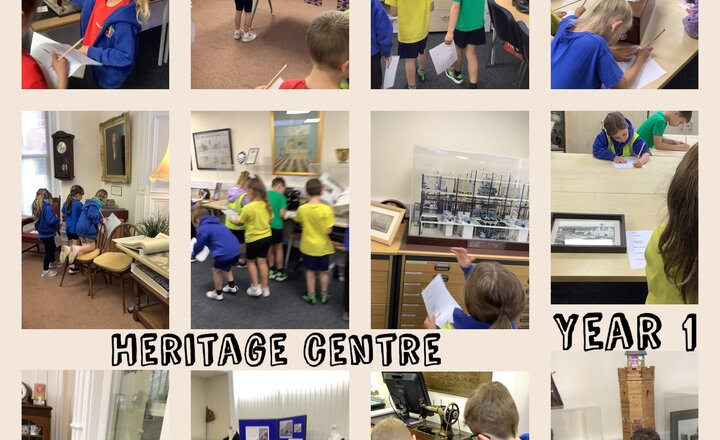
Year 1 History Challenge in the Darwen Heritage Centre
After their super history lesson at the Darwen Heritage Centre, Year 1 were challenged to find the words for different types of shops around the two rooms inside the centre and also the corridor linking them. They were looking for these particular words: baker, boots & shoes, butcher, chemist and clothes. They had to tick how many words they could find on a worksheet. The exact amount of shops in Darwen from the olden days had been put around the rooms. The children found that they all had the most ticks for the clothes shops. They also really enjoyed looking at the giant models of Darwen Tower and all the unique historical artefacts that the heritage centre has within in.
.png)
Viking Longboat Challenge
To complete our history unit on the Vikings, we complete a longboat challenge. The children worked in teams to design and make their very own boat, featuring key pieces such as oars and rudders. These were then evaluated using the success criteria. What a fantastic way to finish the unit and well done to the children for working so well in their teams.
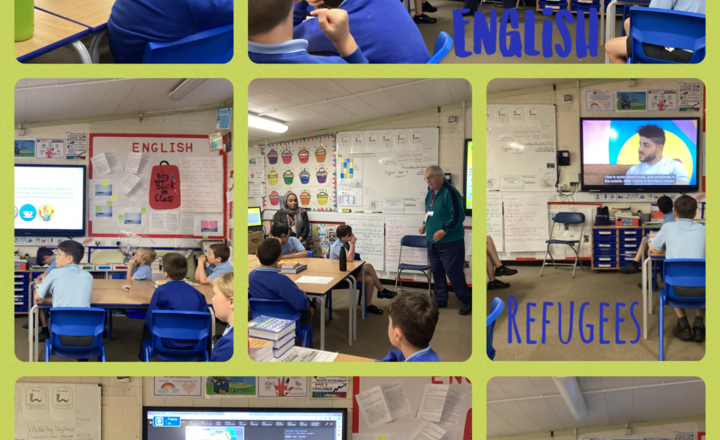
Year 5- English- A visit from Salma (Sudanese refugee)
Today, Year 5 had a special guest, a Sudanese refugee visitor who shared her remarkable journey and life experiences with us. She spoke about the journey she undertook with her four young children when they were forced to flee their home country due to injustice and an oppressive regime. She spoke about the challenges she and her family have faced while adapting to life in the UK. The weather, the food, and the language barrier have posed significant adjustments for them. However, it was inspiring to witness the resilience and determination with which they have approached these challenges. The children were incredibly engaged and displayed remarkable curiosity. They asked numerous insightful questions, delving into the details of her experiences and seeking to understand the impact of her journey on her life and her children's lives. We want to say a big thank you to our visitor for sharing her story with us. It was an important lesson for all of us about how strong people can be, even when things are tough. We also want to thank John East for helping to arrange this visit.
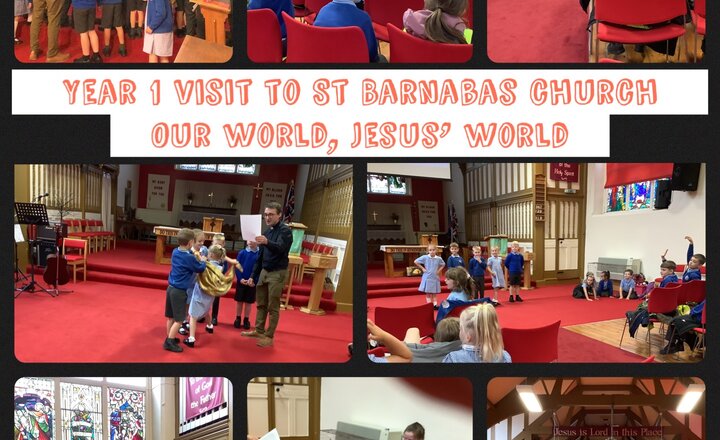
Year 1 Visit to St Barnabas Church
Today Year 1 went to St Barnabas Church as part of their RE unit: Our world, Jesus’ World. Rev Ben helped us to learn more about Jesus’ world and let us think and discuss how it is different living on Earth today compared to when Jesus was alive. The children really enjoyed listening to the story of the prodigal son and either watching others act out the story or being actors and actresses themselves. They looked for images of Jesus within the church and we looked at the clothes and signs of different lifestyles people would have had back then. Year 1 have certainly enjoyed having their RE lesson with Rev Ben in church today.
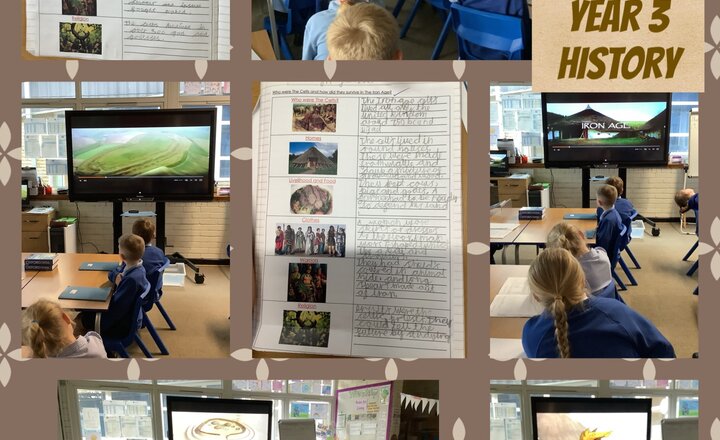
Year 3 History: Who were The Celts and how did they survive in The Iron Age?
This term in History, Year 3 have been learning about historic Britain and how it evolved from The Stone Age, through to The Bronze Age and The Iron Age. This afternoon, we learnt all about The Iron Age and The Celts. We then completed a research activity, where the class had to investigate how The Celts survived, during the Iron Age.
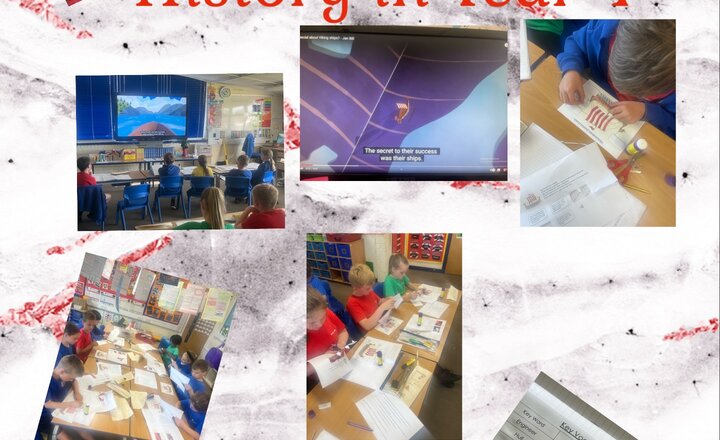
Year 4 History - How did the Vikings Travel? Investigating Longships
In our history lesson today we have learnt all about methods of travel and in particular the use of longships. We looked at the key functions of the boats, labelling a diagram and then adding further details from researching. In the next part of the lesson we will be designing and making our very own longships which we are super excited about.
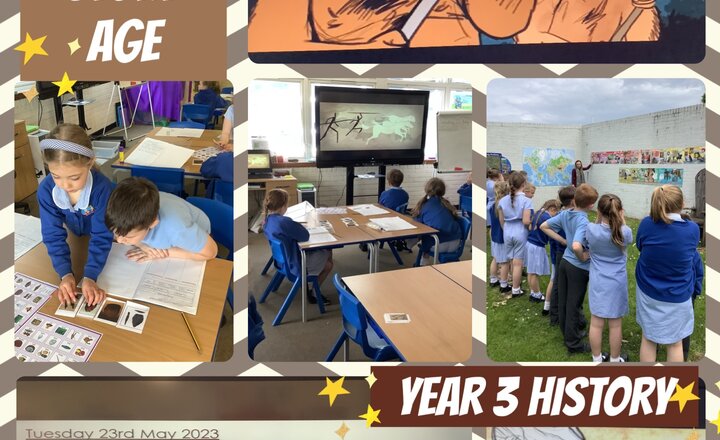
Year 3 History: The Stone Age
This term in History, Year 3 have been learning all about the changes from The Stone Age, through to The Iron Age. This week, we Iooked at what changed for people living in The Stone Age, from the Palaeolithic age, through to the Neolithic age. We learnt how weapons and clothing had developed and how at the beginning of The Stone Age, hunter gatherers would move around often, in search for food. As we approached the end of The Stone Age, people lived in settlements and would farm their animals and crops.
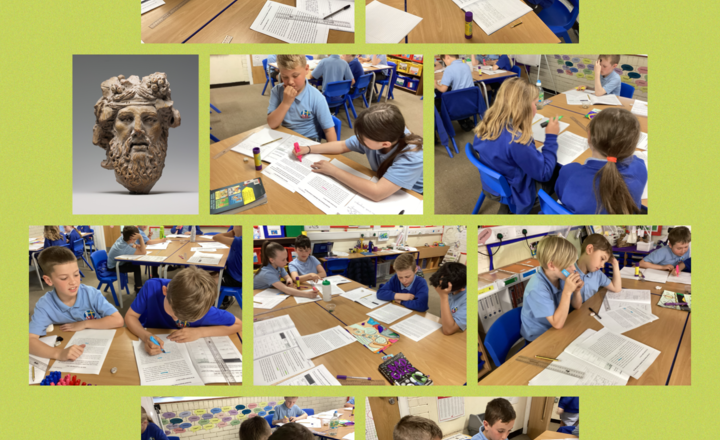
Year 5- Identifying Greek language
This afternoon the children looked at two different stories of 10 year-old children, buried in which were 20-odd words that derive from Ancient Greece. Working in pairs, against the clock, they had to not only spot the words with Greek origin but also, by means of extension for the most able, to use an authoritative dictionary, or the internet, to explain what the words actually means e.g. Brontosaurus = thunder lizard.
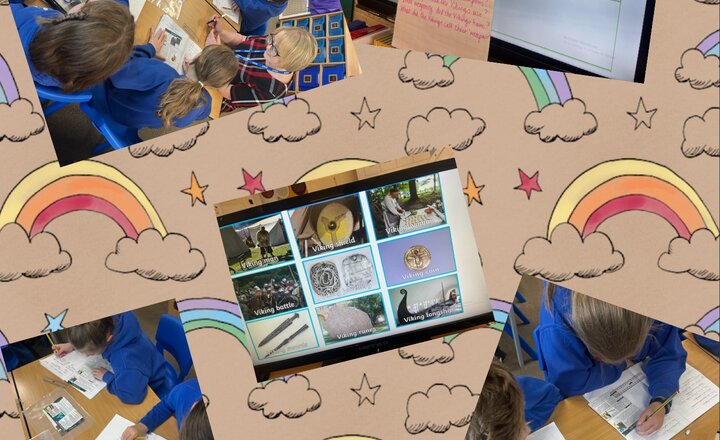
Year 4 English - Information Texts
In our English lesson today we have been developing our ideas for question research. We looked at ‘Viking Weapons’ and ‘Viking Jobs’. The children added lots of detail to their research banks and then selected relevant key pictures and captions.,
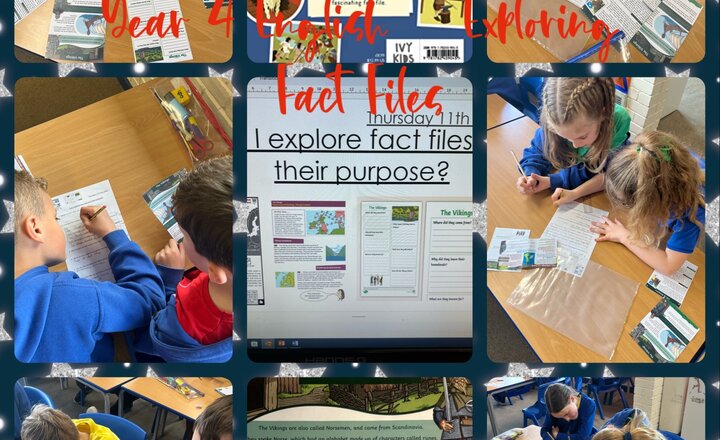
Year 4 English - Exploring Fact Files
In our English session this morning we have started our new Non-Fiction unit on Fact Files. We explored various examples all about the Vikings as this is what we are studying in our History lessons. We discussed what they are for, their purpose and what a good one looks like.
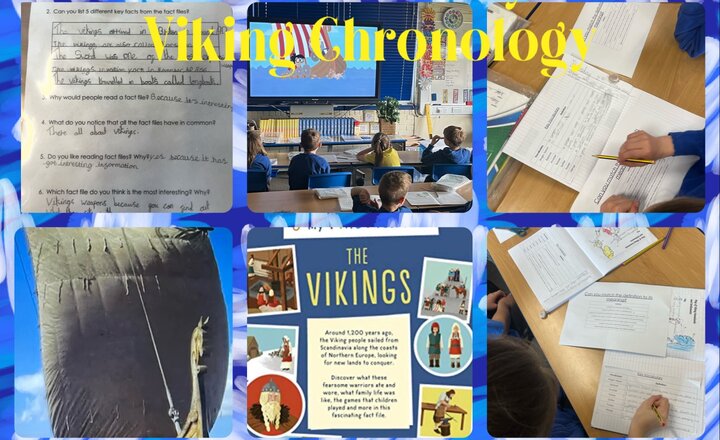
Year 4 History - Viking Chronology
In history today, we have been looking at key words to do with Viking invasion, matching these to their definitions. We then looked at a timeline placing events chronologically. The children worked extremely hard to develop their knowledge about the Viking invasion, what happened at Lindisfarne and how this impacted on following events.