.jpeg)
World Book Day Worship with Key Stage 2
World Book Day Worship with Key Stage 2. Todays session started with a WBD quiz from Primary League Primary Stars in association with WBD. We completed the quiz in our classrooms and it had a football focus. An example question was - Which Premier League club does the current Wales men’s national team captain, Harry Wilson, play for? A mix of authors and footballers asked the questions with Katherine Randell who wrote Year 4’s class novel ~ The Explorer asking question six. The children absolutely loved the interactive quiz and worked to support each other in answering the football heavy questions. What a super way to kick off our World book Day Celebrations and celebrate The National Year of Reading. We finished with Ben and Alex who told us about the ‘Go All In’ challenge which we look forward to taking part in.
World Book Day in Year 4
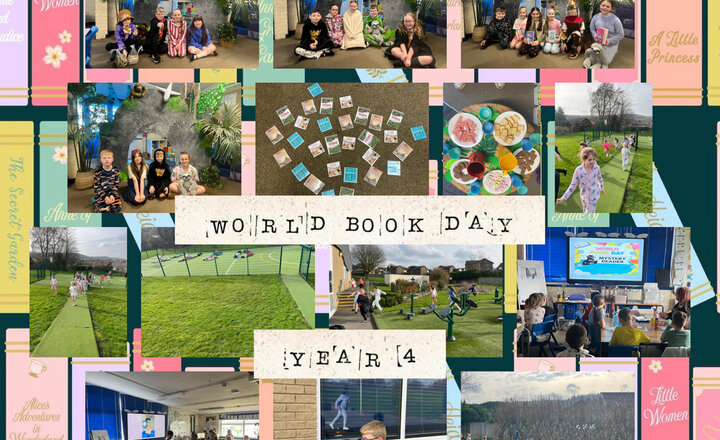
World Book Day in Year 4. We have absolutely loved World Book Week, but we have especially enjoyed World Book Day today. When Year 4 entered the classroom today they were shocked to see a jungle, cave, sloths galore, planes that had crashed and fierce piranhas in the river! The theme of our WBD and the whole week was based on the class novel that the children read back in Autumn Term - The Explorer by Katherine Randell. The children loved the story and this is why we decided to go back to the Amazon Rainforest. After taking part in the WBD quiz this morning, the children completed various challenges and whilst this was going on we had a ‘ Stop, Drop and Read’ session where children were picked to stop whatever they were doing and make their way into the cave to read and enjoy the biscuits and juice. It was lovely to see the children using our Jungle area enthusiastically and sensibly, showing their love for reading. In our PE session, the children had to go on a hunt for all of our past class novels using their orienteering skills. Again, they did this brilliantly with great big smiles on their faces. Finally, to finish off the day we played ‘ Guess the Teacher ‘ where we shared slides with photos of a teacher reading but their faces were covered with their favourite books. It was so much fun!
Year 2 - World Book Day
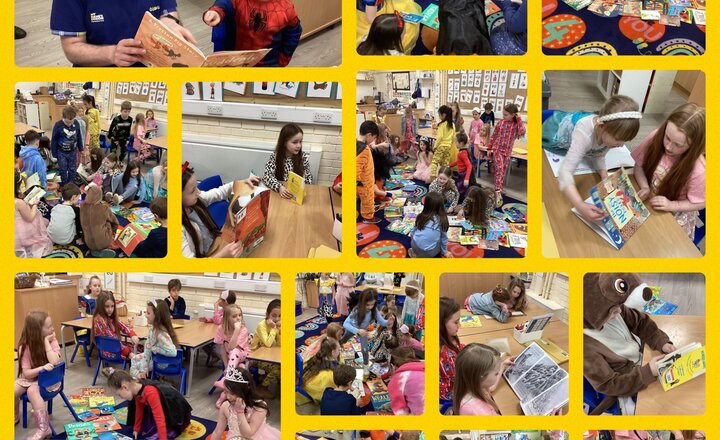
In Year 2, we used our oracy skills when we shared some stories and discussed our thoughts and feelings about different books.
Year 4 - Linking Schools: Zoom Call
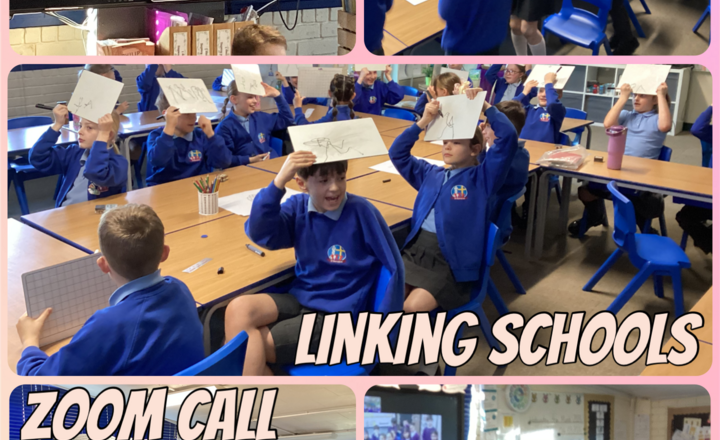
This week, the Year 4 class had the opportunity to meet their link class from St Matthew’s in Blackburn via a Zoom call. The call began with a brief introduction and a chance to share some Makaton/Sign Supported English they had learned. Together, the children from both classes laughed and played games. They also asked and answered curiosity questions, such as, ‘What after school clubs does your school offer?’ Or, ‘What’s your favourite book, and why?’ It was great to meet our link class and to see who we sent our identity maps to.
Year 4 - English: Recital
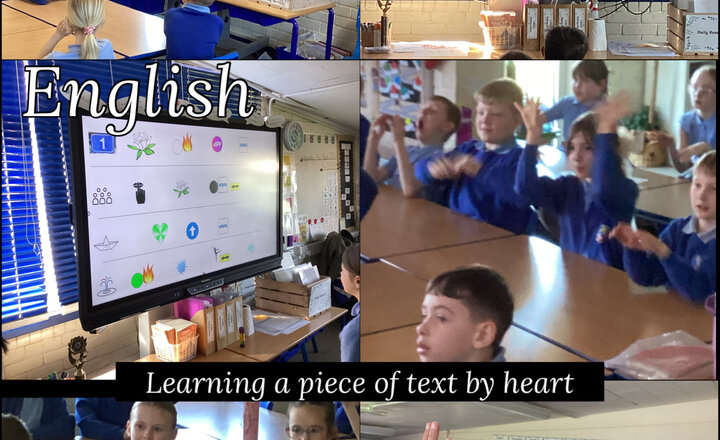
The children are definitely enjoying our current class novel, The Firework-Maker’s Daughter. In this lesson, the children had to practise reading and reciting a paragraph from the story. They used symbols and actions to help them remember the words in each sentence, and they rehearsed 4 or 5 times before the text was removed and only the symbols remained. The children then performed the paragraph with actions and using their symbols to help them remember the words. This will help them to develop the inner voice of an author, ready for writing their own paragraph based on this one.
Year 4 - World Book Day Hook
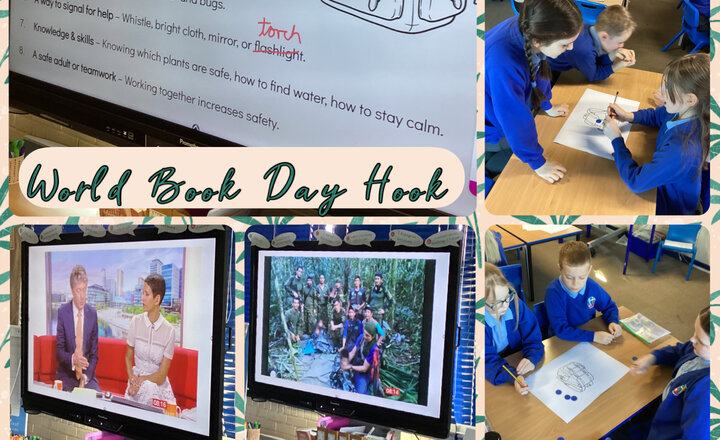
The children are really looking forward to World Book Day, especially following this survival kit activity based on our first class novel, The Explorer. We watched the news report of the plane crash from 2023, in which 4 children ended up stranded in the Colombian jungle. The children instantly recognised the similarities between the incident and the events of The Explorer. Following this the children spent time in groups, using their talk tokens and debating the four most important items to pack in their rucksack for their survival. Each group had a brilliant discussion about why some things are more essential than others and how important it is to meet basic needs first. The children are going to love the activities planned for Year 4 for World Book Day.
Year 6 - Macbeth Commentary
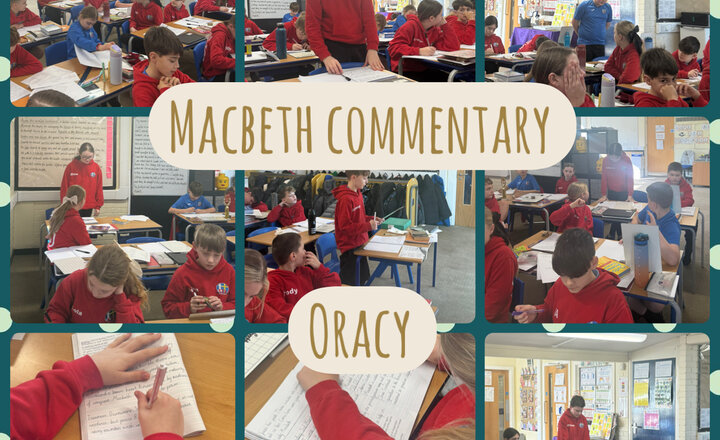
Today, Year 6 focused on developing their oracy skills through an engaging sports commentary task. The children explored how to use pitch, tone, pace and purposeful pauses to build suspense and engage an audience, just like professional commentators. Applying these techniques to their English learning, they created a live-style commentary of Macbeth being crowned king in Macbeth. The children carefully considered how their voices could reflect the atmosphere of the moment — from the tension leading up to the crowning to the dramatic announcement itself. They then performed their commentaries to the class, confidently embodying their roles as commentators. It was fantastic to see them experimenting with expression, projection and timing to bring their writing to life, demonstrating both creativity and growing confidence in their speaking and listening skills.
Year 5 - English
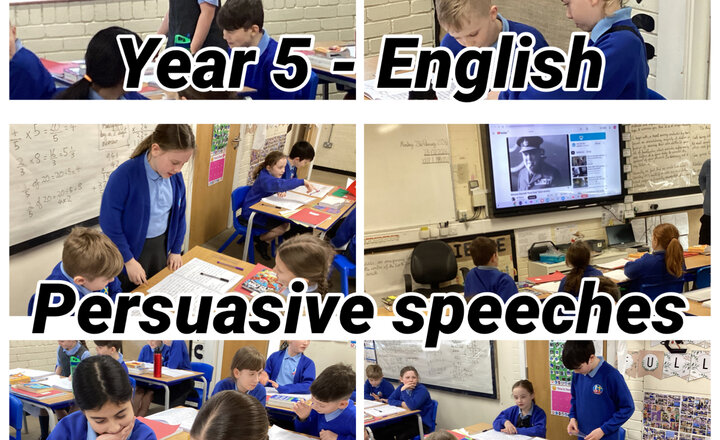
Having completed our persuasive letters promoting Fair Trade products, the children had the opportunity to read their letters out loud. The aim was to be as persuasive as possible, using techniques learned from famous speeches of Winston Churchill and Martin Luther King. The children considered how language choice, repetition, pauses, volume and body language can engage an audience and convince people of your argument.
Year 4 Lead Children’s Mental Health Awareness Week Worship
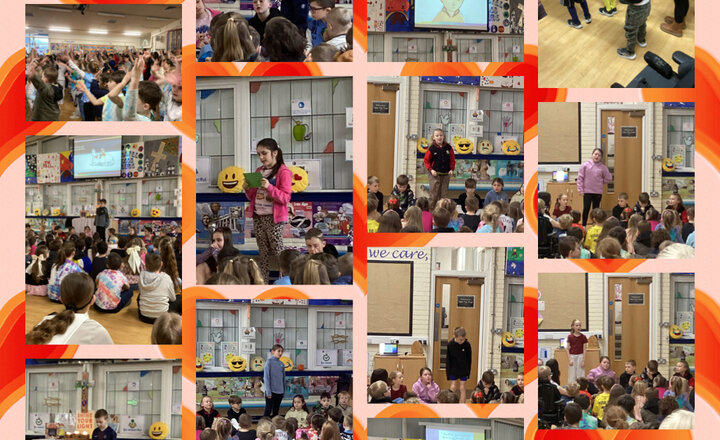
This morning, Year 4 led a truly inspiring Whole School Worship, centering their message on Children’s Mental Health Awareness Week. It was a colourful and vibrant start to the day, as all the children arrived 'Dressed to Express.' It was wonderful to see the hall filled with different outfits showcasing the children's unique personalities, hidden talents, and favourite colours—a perfect reminder that being ourselves is key to our wellbeing. The children did an amazing job showcasing their oracy skills. They projected their voices clearly and confidently, ensuring their important message was heard by everyone. The other classes were captivated, listening intently as Year 4 explained the vital link between kindness and mental health. They highlighted how simple acts of kindness are not just good for others, but also boost our own happiness and sense of belonging. The class reminded us all that kindness is a superpower that supports a healthy mind and a happy school community. We brought the worship to a close with some beautiful, thoughtful prayers and raised the roof singing along to ‘My Lighthouse.’ A huge thank you to the parents and carers who came along to support the children; your presence made the morning even more special.
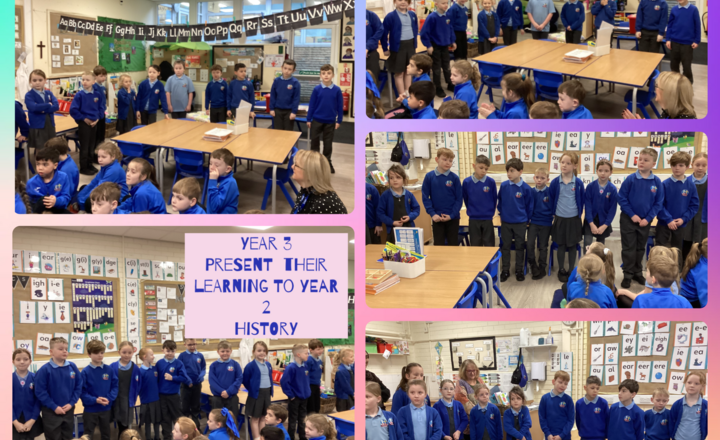
Year 3 Present Their Learning: A Journey Through Victorian History to Year 2
Today, Year 3 had a fantastic opportunity to showcase their historical expertise by presenting their learning to Year 2. The children transported their audience back in time, sharing insightful details about the harsh realities of the Victorian era and the reformers who fought for change. The children shared fascinating facts about: The Factory Acts: They explained how these new laws finally made it illegal to employ children under the age of nine and limited the gruelling hours older children could work. Lord Shaftesbury: The class spoke about his tireless work as a reformer who believed every child deserved a childhood and an education. Ragged Schools: They described these free schools that provided food, clothing, and lessons to the most vulnerable children who couldn't afford a traditional education. Working Conditions: The children painted a vivid picture of the dangerous health conditions in Victorian factories, from the lack of ventilation to the "scavenging" roles children often performed under moving machinery. Whether presenting individually or in small groups, every child rose to the challenge, providing a brilliant boost for our Voice 21 initiative. It was a joy to watch them grow into confident speakers, using their oracy skills to teach others about the differences between the past and the present. Well done, Year 3.
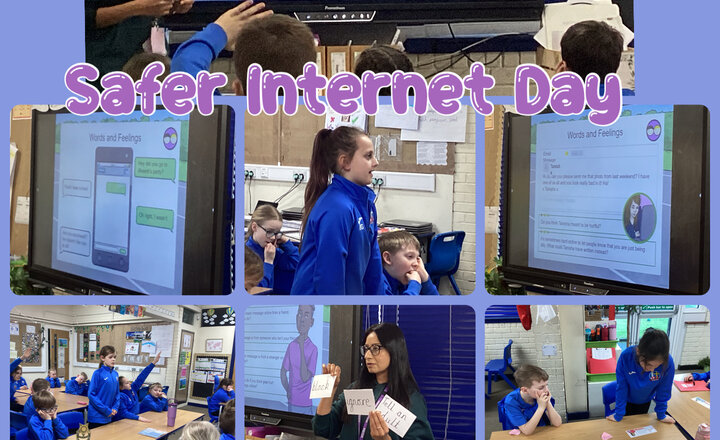
Year 4 - Safer Internet Day: Cyber bullying
In Year 4, we spent Safer Internet Day focussing on a very common issue that many of our school family will probably experience as their internet usage increases: cyber bullying. The topic was introduced to the children sensitively with a look at what cyber bullying may look like. As a class, we read some hypothetical scenarios of unkind messages and shared how we thought the recipient might have felt. We then shared some examples of advice we could give to someone affected by cyber bullying. The children realised that there is a subtle difference between messages aimed at hurting others and those that can be misconstrued. The children were introduced to three options for resolving an issue: block, ignore and tell a trusted adult. They developed skills to help them think critically about what they see online.
.jpeg)
Year 4 - Smart School Council
We were practising using our talk tokens in our Smart School Council session this week. The debate was about our favourite way to spend February half term. After a great discussion with some compelling arguments, the second most popular vote was for spending time with family, but the overall winner was having fun with friends.
.png)