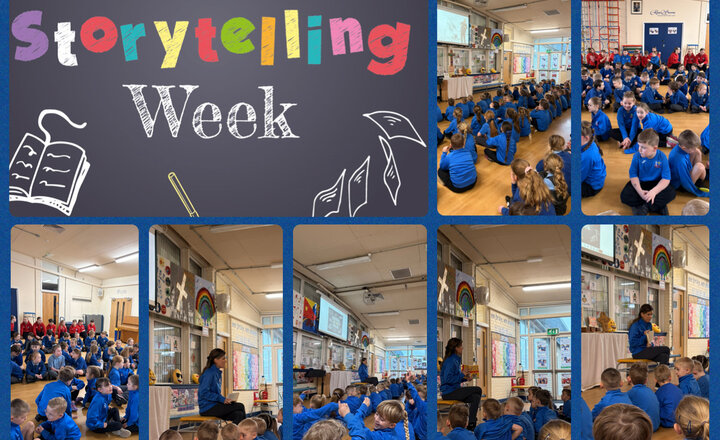
Whole School Worship: National Storytelling Week Launch
Today marks the first day of National Storytelling Week. Mrs Wilkinson launched the week during worship, where we began by discussing some of our favourite stories, such as The Snail and the Whale, Dork Diaries, and The BFG. Mrs Wilkinson then read a chapter from Charlie and the Chocolate Factory, which the children thoroughly enjoyed. We discussed how even longer books can be enjoyed by our younger students and shared a reminder about the wonderful variety of books available in our school library. As a focus of the week is on performance stories, the whole school joined in with Michael Rosen’s reading of We’re Going on a Bear Hunt. It was wonderful to hear students from all year groups reading and performing the story together. Throughout the week, we look forward to welcoming mystery readers into our classes to share their favorite stories, and the children will also be participating in several storytelling workshops. We are excited to continue celebrating this week together.
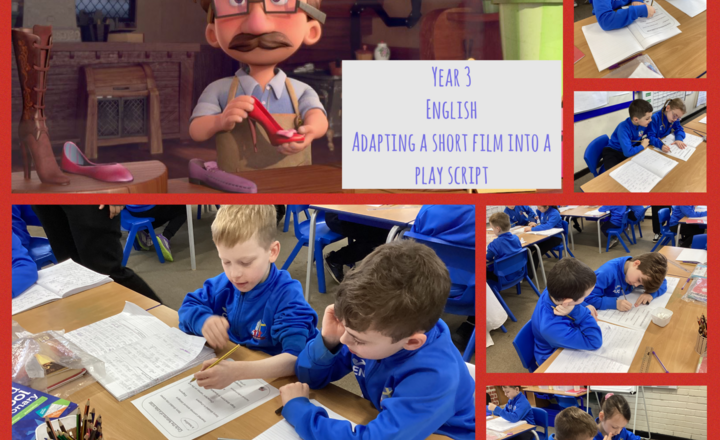
Year 3 - English-Adapting Stories into Play Scripts
This week in English, we have been exploring playscripts. To help us understand how to tell a story through dialogue and action, we have been watching two short films that have no dialogue at all: The Little Shoemaker and Soar. Today, we worked together as a class to adapt The Little Shoemaker into a script. We practised turning the characters' expressions and actions into spoken lines and stage directions. It was a great way to see how we can give characters a "voice" on the page! Next week, the children will take everything they have learned to write their very own scripts for the film Soar. Once their scripts are finished, they will get to perform them for the rest of the class!
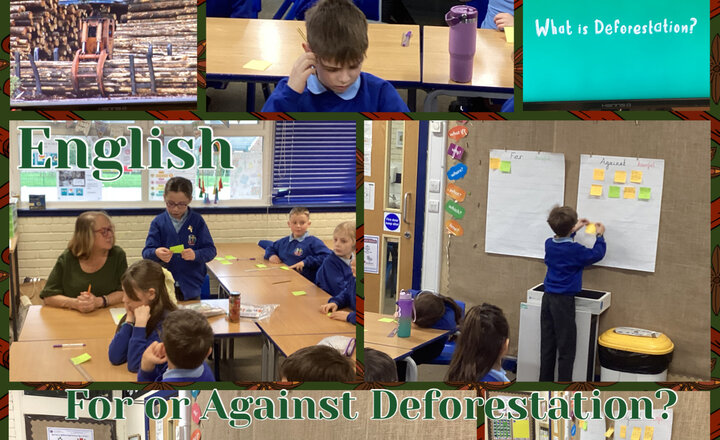
Year 4 - English: For or Against Deforestation?
This week in Year 4, we started our new English topic on debate texts and the children learned some facts about deforestation. First, they recorded a fact they learned from the video and decided if it was an argument for or against. They then worked in groups to consider whether the printed statements were arguments for or against. The children will be working up to writing their own debate texts, forming a balanced argument.
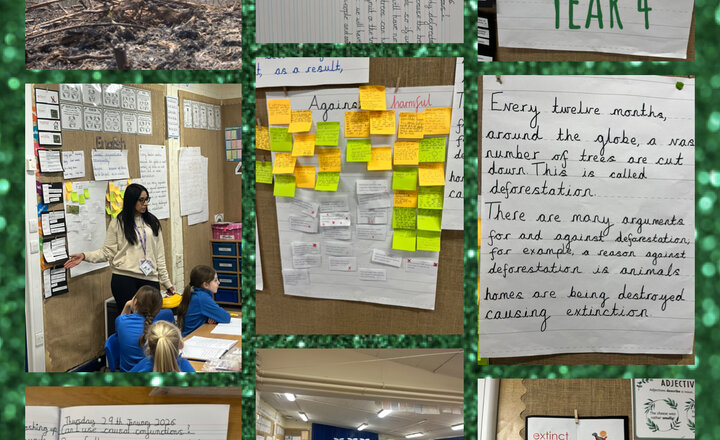
Year 4 - Using causal conjunctions
As part of our English lessons we have continued to build on our for and against points. Today we looked at the main argument followed by how to develop the argument and then its effect - what the effect of deforestation has on the subject. The children tried really hard to use a range of causal conjunctions and extend their arguments further.
.jpeg)
Year 4 - Smart School Council
We were practising using our talk tokens in our Smart School Council session this week. The debate was about our favourite way to spend February half term. After a great discussion with some compelling arguments, the second most popular vote was for spending time with family, but the overall winner was having fun with friends.
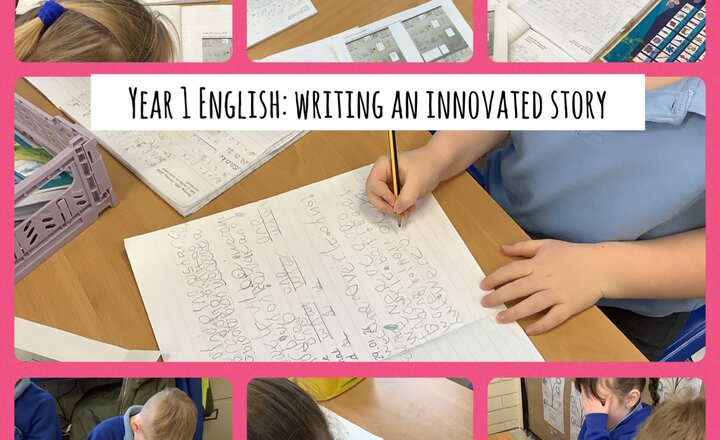
Year 1 English: Writing an innovated story
Year 1 have been working extremely hard in English this week writing their innovated versions of ‘We’re Going On A Bear Hunt’. They are writing three innovated settings and they changed the character too. It has been tricky to remember all of their exclamation marks and full stops, but they have shown resilience and are almost finished with their stories. Well done Year 1!
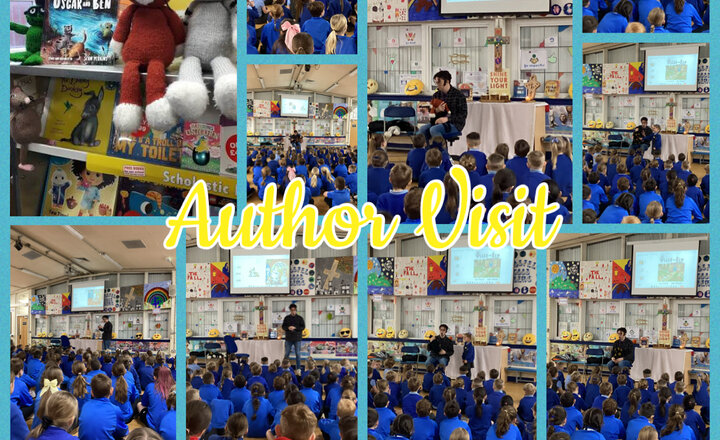
Author Visit: Sean Perkins
Today we continued to celebrate our national year of reading initiative. We were delighted to welcome local author Sean Perkins to our school. Sean shared his stories about characters Oscar and Ben, and the children thoroughly enjoyed listening to a reading of "Oscar and Ben: The Sleepover," which featured engaging sound effects and pictures. The children also learned a song about the characters and had the opportunity to ask Sean questions at the end of the session. All three of Sean’s books are currently available to purchase via ParentPay. Sean has kindly offered to sign any copies purchased. Thank you Sean for visiting our school.
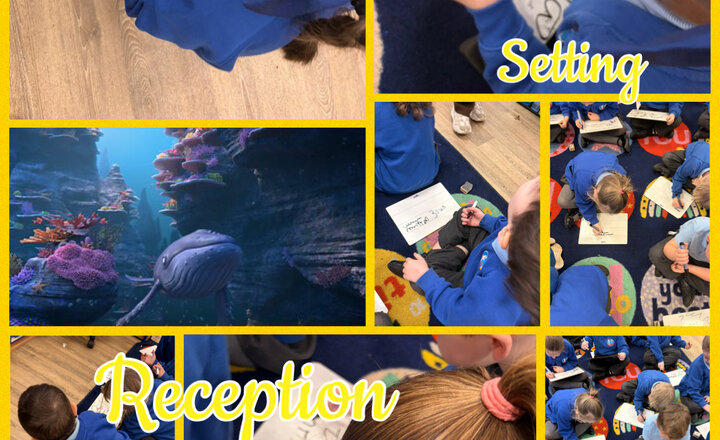
Reception: English
Reception class revisited the story of "The Snail and the Whale" today, with a particular focus on the setting. The children practiced describing the sea and learned a new vocabulary word: "shimmering." They also drew the setting, labelled their work, and explained how the sun makes the water shimmer.
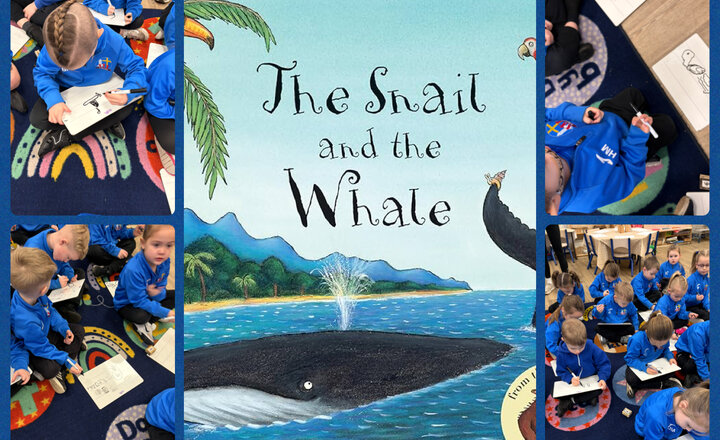
Reception: Snail and the Whale Book Launch
This morning, Reception class read 'The Snail and the Whale'. We listened carefully to the story. The children focussed on two words 'slimy' and 'ginormous'. We discussed the characters in the story and described how they moved and their size. We then drew the characters and had a special key to make them move. Our keys varied from tricky words to different sounds that we have learnt. What a super start to the week!
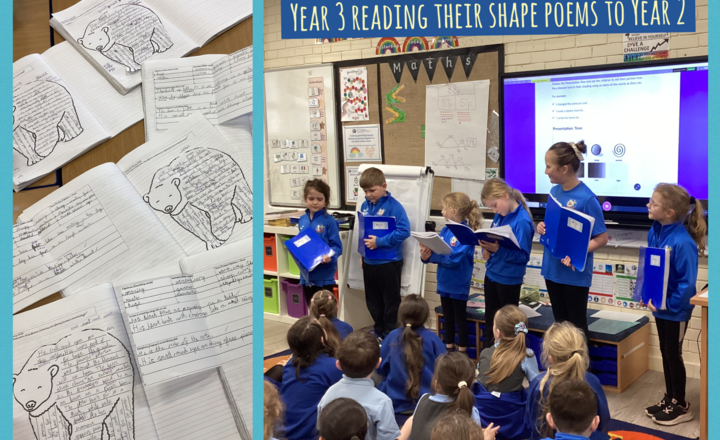
Year 3 Poetry Reading: An Incentive for Excellence
As a reward for their hard work, several Year 3 pupils were selected to visit Year 2 to perform their Arctic bear shape poems. This opportunity served as a fantastic incentive for the children to refine their work, encouraging them to focus on high-quality editing and presentation. The Year 3 students spoke with confidence, and the session was made even more valuable by the constructive feedback provided by Mrs Hegarty and Mr Carter.
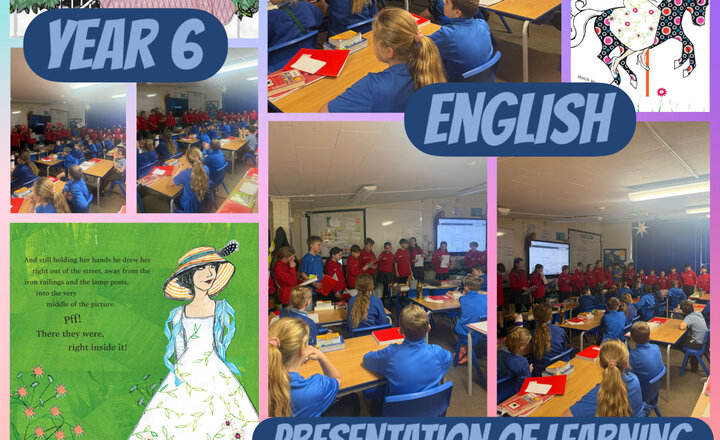
Year 6 - Presentation of Learning
Today, Year 6 presented their English learning to Year 5, all centred around Mary Poppins. The children confidently shared a range of work, including detailed character descriptions, thoughtful book reviews and vivid setting descriptions that brought the story to life. The children also performed imaginative kenning poems inspired by Mary Poppins, using expressive language and performance skills. This presentation celebrated the children’s creativity, reading comprehension and writing skills, while also giving them the opportunity to speak clearly and confidently in front of an audience. Year 5 were a fantastic audience and thoroughly enjoyed seeing the high-quality work produced by Year 6.

Year 1 English: Innovating Settings
Year 1 started to innovate settings based on We’re Going On A Bear Hunt. We changed the original settings to either a candy land, rainforest, hill, volcano, beach or swamp. They then had to think of adjectives to describe their setting for their own story. Next, we will need to think of sounds each setting would make, for example “sticky crunch” for the candy land. It was lovely to hear Year 1’s imaginative ideas and seeing them so excited about creating their settings.
.png)