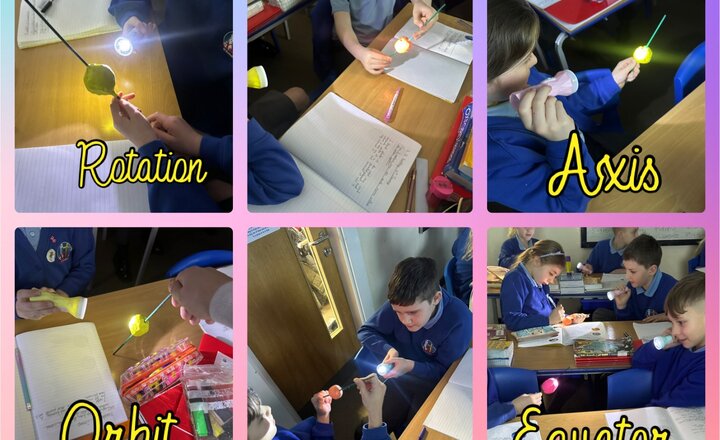
Year 5 - Day and Night
Today, Year 5 embarked on an exciting hands-on activity to deepen their understanding of Earth's rotation and how it causes day, night, and time zones. The children created their own model, using a ball of clay to represent Earth, a dowel to demonstrate its axis tilt and rotation, and a torch to symbolise the Sun. Through this interactive experiment, the children were able to visually explore how Earth rotates on its tilted axis, causing different parts of the planet to experience sunlight or darkness at various times. The children also discussed the significance of time zones and how Earth's rotation impacts the way we measure time across the globe. As the torch illuminated one side of the clay Earth, the children observed how light represents daytime, while the shadowed side represents night. This hands-on approach helped them connect scientific concepts to real-life and why we have day and night.
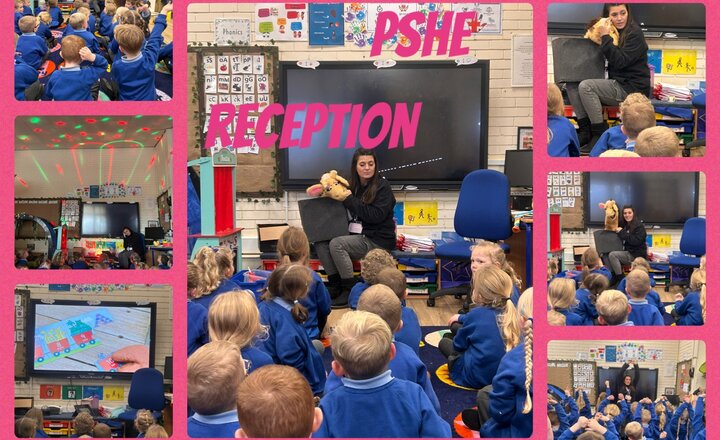
Reception: PSHE
Karen from Life Education visited Reception today. She explained how we need food, drink, exercise and sleep to stay healthy. Karen explained how we need to make sure germs don't get in by washing our hands with soap and water. We might need some medicine and we need to ask a grown up. We watched a video of Harold. Before he ate his breakfast, he washed his hands. Karen brought Harold's wash bag to show the children what he uses to keep clean. Harold has a flannel, soap, shampoo, toothbrush, toothpaste. Karen explained how it is very important to brush our teeth at least twice every day. Harold felt a little bit sad. Karen explained that if you feel a bit sad, you could cuddle a toy, play with a friend or talk to someone. Talking really helps when you feel sad and it can help you to feel better. Karen discussed a good bedtime. She explained how it is important to get an early bed time. We then took part in a calm and relaxing activity. At the end, we got to meet Harold, what a treat! Harold sang a song to us all about looking after our bodies and mind. Thanks Karen for a wonderful session.
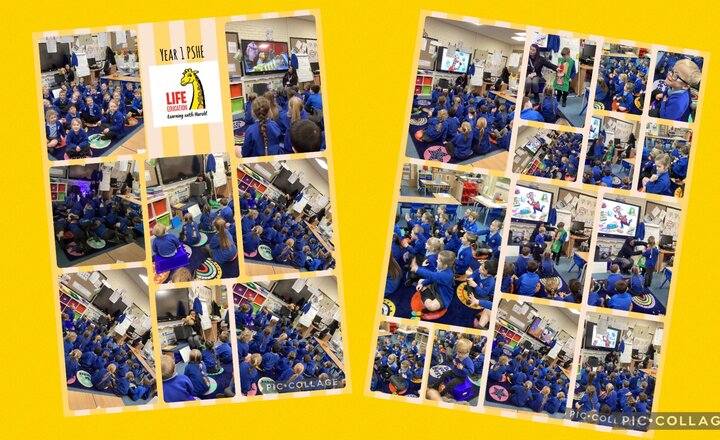
Year 1 PSHE- Life Education Visit
Today, Year 1 had a life education session with Karen and Harold the Giraffe. We learnt that there are lots of different food groups that we need to be eating to ensure that we are consuming a balanced diet. We learnt about dairy foods such as cheese and yogurts which help to make our teeth and bones strong and healthy, protein foods such as chicken, fish, beans and eggs which support muscle growth, fruits and vegetables such as peas, broccoli, peppers and bananas which provide our body with vitamins and minerals to keep us fit and healthy all over and carbohydrate foods such as pasta, cereals, rice, porridge and potatoes which are good for giving us energy. We then talked about our organs (where they are located and what are their functions). We learnt that our ribs look after our heart and lungs, our heart pumps blood around the body, our lungs help us to breathe and our stomach breaks down our food which is called digestion. We learnt that our body absorbs the ‘good stuff’ from our foods and the ‘not so good stuff’ leaves our bodies when we go to the toilet. We then had a look at a packed lunch that Harold the Giraffe had packed. We talked about how his lunch box included bread (carbohydrates), tuna (protein), cheese (dairy) and a yogurt (dairy). We agreed that it was a great lunch but it could be improved by including a portion of fruit or vegetables. Alayna, Cici and Percy then shared their ideas for a balanced lunch. Alayna said that she would have an egg sandwich, apple, banana and a yogurt, Cici said that she would have a tuna sandwich, cucumber, carrots, grated cheese and orange juice and Percy said that he would have a ham sandwich, apple, yogurt and a boiled egg. To end our session, we watched a video and explored the the friendship between Harold the Giraffe, Kiki the Kangaroo and Derek the Penguin. We learnt that we must always think through what we are about to do before we do it to make sure that there is no risk of us upsetting or hurting anyone. We also talked about the importance of sleep for resting our brains, helping our bodies to grow and rebuilding our energy. Thank you to Harold and Karen from Life Education as Year 1 thoroughly enjoyed the session and learnt lots about how to stay fit, healthy and be a good friend.
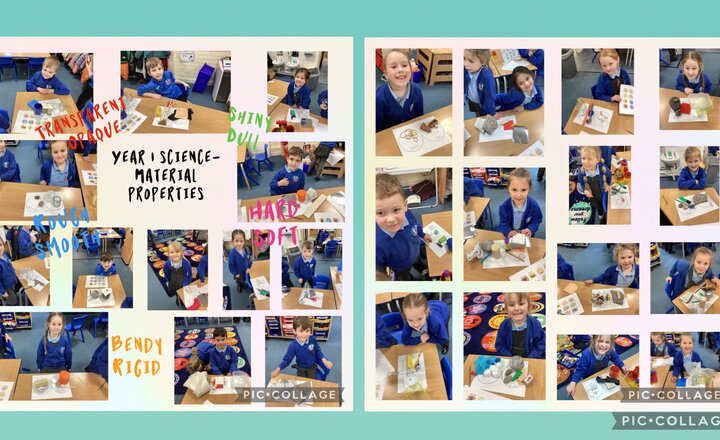
Year 1 Science- Material Properties
This afternoon, Year 1 explored the properties of materials in their science lesson. They explored the following vocabulary: soft, hard, rough, smooth, shiny, dull, bendy, rigid, stretchy, stiff, transparent and opaque. Some of the words were new to the children such as dull, rigid, stiff, transparent and opaque. Therefore, the children chose to find materials and\or objects that these new scientific words would describe. For example, several children chose a glass jar or plastic bubble wrap to describe as transparent, a wooden building block to describe as opaque, an elastic band or white tac to describe as stretchy, a rock to describe as rigid and so on.. Well done Year 1!
Reception: Challenge Champions
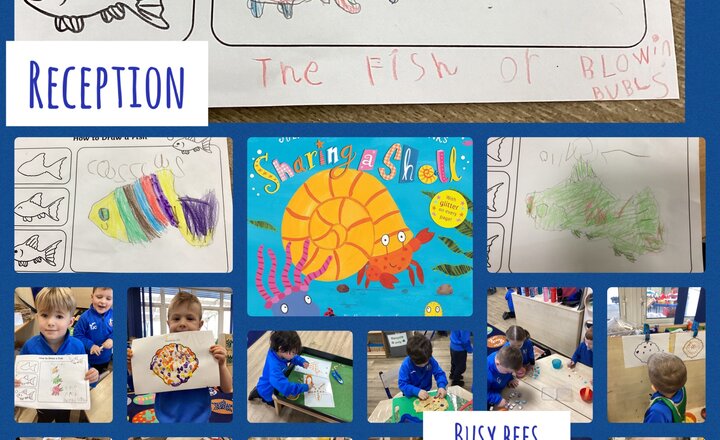
This week in Reception, we are focusing on the story, Sharing a Shell. The children have been really busy in provision completing challenges. They have been attempting to write sentences, strengthening their muscles in the fine motor area, creating rockpools, drawing fish, painting using the skills of Pointillism, counting shells to play a subitise game and moulding the playdough to create different characters from the story. Well done!
Year 5 - The CO Crew
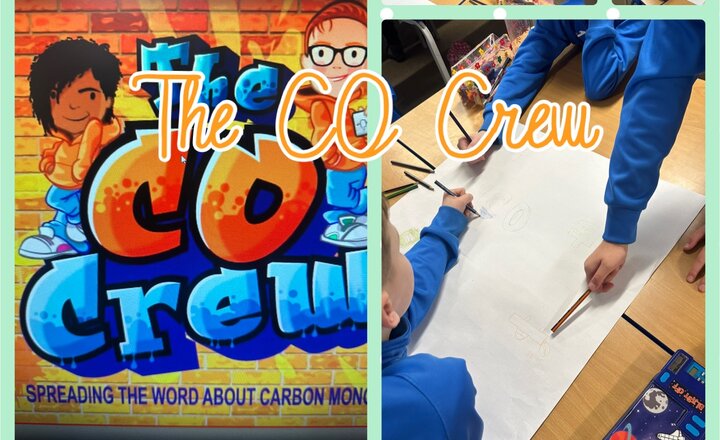
Today, the children participated in a workshop delivered by the CO crew, where they learned about the dangers of carbon monoxide (CO). The session covered key topics, including: What is Carbon Monoxide? A colourless, odourless, and tasteless gas known as the "silent killer" because it is hard to detect without special equipment. Where Does CO Come From? Produced when fuels like gas, coal, wood, or oil don't burn properly, with sources such as faulty boilers, stoves, fireplaces, and cars left running in enclosed spaces. The Dangers of CO Poisoning: Symptoms include headaches, dizziness, nausea, confusion, and tiredness, and it can be fatal if not addressed. How to Stay Safe: The importance of installing CO detectors, maintaining appliances, and avoiding indoor use of outdoor equipment. The children engaged thoughtfully, gaining vital knowledge to help keep themselves and their families safe.
Reception- Winter
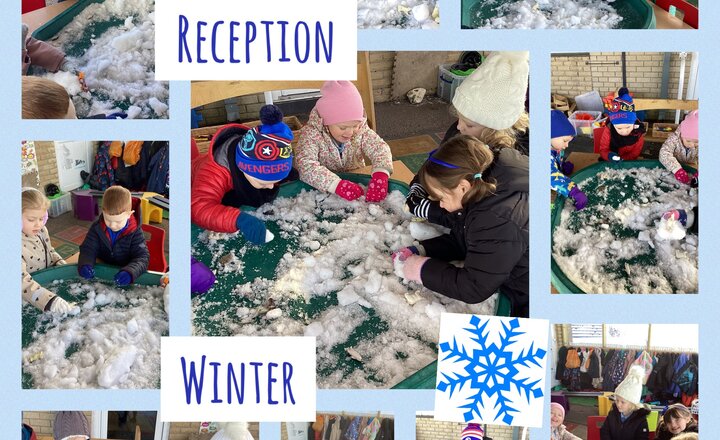
Today we explored the snow and ice in groups. We talked about the season winter and what animals we might see in winter, what clothes we might wear, what the outdoors might look and feel like and our favourite and least favourite things about the season. The children came up with lots of their own knowledge about winter we discussed hibernation and animals who hibernate and deciduous and evergreen trees.
Year 1 Science- Identifying Materials
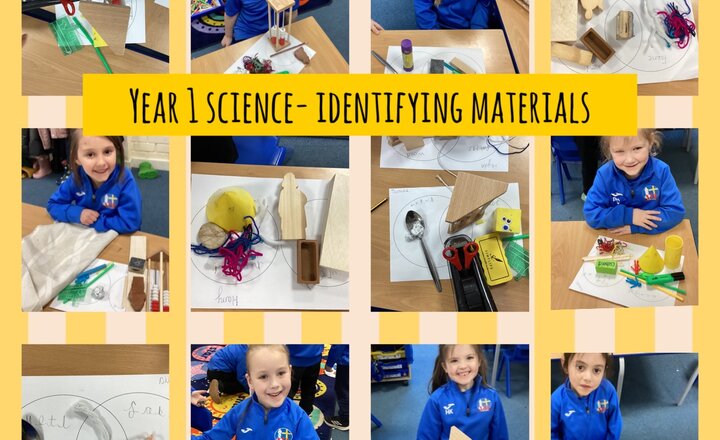
Today in their science lesson, Year 1 explored four common materials (wood, plastic, fabric and metal). They then sorted objects into a Venn diagram based on the material that they were made from. To help them to identify what an object was made from, Year 1 looked for key characteristics such as whether it was soft, shiny, hard, brightly coloured and strong. They even challenged themselves to find objects that were made from more than one material. They found that whiteboard rubbers were made of both wood and fabric, the sellotape holder was made of both plastic and metal and the Rekenrek was made out of plastic, wood and metal. Well done Year 1- you were all super scientists.
.png)
Year 3- Class Worship- Is it our responsibility to protect local wildlife?
During our worship today, we learned about Birdwatch, a special event where people help scientists learn about birds. We talked about whether we have a duty to protect the animals around us. The Bible teaches us to appreciate all of God's amazing creations, and that every creature has a special place in God's plan. We then thanked God for the wonderful world He made and showed our gratitude to those who work hard to study and protect wildlife.
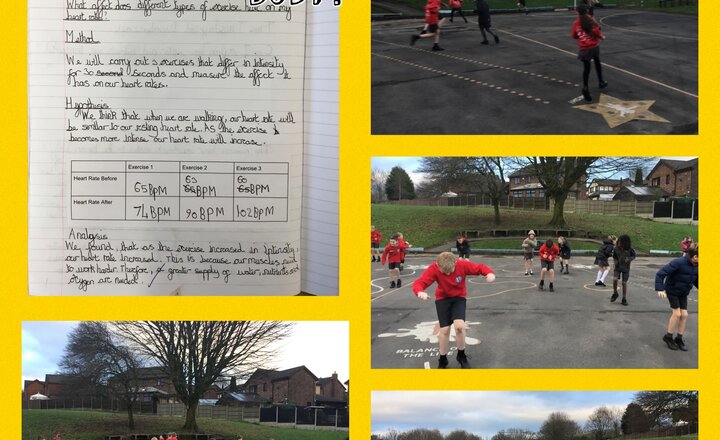
Year 6 - What affect do different types of exercise have on my body?
Year 6 looked at the effect different types of exercise had on their heart rate. We started by taking our resting heart rate and then gradually increased the intensity of the activity we took part in. We found out that as the intensity of the activity increased, our heart rates also increased. Based on our previous learning, we concluded that, because the intensity of the activity increased, the more our muscles demanded water, nutrients and oxygen.
.png)
Whole School- Design Technolgy
This half term, our students have been busy creating a range of designs in Design Technology. From Reception's wooden Christmas decorations to Year 6's electronic steady hand games, our children have showcased their imaginative and creativity skills. Year 1 brought their imaginations to life, creating interactive moving storybooks using slider mechanisms. Year 2 developed their sewing skills, designing and creating a range of Christmas puppets. Year 3 designed and made festive pouches, perfect for holding small gifts or treats. Year 4 stitched up Christmas stockings, ready to hang by the chimney, finally, Year 5 created festive cushions. These creations were showcased and sold at our Christmas Fayre. We're incredibly proud of the hard work and imagination our students have demonstrated in these festive DT projects.
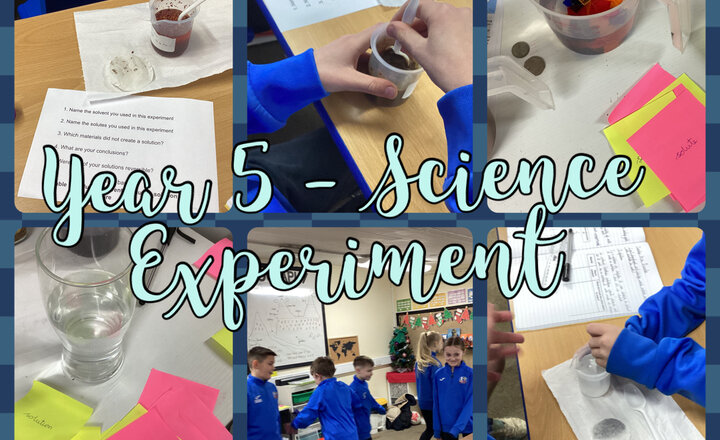
Year 5 - Science Experiment
Today, the children participated in a science investigation to test the differences between solutions, mixtures, and solvents. They began by making predictions about which substances would dissolve and which would not, forming mixtures. During the experiment, the children tested sugar, coffee, and tea leaves by mixing them with water. The children observed how sugar dissolved completely, creating a clear solution, while coffee dispersed evenly but left a cloudy mixture. Tea leaves, however, did not dissolve, instead floating or sinking to the bottom, forming a mixture. After conducting the tests, they carefully recorded their observations and results, comparing them to their initial predictions.